

 English
 Español
 عربى

Home / News / Industry News / How PVC Foam Boards Support Lightweight and Moisture-Resistant Cabinet Manufacturing
How PVC Foam Boards Support Lightweight and Moisture-Resistant Cabinet Manufacturing
Article Directory
A fabricator loading thirty kitchen carcasses onto a delivery van sees the problem immediately: wood-based panels make the stack difficult to lift, and units installed beside dishwashers come back a year later with swollen bottom edges. Replacing the carcass panel with a closed-cell PVC foam board addresses both failures at once. A 16 mm, 1220 x 2440 mm PVC foam sheet at 0.55 g/cm3 weighs roughly 26 kg, which is about a quarter less than MDF, and its water absorption stays under 1 percent after 24 hours of immersion. These two numbers explain why PVC foam boards have moved from signage and exhibition work into mainstream cabinet manufacturing.
The closed-cell core makes the board light without sacrificing rigidity
The foaming process creates millions of sealed air pockets inside the PVC matrix, which lowers average density while keeping the material stiff enough for structural cabinet parts. During extrusion, a blowing agent is dosed into the PVC compound; gas expands inside the melt and forms evenly distributed cells. Because each cell is closed and sealed, the board keeps its mechanical strength while its weight drops substantially. Cabinet-grade PVC foam board is typically supplied at 0.45 to 0.70 g/cm3, while MDF sits at 0.65 to 0.80 g/cm3, which makes the PVC product measurably lighter at the same panel size.
Typical density of cabinet panel materials (g/cm3)
PVC free-foam
0.50
WPC foam board
0.60
Plywood
0.62
Co-extruded PVC
0.65
MDF
0.75
The weight reduction changes production and logistics numbers across the board:
- Van payload increases on every delivery route without adding vehicles.
- CNC routers see less vibration and lower vacuum demand on thin panels.
- Installers handle wall-hung upper cabinets safely on site.
- Lighter packaging reduces freight cost on export orders.
Roughly 26% lighter than MDFA 16 mm, 1220 x 2440 mm PVC foam panel at 0.55 g/cm3 weighs about 26 kg, versus 36 kg for an MDF board of the same size.
Moisture resistance is structural, not a surface coating
Water cannot travel through a closed-cell PVC foam board because the cell walls are sealed and the PVC matrix itself is hydrophobic. This is fundamentally different from wood-based panels, which wick moisture through open fibers and capillaries. When moisture attacks MDF or particleboard, the damage starts at cut edges, where exposed wood fiber acts like a bundle of straws. A CNC-routed cabinet carcass has many cut edges - hinge recesses, shelf pin holes, joint ends - and every one of them is a potential entry point. PVC foam board behaves differently: cutting it exposes the same closed cells found anywhere else in the cross-section, so an unsealed edge does not soak up water.
Closed-cell foam structureA foam structure in which each gas pocket is sealed by the polymer wall, so liquid water and water vapor cannot migrate through the board thickness. For cabinet panels, this means machined edges remain moisture-resistant even when they are not sealed first.
Standard immersion testing shows the difference clearly. Dense PVC foam grades commonly absorb 0.2 to 0.8 percent water by weight over 24 hours, while MDF absorbs 12 to 24 percent under the same procedure. Co-extruded grades with a solid cap layer push the number even lower, which is why manufacturers specify them for bathroom and dishwasher-adjacent cabins. We explain the mechanism in detail in our review of how co-extruded PVC foam board extends furniture service life.
| Material | Water absorption (24 h) | Thickness swell (24 h) | Typical cabinet use |
| MDF | 12-24% | 8-15% | Interior carcasses, painted doors |
| Plywood | 8-16% | 3-8% | Drawer boxes, back panels |
| Particleboard | 10-18% | 6-12% | Laminated carcasses |
| Free-foam PVC board | 0.4-0.8% | < 0.5% | Interior carcasses, shelving |
| Co-extruded PVC foam board | 0.2-0.5% | < 0.3% | Kitchen and bathroom carcasses |
| WPC foam board | 0.5-1.0% | < 0.8% | Wet-area base units |
Match the board structure to the cabinet component
Free-foam, Celuka, and co-extruded boards share a closed-cell core but differ in surface density and hardness, and those differences decide where each board performs best in a cabinet. Free-foam board at moderate density keeps material cost down for interior carcass panels that will be laminated or wrapped. Celuka board adds a hard, smooth skin that resists scratches and holds hinges better on doors and visible ends. Co-extruded board combines the highest surface quality with the best impact resistance for wet-area cabinets and heavy-use kitchen islands.
| Board structure | Density range | Surface character | Best cabinet application |
| Free-foam PVC | 0.45-0.65 g/cm3 | Uniform matte surface, easy to laminate | Interior carcasses, shelves, drawer boxes |
| Celuka PVC | 0.60-0.70 g/cm3 | Dense smooth skin over foamed core | Doors, visible panels, display fronts |
| Co-extruded PVC | 0.60-0.75 g/cm3 | Solid cap layer over foam core | Bathroom cabinets, high-traffic kitchens |
| WPC foam | 0.55-0.70 g/cm3 | Wood-polymer blend, higher stiffness | Wet-area carcasses, structural base units |
0.45-0.75 g/cm3Density range for cabinet grades
< 0.8%Water absorption after 24 h
12-20 mmTypical panel thickness
For cabinet doors, Celuka board in the 18 to 20 mm range is the most common specification, with a dense skin that keeps the panel flat and scratch-resistant:
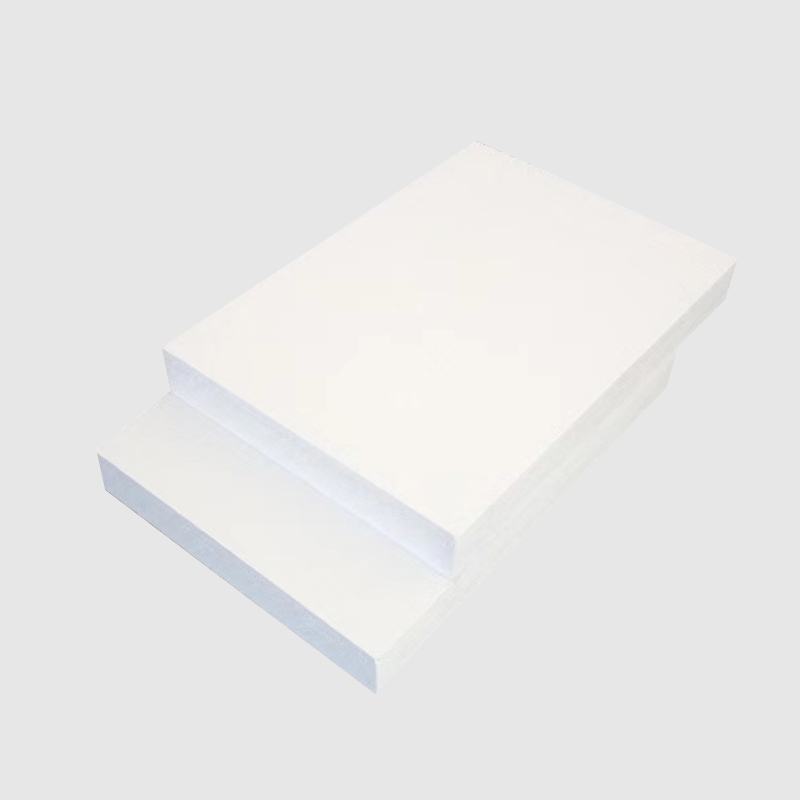 Dense Celuka PVC Foam Board for Kitchen Cabinet DoorsThis high-density Celuka PVC foam board in 18-20 mm thickness features a dense outer skin that keeps cabinet doors flat and scratch-resistant, making it a common choice for moisture-prone kitchen environments.View Product →
For wet-area cabinets and heavy-use islands, the co-extruded structure with a solid cap layer is the preferred panel:
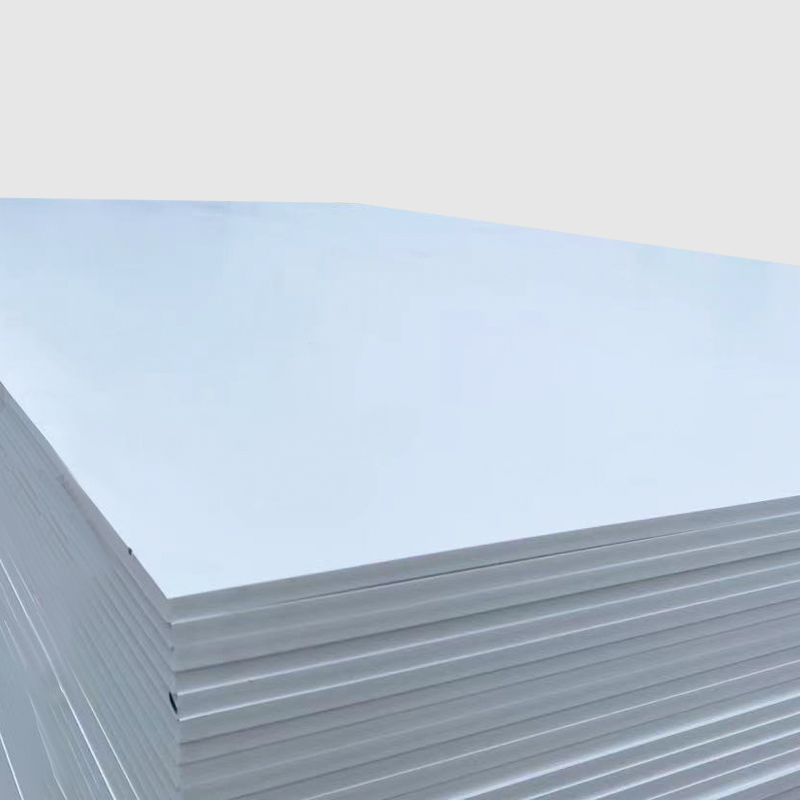 Multi-Layer Co-Extruded PVC Foam Sheet for Custom CabinetsThis 4x8 ft co-extruded PVC foam board provides a smooth, flat surface with adequate rigidity and impact resistance, making it suitable for laminating and fabricating custom kitchen, wardrobe, and office furniture.View Product →
For cabinet doors that must stay flat in a steam-filled kitchen, choose Celuka or co-extruded board. For a laminated interior carcass, free-foam delivers the same moisture safety at a lower cost.
These cabinet-grade structures are supplied by Hangzhou Jiatao Industrial Co., Ltd., a PVC foam board manufacturer with more than 25,000 tons of annual capacity and export experience across North America, Europe, and Asia.
Fabrication notes that decide success in the shop
PVC foam boards machine like solid plastic rather than wood, so tool geometry, chip removal, and joint technique influence final quality more than they do with particleboard. CNC shops that process PVC foam board consistently use sharp carbide tooling, higher spindle speeds, and moderate feed rates, with a climb-milled final pass that leaves a clean edge without fuzz.
- Drill pilot holes before driving screws so the closed-cell wall does not crack; coarse-thread screws designed for plastics give the strongest pull-out values.
- Use solvent-based adhesives, two-component polyurethane, or PVC edge banding applied with hot-melt; standard PVA wood glue does not bond to the PVC surface.
- Allow panels to acclimate for 24 to 48 hours before machining in cold weather, because PVC expands and contracts with temperature like any plastic.
- Set router compression and chip extraction on dense grades; poor chip removal is the leading cause of melted edges on co-extruded board.
Plan joints for the material: butt joints with matching PVC edge banding are faster than dados and just as moisture-tight, because the closed-cell edge needs no sealing.
When a carcass design demands stronger screw retention or higher stiffness than standard free-foam, WPC foam board is a practical alternative, especially for wet-area base units:
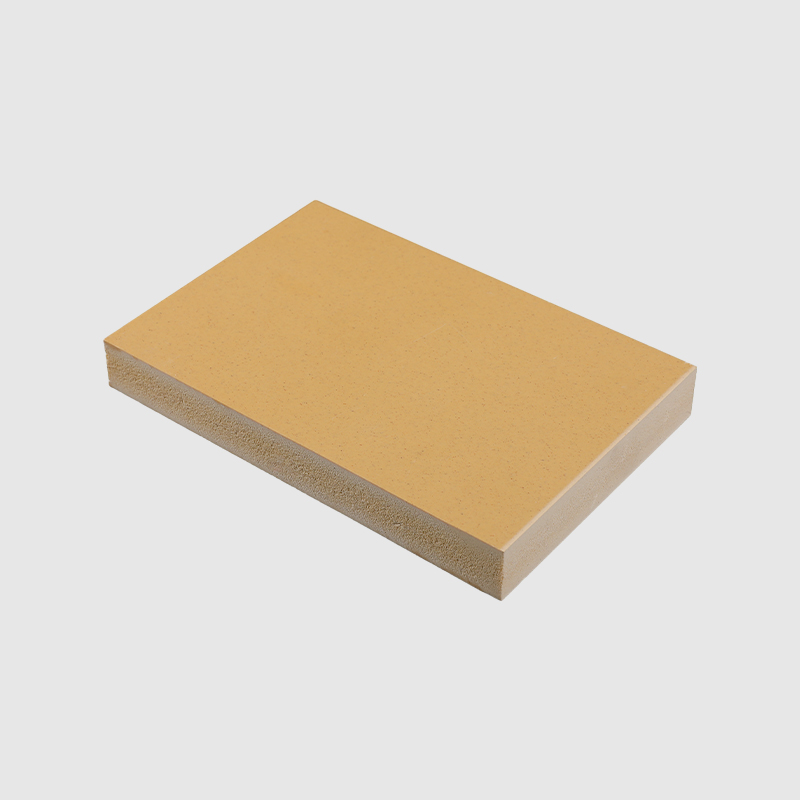 Waterproof WPC PVC Foam Board for Wet-Area CabinetsThis wood plastic composite foam board combines durability and light weight with waterproof and anti-termite properties, offering better screw retention for kitchen and bathroom cabinets with thicknesses from 3 to 25 mm.View Product →
Frequently asked questions
Quick answer Dense PVC foam board satisfies the mechanical and moisture requirements of cabinet carcasses, doors, and wet-area units when the panel is selected by density, structure, and thickness.
Is PVC foam board strong enough for cabinet hinges?
Yes, when the density is in the 0.60 to 0.75 g/cm3 range and the panel is at least 16 mm thick. Use coarse-thread screws in pilot holes, or hinge plates bonded with structural adhesive for heavy doors. For very heavy doors, through-bolted brackets are the safest option.
Can PVC foam board replace plywood in a bathroom vanity?
For carcasses, drawer boxes, and doors, dense PVC foam board is more moisture-resistant than plywood and will not delaminate. The main requirements are plastic-compatible screws and protection from temperatures above 70 C, where PVC starts to soften.
What thickness is recommended for a kitchen cabinet carcass?
16 to 18 mm is the common range for carcasses, with 18 to 20 mm for doors and heavy pull-out drawers. Thin boards from 3 to 10 mm work well for drawer bottoms, back panels, and cabinet liners because the closed-cell structure prevents edge swelling.
Do CNC-cut edges need sealing before installation?
No. A routed edge remains moisture-resistant without edge banding because the internal cells are closed. Banding is still recommended for impact resistance and a finished appearance on visible areas, but it is not required for moisture protection.
Specify PVC foam board by density and structure, not by thickness alone. A closed-cell core above 0.55 g/cm3, a dense surface layer on visible parts, and correct machining practices will consistently produce cabinets that are lighter, drier, and more stable than their wood-based equivalents.
Recommended NEWS:
How to choose the right Laminated PVC foam board according to the surface treatment and lamination type
PVC Free Foam Board's multiple applications and environmental advantages in the field of transportation
White Laminated PVC Free Foam Boards: Environmentally friendly and sustainable production
Moisture-proof and waterproof properties of PVC Celuka Board
In public facility construction and home decoration, how does Waterproof PVC Celuka Foam Sheets meet the dual needs of waterproofing and sound insulation?
What environmental measures are used in the production of White Laminated PVC Free Foam Boards?
Related Products

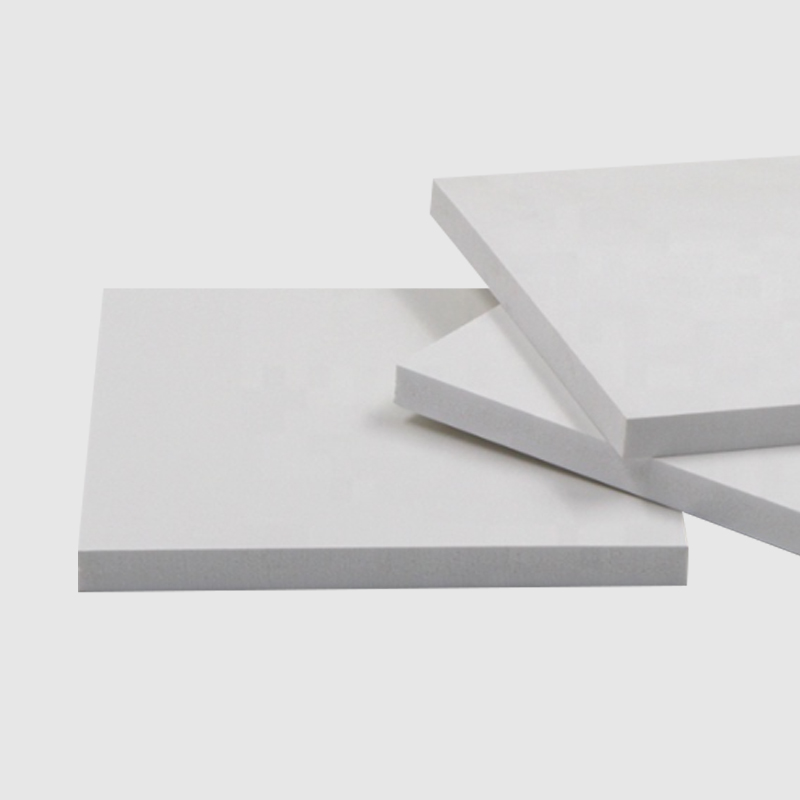
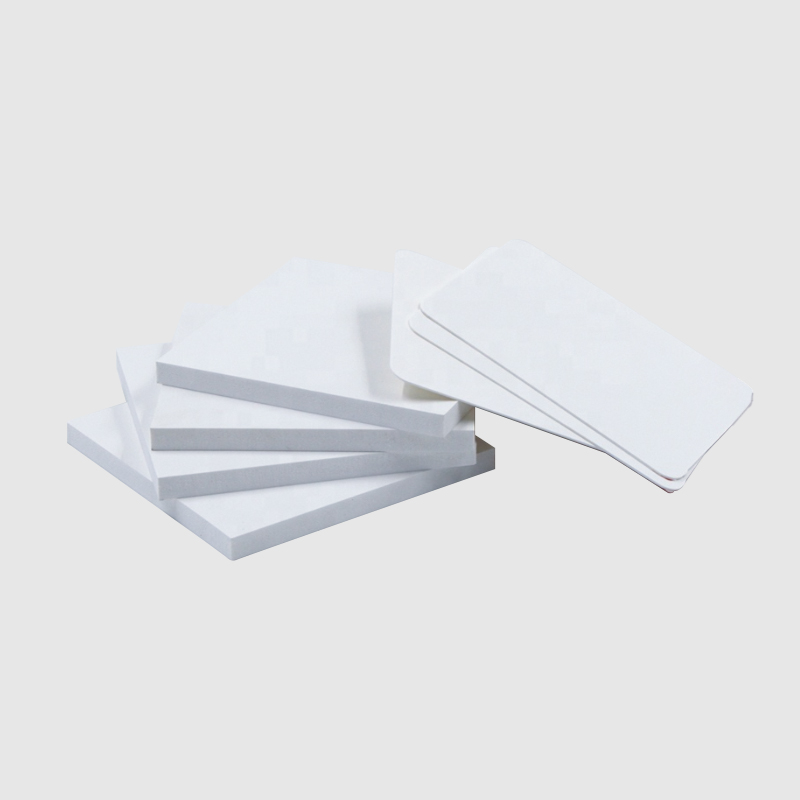

Jiatao Industry Co., Ltd. is a professional manufacturer of polyvinyl chloride plastic boards in China, dedicated to the production of PVC foam boards, plastic wood foamboards, as well as colorful pVC for extruded foam board sheet manufacturers.
-
ADDRESS
No.65 Liminba, Yinong Town, Xiaoshan District, Hangzhou, Zhejiang, China
-
EMAIL
-
PHONE
+86-17816178586
MOBILE SITE



Copyright © Jiatao Industry Co., Ltd. All Rights Reserved.
Custom Rigid PVC Plastic Foam Boards Suppliers

Contact Us