

 English
 Español
 عربى
عربى
Home / News / Industry News / Free Foam vs Celuka Foam Board: Differences in Process, Density, Surface and Cost
Free Foam vs Celuka Foam Board: Differences in Process, Density, Surface and Cost
Article Directory
- 1 What Actually Differs Between Free Foam and Celuka Foam Board
- 2 How the Manufacturing Processes Create the Difference
- 3 Side-by-Side Comparison of Free Foam and Celuka Foam Board
- 4 Which One Should You Use for Signage, Furniture, and Interior Panels?
- 5 Buying Risks and Quality Checks
- 6 Final Recommendation
What Actually Differs Between Free Foam and Celuka Foam Board
If you have ever compared two PVC foam boards side by side, you know the feeling. One sheet is light, matte, and slightly soft to the thumbnail; the other feels harder and smoother, almost like a solid plastic panel. They are both PVC foam boards, but they are not the same product. The board in the first group is a free-foam board; the second is a Celuka board.
Here is the conclusion before the details: free foam and Celuka foam boards share the same base chemistry, but they differ in the way the foam is expanded. A free-foam board expands uniformly across its full thickness, leaving a soft outer surface. A Celuka board is extruded through a calibrator that chills the surface while the core continues foaming, producing a hard outer skin over a cellular interior. That one difference determines the cost, the surface quality, the mechanical performance, and the best use of each board.
For a broader view of where these two boards sit in the larger sheet family, you can check our PVC foam board types and applications guide.
How the Manufacturing Processes Create the Difference
The names "free foam" and "Celuka" refer to two different extrusion methods. Both start with a PVC-based compound and a blowing agent, but the way the board is cooled and shaped changes the final structure.
Free-Foam Extrusion: Uniform Expansion
In free-foam extrusion, the melted PVC compound leaves the die and is allowed to expand without a hard calibrating profile touching the faces. Gas bubbles form throughout the material and grow at a similar rate, creating a fairly uniform, closed-cell structure from one face to the other. The result is a lightweight board with a matte, slightly rough surface. A free-foam board in typical signage density is usually in the range of 0.4 to 0.6 g/cm³, although higher-density versions are available.
Celuka Extrusion: A Hard Skin Over a Foamed Core
In the Celuka process, the extruded melt passes through a water-cooled calibrator immediately after leaving the die. This chills the outer layers before the internal cells have time to expand, so the skin becomes a compact, dense layer. The core, still hot, foams inward and creates a cellular middle section. The skin can be as thin as a fraction of a millimeter, but it dramatically changes how the board behaves.
That denser skin gives Celuka boards a higher overall density, often 0.5 to 0.8 g/cm³ depending on the intended application, and it explains why a Celuka sheet feels harder and more rigid than a free-foam sheet of similar thickness. It also improves moisture resistance and makes the board harder to dent. If you are comparing grades, our article on how PVC foam density affects strength, rigidity, and insulation digs into the underlying relationship.
Side-by-Side Comparison of Free Foam and Celuka Foam Board
The table below summarizes the practical differences. The values are typical ranges for common commercial grades; a specific product can vary depending on formulation and density.
| Parameter | Free Foam Board | Celuka Foam Board |
|---|---|---|
| Structure | Uniform closed-cell foam | Foam core with a dense outer skin |
| Surface | Matte, soft, slightly porous | Smooth, hard, scratch-resistant |
| Density | Typically 0.4–0.6 g/cm³ | Typically 0.5–0.8 g/cm³ |
| Rigidity | Lower at the same thickness | Higher, especially near the surface |
| Screw holding | Fair; can pull out near edges | Good; skin supports fasteners |
| Moisture resistance | Good | Better, especially at cut edges |
| Printing | UV and screen ink absorb easily | Smooth; may require surface treatment |
| Machining | Easy to cut, route, and sand | Slightly harder but clean edges |
| Relative price | Lower | Higher |
| Common thickness | 3–30 mm | 3–20 mm |
Density and Strength: The Numbers Matter
Density is the first spec to check, but it is not the only one. Two boards with the same average density can behave differently because Celuka puts more material near the surfaces. That hard skin increases bending stiffness and resistance to dents without adding much weight. For a cabinet door that will see constant handling, the difference is immediately noticeable.
Surface Finish and Printing
Free-foam surfaces are naturally matte and slightly absorbent, which is why they work so well for solvent, screen, and UV printing. Celuka surfaces are denser and smoother. Inks can still adhere, but the manufacturer may need to adjust surface tension or use a primer for long outdoor life. The smoother Celuka face is an advantage when you want a clean painted or laminated finish.
Price and Fabrication
Celuka boards typically cost more per sheet than free-foam boards of the same thickness because the process is more complex and the density is usually higher. In return, you get a board that is easier to handle with screws, hinges, and edge profiles. Free-foam boards are cheaper and cut faster, which makes them attractive for short-lived displays.
Which One Should You Use for Signage, Furniture, and Interior Panels?
Signage, Display, and Model Making: Free Foam Is Usually Enough
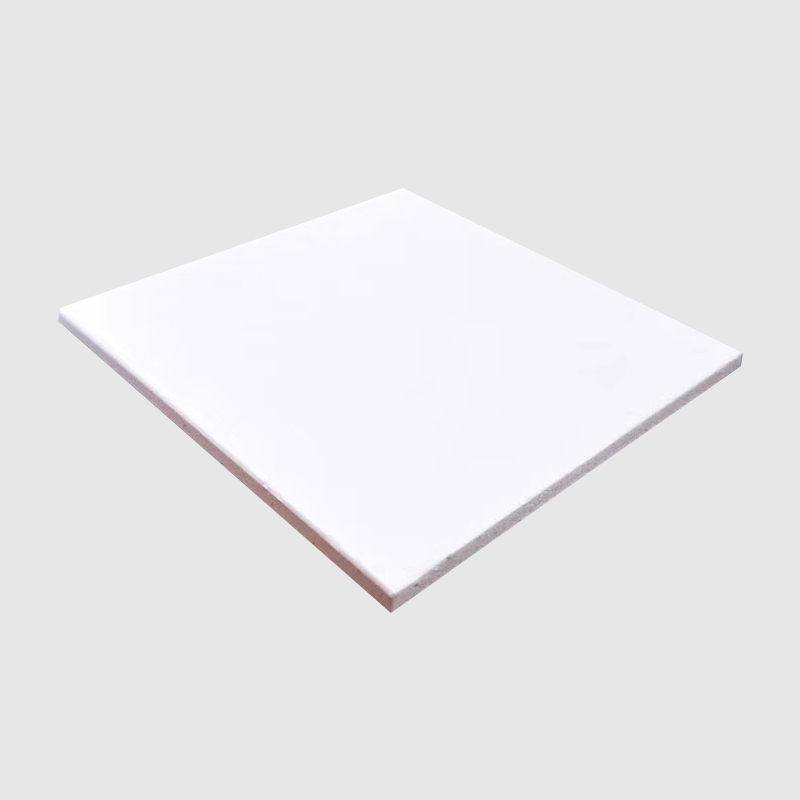
If the board will carry a printed graphic and stand inside a store or exhibition hall, a standard free-foam board is the efficient choice. It is light, inexpensive, and easy to cut to shape. It also accepts UV ink well, which reduces prep time. For typical sign blanks and architectural models, you do not need the added hardness of a Celuka skin. A white PVC foam board in standard stock sizes covers most of the thicknesses a sign shop will specify.
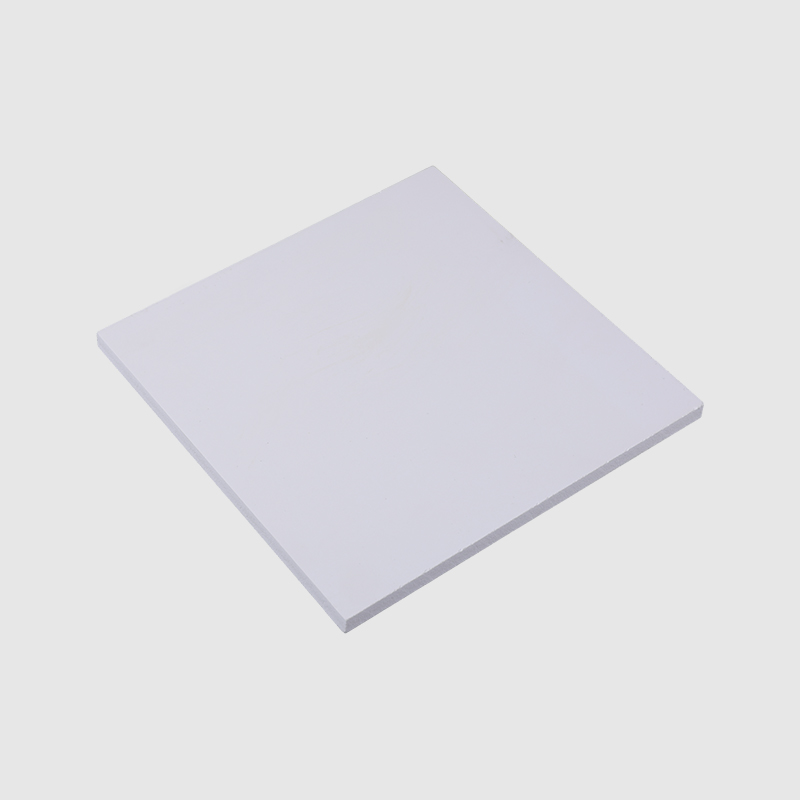 White PVC Foam Board | 4x8 & Custom Sizes | All ThicknessesDiscover our high-quality white PVC foam board, available in standard 4x8 ft sheets and custom sizes. Our waterproof and lightweight foam...View Product →
Furniture, Cabinetry, and Wall Panels: Choose Celuka for the Hard Face
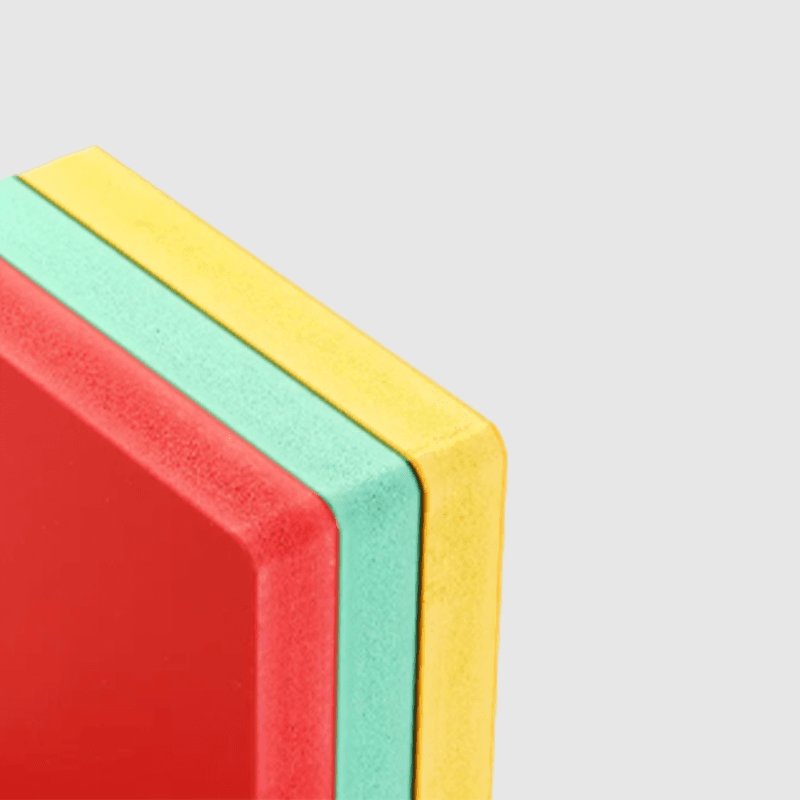
For cabinet doors, drawer fronts, and furniture panels, the surface takes more abuse. A Celuka board's hard skin resists scratches, dents, and moisture penetration much better than free foam. It also holds a hinge screw more reliably. If you are making kitchen or bathroom cabinets, where humidity is a constant, the denser outer layer is worth the extra cost. A rigid-surface Celuka PVC board for furniture and cabinetry is the type of product to specify when the fastener and surface requirements are non-negotiable.
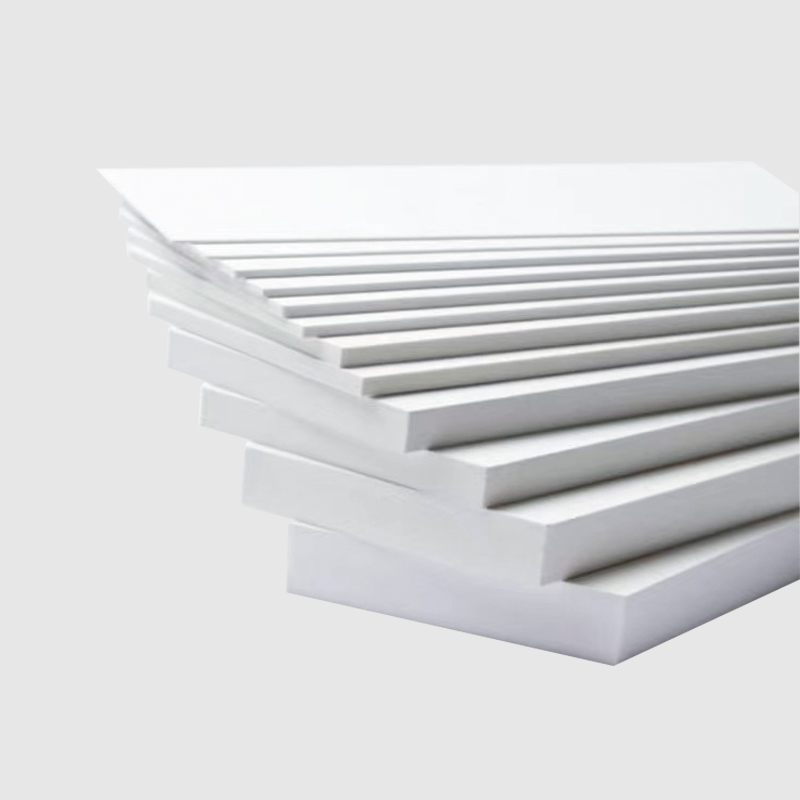 Wholesale OEM/ODM Pvc foam board celuka sheet rigid surface high density 3mm-17mOffer Wholesale Pvc foam board celuka sheet rigid surface high density 3mm-17mm furniture application water proof pvc board white color r...View Product →
Selection Guidance in Practice
To decide quickly, ask three questions:
- Will the board be printed and mounted as a flat graphic? If yes, free foam is the lower-cost path.
- Will the board hold screws, hinges, or edge profiles? If yes, Celuka is the safer material.
- Will the surface face repeated touching, cleaning, or outdoor moisture? If yes, the Celuka skin adds real protection.
For a deeper look at how the skin thickness and density relate to quality, the Celuka foam board properties and quality guide explains what to ask your supplier.
Buying Risks and Quality Checks
The biggest mistake buyers make is assuming that every sheet labeled "Celuka" has the same dense skin. In practice, skin thickness and density vary from one supplier to another, and the difference affects price and performance.
When you compare quotations, ask for the nominal density and the thickness tolerance. A free-foam board should be consistently light, and a Celuka board should have a visibly smooth face with a fine, even cell structure in the core. Cut through a sample and check whether the skin is present on both faces and whether the foam cells are uniform. Also bend a strip by hand: a true Celuka board offers more resistance than a free-foam board of the same thickness.
Thickness tolerance is a practical purchasing consideration. A typical specification may be ±0.2 mm to ±0.3 mm, but thicker boards and cheaper processes can drift more. In sign making, uneven thickness shows up as print head distance variations; in cabinetry, it creates gaps at joints. A supplier that can produce boards with consistent thickness and density is worth more than one that only offers a low price.
Because both board types are waterproof in normal use, the moisture concern is mainly at cut edges and drilled holes. Celuka's skin reduces edge moisture uptake, which is why it becomes the default for bathroom cabinets and exterior sign frames. If you are buying for a long outdoor installation, ask for UV-stabilized material; otherwise, even a structurally sound board may lose color or become brittle over years of exposure.
Final Recommendation
If your job is printed graphics and short-term displays, free foam gives you the best balance of cost and processability. If your job involves panels that must look solid, stay flat, and hold hardware, Celuka is the better investment.
There is no universal winner. The right board depends on the application, the fabrication method, and the quality level your customer expects. Get density data, inspect cross-sections, and run a drilling or printing test before you commit to a large order. That will save you more money than any price negotiation.
Recommended NEWS:
PVC Free Foam Board's multiple applications and environmental advantages in the field of transportation
White Laminated PVC Free Foam Boards: Environmentally friendly and sustainable production
WPC Foam Board: Lightweight and easy to process, leading the new trend of building materials
Waterproof and moisture-proof performance of WPC Foam Board: materials, technology, application and maintenance
WPC Foam Board: Green building materials with environmental performance and waste reduction
What environmental measures are used in the production of White Laminated PVC Free Foam Boards?
Related Products

Jiatao Industry Co., Ltd. is a professional manufacturer of polyvinyl chloride plastic boards in China, dedicated to the production of PVC foam boards, plastic wood foamboards, as well as colorful pVC for extruded foam board sheet manufacturers.
-
ADDRESS
No.65 Liminba, Yinong Town, Xiaoshan District, Hangzhou, Zhejiang, China
-
EMAIL
-
PHONE
+86-17816178586
MOBILE SITE



Copyright © Jiatao Industry Co., Ltd. All Rights Reserved.
Custom Rigid PVC Plastic Foam Boards Suppliers

Contact Us