

 English
 Español
 عربى

Home / News / Industry News / How Custom PVC Foam Board Manufacturers Support OEM and ODM Material Requirements
How Custom PVC Foam Board Manufacturers Support OEM and ODM Material Requirements
Article Directory
A kitchen-cabinet OEM sends its PVC board supplier a one-page spec: 18 mm thickness, 0.60 g/cm3 density, RAL 9003 white, and a 4 x 8 ft sheet that stays flat after CNC routing. A signage house with no formulation team asks the same factory to design a 5 mm UV-printable board. Both are working with a custom PVC foam board manufacturer that runs OEM and ODM programs.
OEM means you own the specification and the brand. ODM means the manufacturer opens its process knowledge and builds the material design for you. In PVC foam board supply, that line is blurrier than the acronyms suggest - and the supplier's ability to handle both determines whether your program ships on time, holds color, and survives a third-party audit.
25,000+tons of annual PVC board output
11,000 sqmfactory floor area
15+years of extrusion experience
10+Fortune 500 partner companies
What OEM and ODM Mean for a PVC Foam Board Program
OEM and ODM arrangements differ in who owns the material specification, and in PVC foam board production that single difference changes how sampling, tooling, and batch accountability are handled.
In an OEM program, the buyer supplies the thickness, density, surface, and dimensional tolerances, and the manufacturer converts them into boards. In an ODM program, the manufacturer proposes the formula, process, and surface solution - then refines them until the buyer approves.
Hangzhou Jiatao Industrial Co., Ltd. (Jiatao) runs both modes on the same extrusion lines. An OEM buyer may order a 2050 x 3050 mm white free-foam sheet at 11 mm with density locked near 0.55 g/cm3. An ODM buyer may arrive with a finished cabinet door and ask the supplier to reverse-engineer the right core material, skin hardness, and edge finish. Both start with the same question: what thickness, density, surface, color, and tolerance does the final product require?
| Aspect | OEM arrangement | ODM arrangement |
| Specification ownership | Buyer owns the full material spec | Manufacturer proposes and refines the spec |
| Formula and process | Buyer-defined density, thickness, surface | Supplier selects formula, additives, and process |
| Tooling and sampling | Buyer usually funds molds or embossing tools | Supplier absorbs most development cost |
| Approval and risk | Buyer validates samples against drawings | Supplier validates, buyer approves final sample |
| Brand and IP | Buyer's brand and product records | Shared or buyer-owned per contract |
Five Customization Layers That Define a Custom Board
A custom PVC foam board program is specified through five layers - thickness, density, sheet size, color and surface, and packaging - and a manufacturer that cannot control all five is not a reliable OEM or ODM partner.
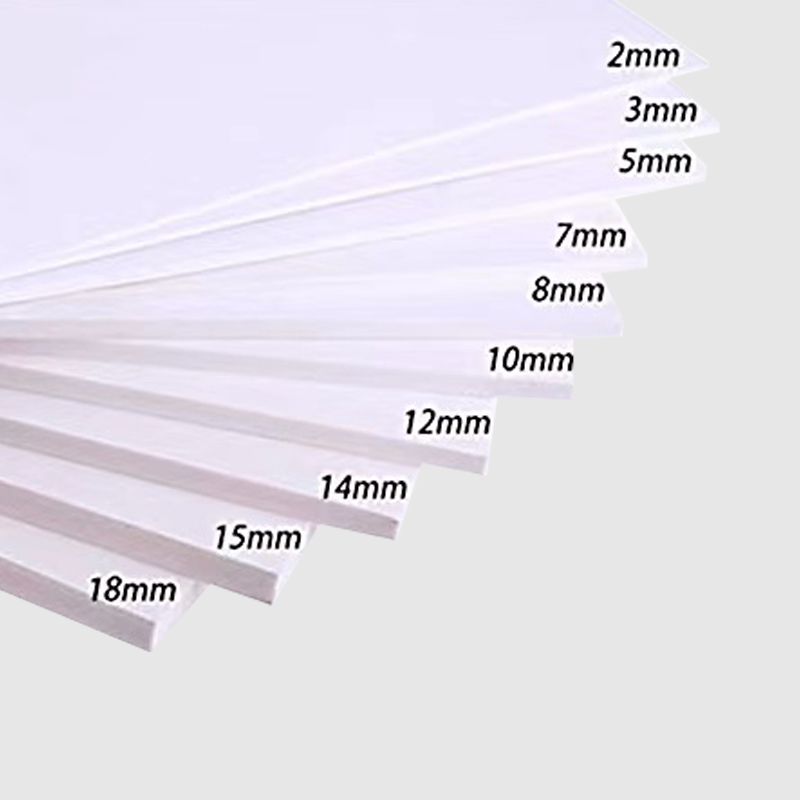
- Thickness and tolerance. Jiatao's catalog covers roughly 2 to 330 mm across its product families: thin 3 mm sheets are built for UV printing and display, 18 mm boards serve cabinet shells, and 325 to 330 mm blocks support heavy industrial fabrication. Consistent thickness is what a CNC router, or a cabinet hinge, will trust.
- Density and cell structure. Free-foam gives a lighter, softer core; celuka forms a dense outer skin; co-extrusion bonds a smooth hard layer to the core. The density number alone does not tell you how the sheet routes, screws, heat-bends, or holds a print.
- Sheet size. Standard 1220 x 2440 mm (4 x 8 ft), larger 2050 x 3050 mm panels, and cut-to-size blanks are the normal range, with custom dimensions quoted against the extrusion and trimming process.
- Color and surface. White, bright yellow, gray, black, deep blue, sky blue, wood grain, marble lamination, and embossed textures are produced across the colored and wall-panel lines. Colored boards are pigmented through the thickness, which matters when edges will be visible.
- Packaging and lot traceability. Export packing must survive sea freight, and batch codes must link back to density and color records when a claim arrives.
The same factory that produces standard white board also runs a dedicated colored line, giving OEM buyers a single point of responsibility for color-matched signage and interior decoration panels instead of a paint-and-pray conversion done downstream.
 Yellow PVC Foam Board for Advertising Signs and DisplaysThis bright yellow PVC foam board offers a lightweight, durable surface for outdoor signage and displays. Its weather resistance and printing compatibility make it a practical choice for OEM buyers needing color-matched panels from the same factory line.View Product →
25,000+ tons of annual capacity means Jiatao can run custom lots without stopping standard export orders - the hidden scheduling advantage that keeps OEM and ODM lead times honest.
Matching Product Lines to OEM and ODM Applications
Each Jiatao product family exists for a reason, and choosing the right one is the first technical decision in any OEM or ODM material program.
The lineup - PVC foam board, PVC co-extruded foam board, PVC celuka foam board, colored PVC foam board, WPC foam board, and PVC wall panel - spans signage, furniture, and interior construction. The logic is simple: free-foam boards for high-volume flat jobs, co-extruded and celuka lines for rigid furniture surfaces, and laminated wall panels for decoration.
| Product line | Thickness range | Surface character | Typical OEM/ODM use |
| PVC Foam Board | 3-330 mm | Smooth, matte to light texture | Signage, display, building models |
| PVC Co-extruded Foam Board | 3-40 mm | Extra-smooth hard surface | Cabinetry, furniture, car interior parts |
| PVC Celuka Foam Board | 3-20 mm | Dense skin, rigid face | Cabinet doors, furniture, wall panel |
| Colored PVC Foam Board | 3-18 mm | Pigmented through thickness | Colored signage, indoor decoration, UV printing |
| WPC Foam Board | 2-325 mm | Wood-like, machinable | Bathroom and kitchen cabinets, wall cladding |
| PVC Wall Panel | 3-30 mm | Laminated, UV-coated, wood or marble finish | Interior wall covering, renovation |
Distinct thickness values counted from thickness references in Jiatao's product family pages; several lines overlap in the standard 3-18 mm band.
Furniture and cabinetry programs favor co-extruded boards
Co-extruded boards add a smooth, hard outer layer over a foamed core, which makes them the common choice for cabinet shells, bathroom vanities, and furniture panels where edges stay visible. Jiatao's structural co-extrusion sheets from 3 mm to 18 mm, plus free-foam options up to 40 mm for thicker components, give OEM buyers a wide window for hinge mounting, edging, and moisture resistance.
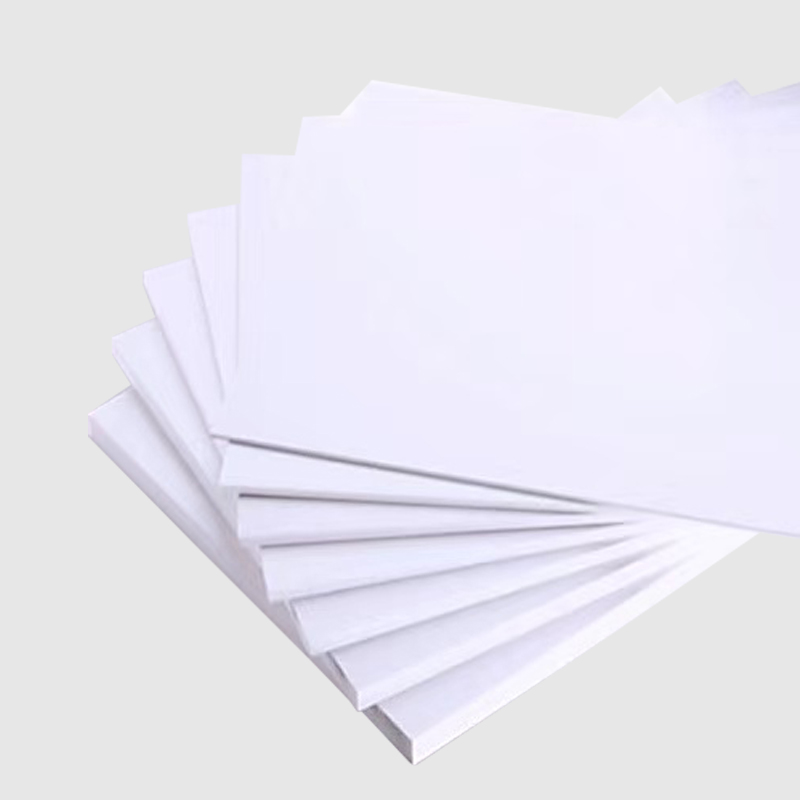 PVC Co-extruded Foam Board with Smooth Rigid SurfaceCo-extruded boards combine a hard outer layer with a foamed core, suited for cabinet shells, bathroom vanities, and furniture panels. Available in 3–18 mm thicknesses, these waterproof, soundproof sheets support hinge mounting and visible-edge applications in OEM programs.View Product →
Quality Control and Consistency at Export Scale
In OEM and ODM supply, quality control is not about catching defects at the dock; it is about holding the same density, color, and flatness from the pilot board to the twentieth container.
Jiatao lists SGS-certified high-density PVC boards in its catalog and markets lead-free formulations across several product pages, which matters for export programs facing REACH-style chemical due diligence in Europe. The company also points to cooperation with more than ten Fortune 500 enterprises and over 1,000 completed project cases as evidence that its quality documentation survives third-party audits.
For programs where the rigid outer layer is the selling point - cabinet doors, high-density furniture boards, decorated wall panels - celuka skin consistency is a measurable quality parameter. A capable supplier shows skin-thickness records and surface hardness data, not just core density numbers. Jiatao's celuka sheets pair that hard skin with a closed-cell foam core for furniture and cabinet applications.
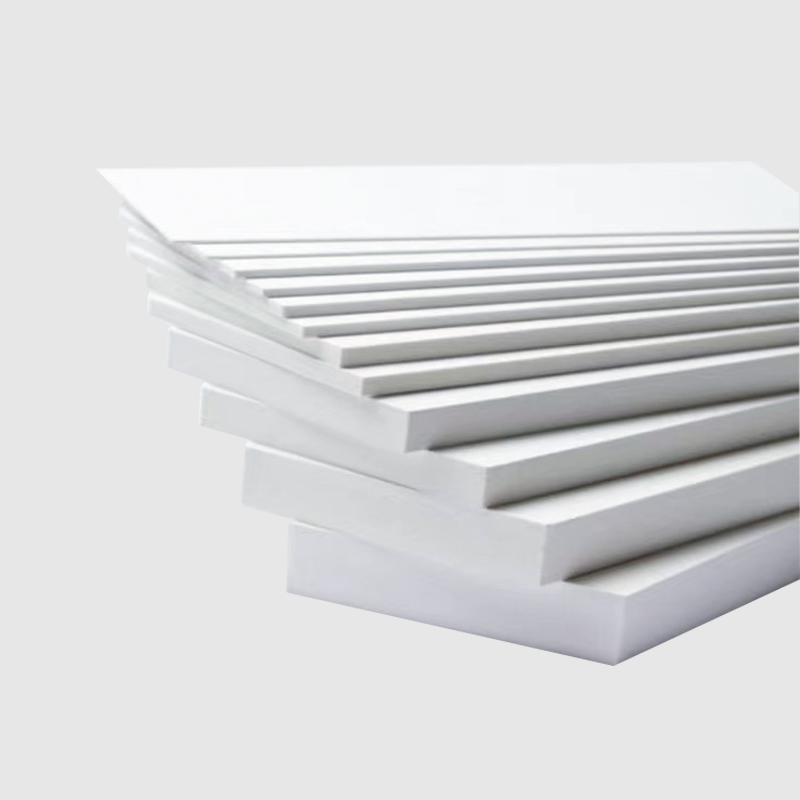 PVC Celuka Foam Board with High-Density Rigid SkinThis celuka sheet features a rigid outer skin and closed-cell foam core, ideal for furniture and cabinet applications where surface hardness matters. Available in 3–17 mm thicknesses, it offers consistent quality control for decorating panels and high-density furniture boards.View Product →
If you want to see what stage-by-stage control looks like, our breakdown of the custom PVC celuka board production and quality control process walks through each checkpoint from formulation to finished sheet.
What you are really buying from a custom PVC foam board manufacturer is not sheet inventory. It is the ability to hold the same density, color, and flatness from pilot order to container twenty.
How to Qualify a Custom PVC Foam Board Manufacturer
Qualify a custom PVC foam board supplier the same way you would qualify any extrusion partner: on documentation, process control, and the engineering judgment of the people who will touch your specification.
- Request thickness, density, and dimensional tolerances in writing for every custom board, including how they are measured.
- Ask for samples from different production dates and compare density and color drift between batches.
- Confirm which compliance documents the factory can provide - SGS reports, lead-free declarations, and REACH-relevant statements.
- Check capacity alignment; a 25,000-ton-per-year plant can mix custom orders with standard stock production without constant changeover chaos.
- Verify fabrication inputs: how the board cuts, routes, UV-prints, and edge-bends in real workshop conditions.
- Ask how export orders are packed and whether batch codes on the boards trace back to production records.
Reviewing the full PVC foam board product range is a reasonable first pass. The final qualification step is a technical call where you test the supplier's questions against your spec - a partner that asks about edge finishing, UV ink adhesion, and storage humidity is a partner that has seen real programs fail.
Frequently Asked Questions
What is the typical lead time for a custom PVC foam board order?
Lead time depends on color changeover and density setup. Standard white boards ship fastest because the line is already running; custom colors or celuka surface profiles add days for tooling and first-article approval. Ask your manufacturer for a lead-time breakdown per thickness and color before placing the first order.
Can colored PVC foam boards be UV-printed with a logo?
Yes. Colored and white boards in the 3-6 mm range are routinely printed with UV-curable inks for signage and display work. Surface tension and storage humidity affect ink adhesion and dimensional stability, so request a print-adhesion test on the exact custom color you plan to order.
What is the difference between co-extruded and celuka PVC foam boards?
Co-extrusion bonds a smooth, high-hardness surface layer to a foamed core in one combined extrusion step, which is ideal for visible furniture surfaces. Celuka foaming presses a dense skin against a cooled calibrator, creating a hard shell over the foam core - a good choice for cut edges that need a tougher perimeter. Both are rigid and waterproof, but the surface behavior and edge finish differ.
How many samples should an OEM buyer request before production?
At least two samples from different production dates. Compare thickness, density, color, and dimensional stability, and keep one sample as the approval reference for the production batch. This is the fastest way to hold a factory accountable to the specification you actually agreed on.
Recommended NEWS:
PVC Free Foam Board's multiple applications and environmental advantages in the field of transportation
Custom Laminated PVC Foam Board: A versatile material with excellent waterproof performance
Material and performance innovation of PVC ceiling panels
How to deal with board deformation during the production process of PVC Celuka Board?
Fireproofing of Custom Laminated PVC Foam Boards
How to choose the right Laminated PVC foam board according to the surface treatment and lamination type
Related Products


Jiatao Industry Co., Ltd. is a professional manufacturer of polyvinyl chloride plastic boards in China, dedicated to the production of PVC foam boards, plastic wood foamboards, as well as colorful pVC for extruded foam board sheet manufacturers.
-
ADDRESS
No.65 Liminba, Yinong Town, Xiaoshan District, Hangzhou, Zhejiang, China
-
EMAIL
-
PHONE
+86-17816178586
MOBILE SITE



Copyright © Jiatao Industry Co., Ltd. All Rights Reserved.
Custom Rigid PVC Plastic Foam Boards Suppliers

Contact Us