

 English
 Español
 عربى

Home / News / Industry News / How to Select the Right PVC Co-Extruded Foam Board Structure for Fabrication
How to Select the Right PVC Co-Extruded Foam Board Structure for Fabrication
Article Directory
A 10 mm co-extruded sheet printed cleanly on a UV flatbed but chipped along every routed edge on the CNC table. The router bits were new; the real cause was internal. The cap layer measured barely 0.15 mm, and the core cells were coarse and irregular. Structure, meaning cap thickness, core density, and co-extrusion bond, decides fabrication success before the first cut is made.
Hangzhou Jiatao Industrial Co., Ltd., a manufacturer with more than 15 years in extruded PVC sheet production and an annual output above 25,000 tons, sees this confusion whenever buyers compare quotes from different suppliers without comparing structural specifications. The selection logic below is the one our engineers use when a customer sends drawings and asks for a board that will survive their fabrication line.
Across more than 1,000 documented project cases, most co-extruded board failures trace back to a cap layer too thin for the customer's router feed rate, not to bad resin or bad machinery.
What "Structure" Means in a Co-Extruded Board
A PVC co-extruded foam board is a three-zone composite: a dense solid cap layer fused over a foamed core, with a co-extrusion bond line in between. Each zone controls a different set of fabrication results.
Co-extrusion structure
A single-pass extrusion process in which a hard PVC cap compound and a foamed PVC core compound meet in one die while both are still molten, so both layers cool as one sheet with no adhesive.
- The cap layer governs scratch resistance, ink adhesion, moisture barrier, and edge-banding quality.
- The core controls weight, flexural stiffness, screw holding, and how chips behave under a router.
- The co-extrusion interface decides whether the cap stays bonded when the sheet is machined, bent, or exposed to heat and moisture cycling.
Fabrication-grade material typically carries a cap thickness of 0.2-0.6 mm per face, a cap hardness of 72-80 Shore D, and a core density of 0.5-0.9 g/cm3. Any sheet below 0.2 mm cap on a 15 mm or 18 mm panel should raise a red flag in a machining environment.
0.2-0.6cap layer, mm per face
72-80cap hardness, Shore D
0.5-0.9core density, g/cm3
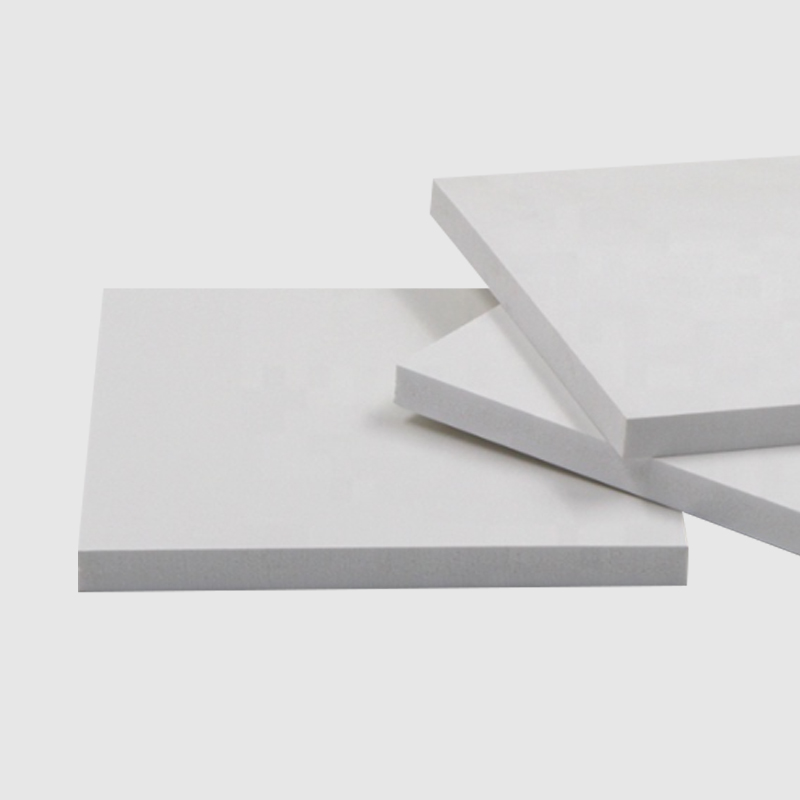
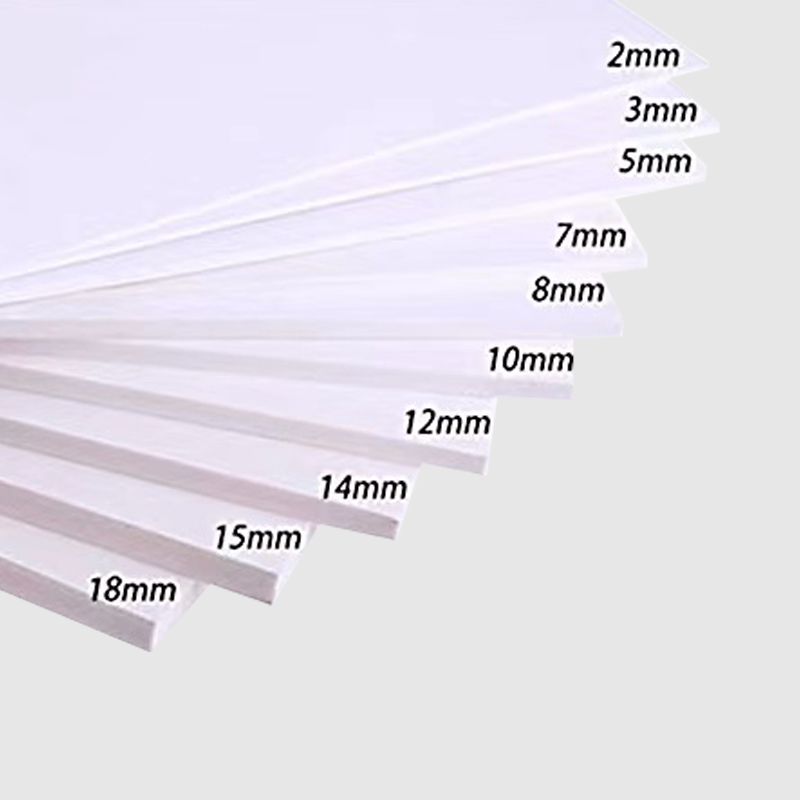
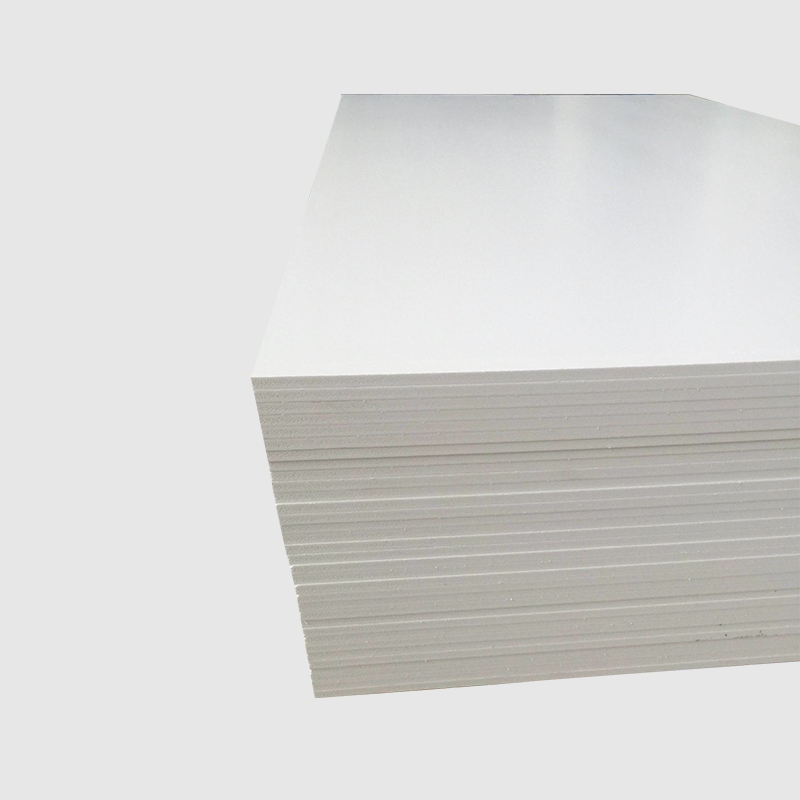
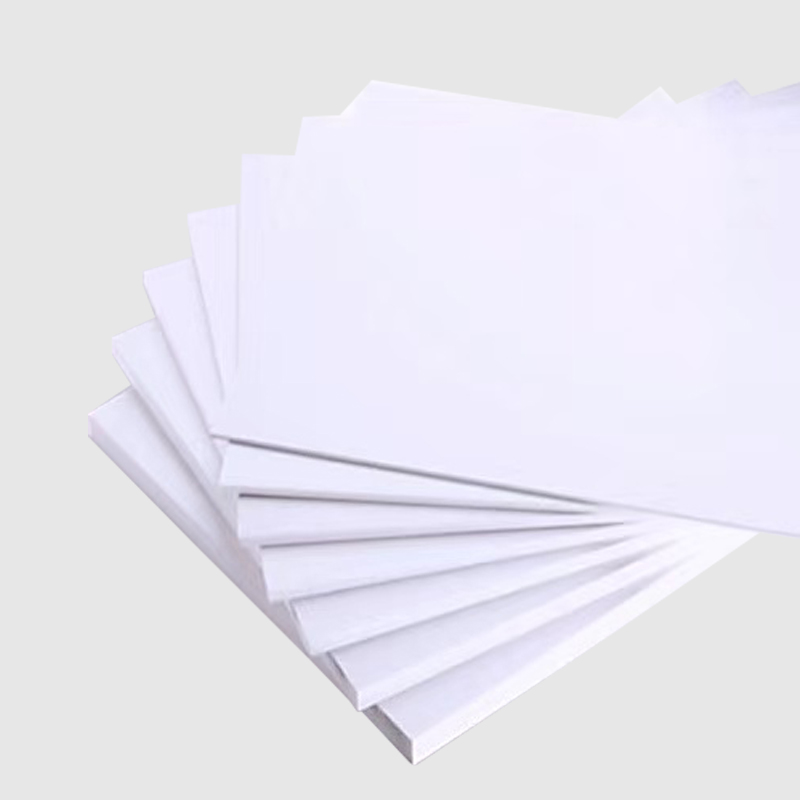 PVC Co-extruded Foam Board with Smooth Surface for Furniture and SignsThis rigid PVC sheet features a co-extruded cap for a smooth waterproof surface, covering 3–18 mm thickness options. Its consistent quality suits fabrication checks on fresh cut edges, helping identify rejects before production.View Product →
Three Structural Checks Before You Approve a Sample
You can verify the structure of a co-extruded board on a fresh cut edge in less than two minutes, without special equipment. These three checks catch most fabrication rejects before they reach production.
- Cap uniformity. Cut a clean cross-section and measure the cap on both faces and along the sheet width. Specify an average of at least 0.3 mm per face for CNC work; below 0.2 mm, router exit edges tear the cap instead of shearing it.
- Core cell structure. Look for fine, regular closed cells. Free-foam cores with cells two to three times larger leave a rougher routed surface, absorb more moisture at exposed edges, and produce inconsistent screw holding.
- Co-extrusion bond. Route a 45-degree bevel at your normal feed speed. A sound bond shows a clean, continuous line with no whitening; a weak bond shows fuzz, chalk lines, or cap lift along the bevel.
For more detail on how cap quality changes machining and printing results, read this analysis of CNC precision and UV ink adhesion on co-extruded foam boards.
If a supplier cannot provide cap thickness and core density values in writing, treat their technical datasheet as a sales document, not an engineering specification.
Match the Structure to the Fabrication Method
Different fabrication operations stress different zones of the sheet, so the structure you approve should be set by the most demanding operation in your line.
| Fabrication operation | Zone that matters | Recommended structure | Failure if wrong |
| UV flatbed printing | Cap surface | Lead-free white cap, surface energy above 38 dynes/cm | Ink delamination in cross-hatch test |
| CNC routing | Interface and core | Microcellular core, cap at least 0.3 mm | Fuzzed edges, cap lift |
| Edge banding | Cap uniformity | Even cap 0.3-0.5 mm on both faces | Band detachment after aging |
| Screw and hinge mounting | Core density | Core density at least 0.6 g/cm3 | Thread stripping, hinge pull-out |
| V-grooving and folding | Cap symmetry | Symmetric cap layers on both faces | Unbalanced cut, stress whitening |
The operation that stresses the sheet most sets your structural floor. Everything else is fine-tuning.
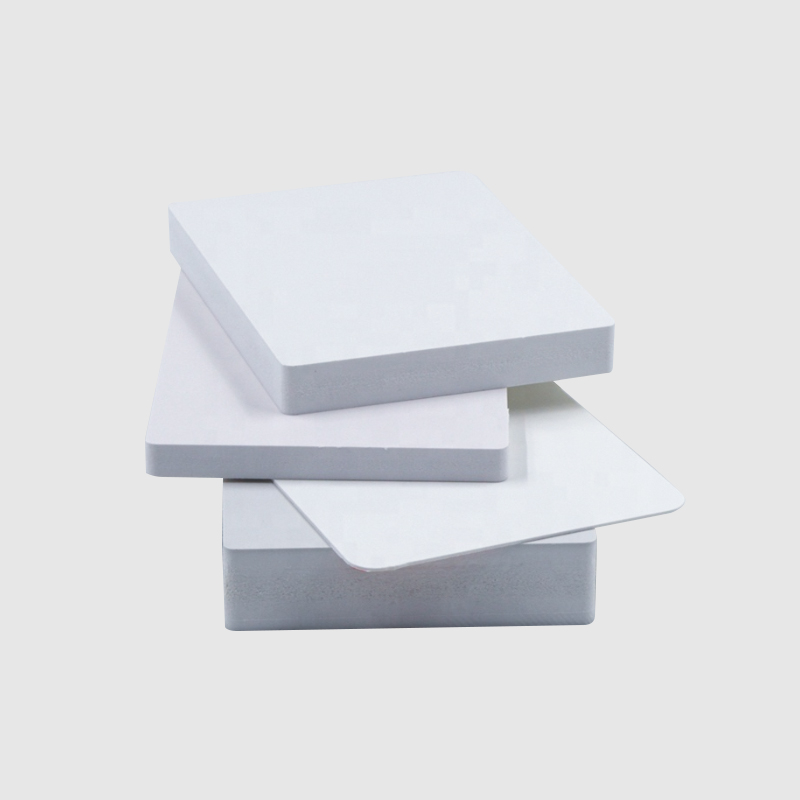
 Co-extruded PVC Foam Board for Cabinet and Furniture Applications, 3–18 mmDesigned for cabinet doors, panels, and interior decoration, this board offers dimensional stability, smooth finishing, moisture resistance, and CNC machinability. Its 0.2% water absorption and fire-retardant options support demanding fabrication workflows.View Product →
Free Foam or Co-Extruded: Two Fabrication Profiles
Free-foam board and co-extruded board are not interchangeable in a fabrication workflow. The deciding factor is what the surface and edge must survive.
Free-foam profile
No dense cap, Shore D hardness around 55-62, coarser cell structure, lower material cost. It cuts easily and prints acceptably for short-term signage. Best for display panels, architectural models, and projects where soft edges are acceptable.
Co-extruded profile
Dense cap at 72-80 Shore D, fine closed cells, higher stiffness and screw holding. The right structure for cabinet doors, bathroom furniture, outdoor displays, and parts that see repeated machining or demanding edge work.
Surface hardness by board structure, Shore D scale
The fastest factory test for a co-extruded board is a 45-degree bevel route at normal feed speed. If the cap stays clean and bonded, the rest of the structure will normally perform in production. If it whitens or lifts, no datasheet number can save that batch.
Five-Step Selection Workflow
Use this order when selecting the structure for a new fabrication project. Skipping a step is the main reason a board that looks good in a sample box fails in a production run.
- Identify the harshest operation in your line. The operation with the deepest tool engagement, highest cure temperature, or longest moisture exposure sets the structural minimum.
- Set cap thickness from the surface requirement. At least 0.3 mm for CNC work, 0.4 mm for repeated edge banding, and 0.5 mm for heavy hinge loads.
- Set core density from mechanical load. Use 0.5-0.6 g/cm3 for printing and display work, 0.65-0.8 g/cm3 for cabinet carcasses, and above 0.8 g/cm3 for structural panels.
- Verify with a production-tolerance sample batch. Ask for five sheets from different production slots, not one hand-picked sample, and run the three checks above on each sheet.
- Match sheet format to cut yield. Standard 1220 x 2440 mm is economical for most parts; 2050 x 3050 mm reduces waste when nesting large cabinet panels or point-of-purchase displays.
Structure is a supply decision, not a grade label. The same co-extruded product family can ship with a 0.2 mm or a 0.5 mm cap, and the fabrication behavior is completely different.
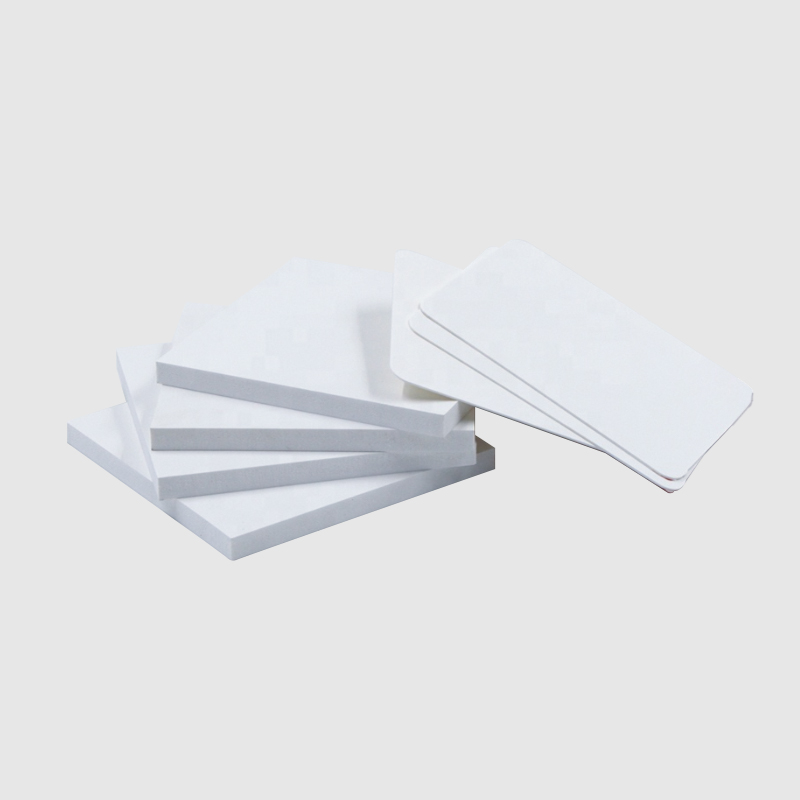
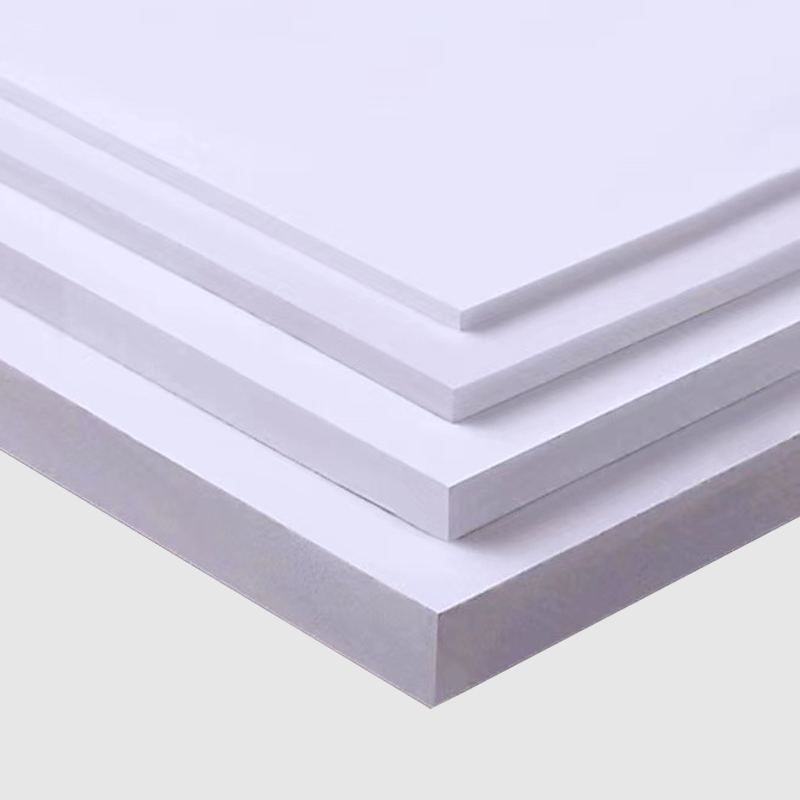 Structural PVC Co-extruded Foam Sheet, 16 mm, 1.22×2.44 m, Durable Rigid CoreA robust 16 mm co-extruded board engineered for structural uses, with a strong plastic core and durable faces. Recommended when hinge recesses or routed edges demand a thicker cap for reliable performance in production.View Product →
Frequently Asked Questions
What cap thickness should I specify for CNC-routed cabinet doors?
Specify at least 0.3 mm per face, and 0.4 mm when hinge recesses are routed through the cap. Measure the cap on a fresh cut edge with a 10x loupe at three positions along the width; reject the lot if the average is below 0.25 mm.
Can a co-extruded board be UV printed without primer?
Yes, when the cap is a lead-free white compound with surface energy above 38 dynes/cm. Ask the manufacturer for a dyne test result and a printed adhesion cross-hatch sample before approving the first order.
What core density do cabinet fabricators typically use?
Most cabinet and bathroom-furniture shops order 0.65-0.75 g/cm3 core density in 15 mm to 18 mm thickness. That range holds screws reliably and gives enough rigidity for door panels up to 600 mm wide.
How do I test co-extrusion bond quality on a sample?
Route the edge at a 45-degree bevel using your normal feed speed and inspect for whitening or cap lift. Run the test on five random sheets from different production slots; a clean, continuous bevel line across all five is the most reliable structure check available in a workshop.
When you evaluate suppliers, ask for a structural spec sheet that states cap thickness, core density, and bond test results across batches. A manufacturer with documented co-extrusion experience should provide those numbers in writing; that traceability is the real foundation of a fabrication line without surprises.
Recommended NEWS:
How to deal with board deformation during the production process of PVC Celuka Board?
How does PVC co-extruded foam board provide excellent waterproof performance to ensure the service life of furniture?
How to choose the right Laminated PVC foam board according to the surface treatment and lamination type
What factors affect the appearance of High Density Waterproof PVC Composite Boards Wall Panel?
How to ensure the installation quality of PVC Ceiling Panel
Laminated PVC Foam Board has the advantages of being moisture-proof and water-resistant compared to other materials
Related Products


Jiatao Industry Co., Ltd. is a professional manufacturer of polyvinyl chloride plastic boards in China, dedicated to the production of PVC foam boards, plastic wood foamboards, as well as colorful pVC for extruded foam board sheet manufacturers.
-
ADDRESS
No.65 Liminba, Yinong Town, Xiaoshan District, Hangzhou, Zhejiang, China
-
EMAIL
-
PHONE
+86-17816178586
MOBILE SITE



Copyright © Jiatao Industry Co., Ltd. All Rights Reserved.
Custom Rigid PVC Plastic Foam Boards Suppliers

Contact Us