

 English
 Español
 عربى
عربى
Home / News / Industry News / How the Structure of a PVC Co-extruded Foam Board Improves CNC Routing Precision and UV Ink Adhesion
How the Structure of a PVC Co-extruded Foam Board Improves CNC Routing Precision and UV Ink Adhesion
Article Directory
- 1 1. The Co-extrusion Morphology: Hard Skin vs. Cellular Core
- 2 2. Enhancing CNC Routing Precision and Edge Definition
- 3 3. Optimizing UV Ink Adhesion and Color Vibrancy
- 4 4. Durability in Demanding Environments
- 5 5. Frequently Asked Questions (FAQ)
- 5.1 1. Is pvc co-extruded foam board suitable for laser cutting?
- 5.2 2. Can I use this board for pvc co-extruded foam board for kitchen furniture?
- 5.3 3. What makes co-extruded board the best pvc foam board for outdoor signage?
- 5.4 4. How does high density pvc co-extruded board handle screw retention?
- 5.5 5. What are the common pvc co-extruded foam board dimensions available?
- 6 Industry References
In the high-precision world of industrial advertising and building decoration, material morphology dictates the quality of the final output. The pvc co-extruded foam board represents a pinnacle of polymer engineering, utilizing a "sandwich" structure that separates it from standard expanded PVC. Jiatao Industrial Co., Ltd., a premier Chinese manufacturer with an annual capacity of 25,000 tons, specializes in high-end pvc co-extruded foam board production. By employing advanced extrusion technology and fine cooling solidification processes, we provide materials that meet the rigorous demands of the US, German, and Japanese markets. Understanding the mechanical synergy between the high-density skin and the micro-cellular core is essential for optimizing both CNC machining and digital printing workflows.
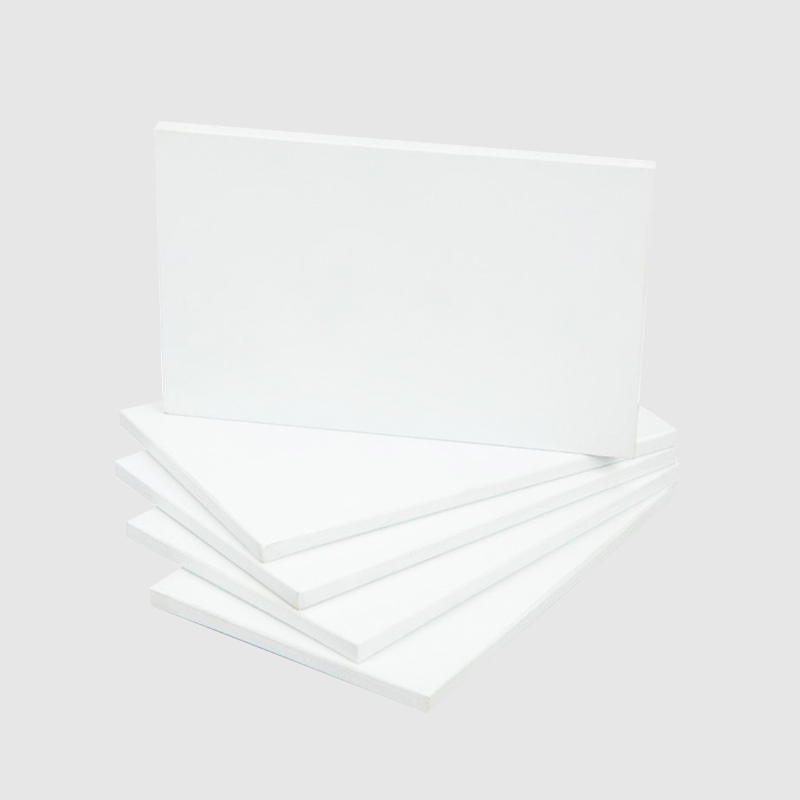
1. The Co-extrusion Morphology: Hard Skin vs. Cellular Core
The core innovation of a pvc co-extruded foam board lies in its simultaneous extrusion process. Unlike free-foam boards which have a consistent, relatively soft density throughout, co-extruded boards feature a high-density, rigid outer skin on both sides. This hard surface acts as a structural exoskeleton. While free-foam boards are susceptible to surface indentation, the co-extruded variant offers superior impact resistance and stiffness. This structural rigidity is a key factor when considering pvc co-extruded foam board vs free foam for structural applications, as the co-extruded surface provides a much higher Rockwell hardness rating.
| Feature | Free-Foam PVC Board | PVC Co-extruded Foam Board |
| Surface Hardness | Lower (Easy to scratch) | High (Hard, glossy, and scratch-resistant) |
| Density Distribution | Uniformly porous | High-density skin / Low-density core |
| Structural Rigidity | Flexible | Very Stiff (Higher flexural modulus) |
2. Enhancing CNC Routing Precision and Edge Definition
Precision in CNC routing is determined by the material's ability to resist "chatter" and heat deformation during high-speed spindle movements. When cutting pvc co-extruded foam board with CNC, the rigid skin provides a stable entry and exit point for the router bit, preventing the "burring" common in softer substrates. The high-density surface ensures that thin walls and intricate geometric designs maintain their dimensional integrity under mechanical stress. Furthermore, pvc co-extruded foam board for cabinet making benefits from this clean-edge finish, as it requires significantly less post-processing or manual sanding compared to standard foam boards.
| Routing Metric | Standard Foam Board Result | Co-extruded Foam Board Result |
| Edge Smoothness | Rough/Porous | Crisp/Closed-cell finish |
| Dimensional Tolerance | Variable due to vibration | High (Stable during high-speed feed) |
| Heat Resistance | Softens at bit contact point | Resistant (Hard skin dissipates heat better) |
3. Optimizing UV Ink Adhesion and Color Vibrancy
For the advertising industry, uv printing on pvc foam board is the primary method of visual communication. The performance of UV-curable inks is highly dependent on surface tension and porosity. The surface of a pvc co-extruded foam board is non-porous and chemically optimized during our fine cooling solidification process. This prevents the ink from "sinking" into the core, which typically happens with more porous boards, leading to duller colors. By keeping the ink on the absolute surface of the hard skin, the board achieves higher color density and better mechanical bonding. This makes it the best pvc foam board for outdoor signage, as the ink film is less likely to crack or peel when exposed to thermal expansion.
Comparison: Ink Absorption and Visual Clarity
The closed-cell surface of co-extruded boards allows for finer droplet control (picoliter accuracy), whereas porous boards cause "dot gain," which reduces image sharpness.
| Printing Metric | Porous Free-Foam Surface | Co-extruded Hard Skin Surface |
| Ink Absorption | High (Loss of saturation) | Zero (Maximized saturation) |
| Image Sharpness | Moderate (Ink spreads) | Excellent (Ink stays in place) |
| Adhesion Strength | Mechanical lock only | Chemical and mechanical bonding |
4. Durability in Demanding Environments
Beyond aesthetics, the durability of pvc co-extruded foam board is significantly higher due to its weather-resistant skin. The outer layers are often enriched with UV stabilizers that protect the internal foam core from degradation. For industries such as transportation interior decoration or building decoration, the waterproof pvc co-extruded foam board properties are essential. The co-extrusion process creates a seamless seal that prevents moisture ingress, which is why Jiatao Industrial products are trusted by over 10 of the world's top 500 enterprises. Whether used as high density pvc co-extruded board for partitions or as a substrate for pvc co-extruded foam board for kitchen furniture, the material remains warp-free and mold-resistant over long service lives.
Engineering and Processing Best Practices:
- CNC Bit Selection: Use "O-flute" carbide bits to ensure efficient chip removal from the cellular core.
- Surface Preparation: Although pre-treated, ensure the skin is free of static dust for uv printing on pvc foam board applications.
- Thermal Management: Account for a linear expansion coefficient of approximately 0.06mm/m°C during outdoor installation.
- Adhesive Use: For furniture, use PVC-specific solvent cements or high-bond strength double-sided tapes for maximum surface adhesion.
5. Frequently Asked Questions (FAQ)
1. Is pvc co-extruded foam board suitable for laser cutting?
While possible, CNC routing is highly recommended over laser cutting. CNC provides a cleaner edge without the risk of thermal discoloration or the release of chlorine gas associated with laser-cutting PVC materials.
2. Can I use this board for pvc co-extruded foam board for kitchen furniture?
Yes. Its high surface hardness and waterproof nature make it an ideal replacement for MDF or plywood in wet areas. It will not swell or rot when exposed to humidity.
3. What makes co-extruded board the best pvc foam board for outdoor signage?
The combination of a UV-stabilized hard skin and a moisture-proof core ensures the board remains flat and the printed graphics remain vibrant even under direct sunlight and rain.
4. How does high density pvc co-extruded board handle screw retention?
The rigid skin provides significantly better screw pull-out resistance than free-foam boards, making it reliable for hinge mounting and structural assembly in the furniture industry.
5. What are the common pvc co-extruded foam board dimensions available?
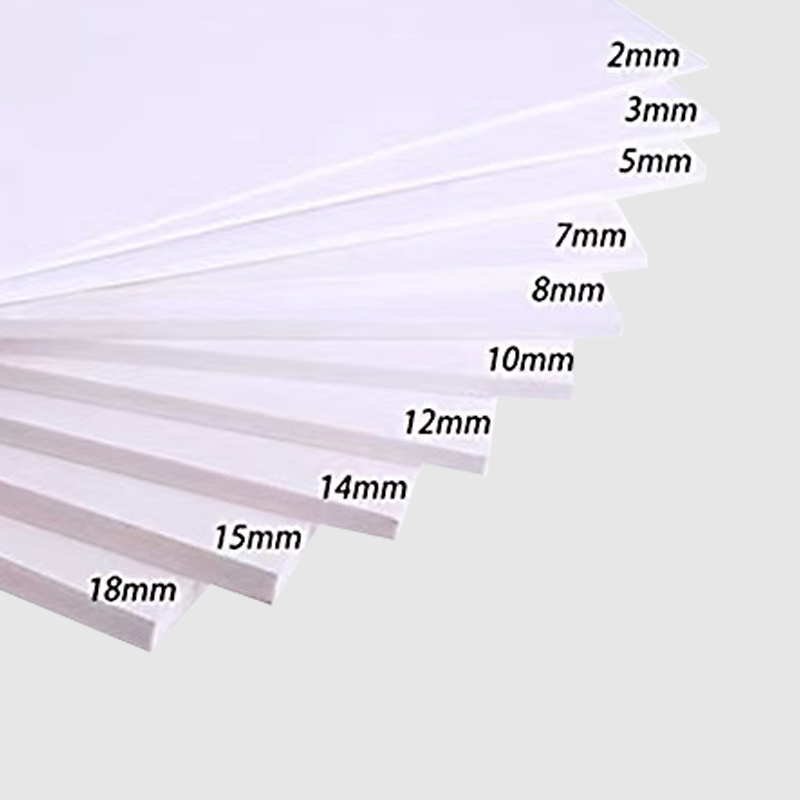
Standard sizes typically include 1220mm x 2440mm, with thicknesses ranging from 3mm to 30mm. Custom sizes can often be produced by Jiatao Industrial to meet specific project requirements.
Industry References
- ISO 1183-1: Plastics — Methods for determining the density of non-cellular plastics.
- ASTM D790: Standard Test Methods for Flexural Properties of Unreinforced and Reinforced Plastics.
- Graphic Solutions Association: Technical Bulletin on UV Ink Adhesion on Polymeric Substrates.
- Jiatao Industrial Internal R&D: Impact of Co-extrusion Cooling Rates on Surface Rockwell Hardness (2025).
Recommended NEWS:
PVC Free Foam Board's multiple applications and environmental advantages in the field of transportation
How to deal with board deformation during the production process of PVC Celuka Board?
How does PVC co-extruded foam board provide excellent waterproof performance to ensure the service life of furniture?
Laminated PVC Foam Board has the advantages of being moisture-proof and water-resistant compared to other materials
WPC Foam Board: Lightweight and easy to process, leading the new trend of building materials
What factors affect the appearance of High Density Waterproof PVC Composite Boards Wall Panel?
Related Products

Jiatao Industry Co., Ltd. is a professional manufacturer of polyvinyl chloride plastic boards in China, dedicated to the production of PVC foam boards, plastic wood foamboards, as well as colorful pVC for extruded foam board sheet manufacturers.
-
ADDRESS
No.65 Liminba, Yinong Town, Xiaoshan District, Hangzhou, Zhejiang, China
-
EMAIL
-
PHONE
+86-17816178586
MOBILE SITE



Copyright © Jiatao Industry Co., Ltd. All Rights Reserved.
Custom Rigid PVC Plastic Foam Boards Suppliers

Contact Us