

 English
 Español
 عربى

Home / News / Industry News / PVC Celuka Foam Board vs Standard PVC Foam Board: Key Differences for Buyers
PVC Celuka Foam Board vs Standard PVC Foam Board: Key Differences for Buyers
Article Directory
A buyer comparing a 5 mm sheet for UV printing with an 18 mm sheet for cabinet doors is not comparing like with like. Standard PVC foam board and PVC Celuka foam board can look identical in a catalog thumbnail, but they are made by different extrusion processes and behave differently at the router, under the printer, and behind a hinge.
The difference comes down to surface structure: standard board has a soft, porous skin, while Celuka board has a hard, closed skin over a cellular core. That one design decision changes density, edge quality, screw holding, and project cost.
Key buyer takeaway
Choose standard free foam for printed displays and low-cost short-run sheets. Choose Celuka board when the panel will be routed, fixed with hardware, or exposed to handling.
What Does Standard PVC Foam Board Really Mean?
Standard PVC foam board, also called free foam board, is a single-layer extruded sheet with a micro-porous core and a comparatively soft matte surface. In the free-foam process, the PVC melt expands as it leaves the die, and the outer layer is not compressed into a separate hard skin. Density usually ranges from 0.40 to 0.65 g/cm3, and thicknesses from 1 mm to 30 mm are available.
Most print and display fabricators know this material by trade names such as Forex, Sintra, or Sunboard. It is preferred for flatbed UV printing because the surface accepts ink quickly and holds fine detail. It is also easy to cut on a CNC machine, but the edge remains slightly open and porous, which may matter on visible routed profiles.
For flat printed graphics, free foam board is the most cost-effective PVC substrate. For parts that will be machined, handled, or hinged, the soft edge can become a quality complaint.
What Is PVC Celuka Foam Board?
PVC Celuka foam board, also known as cellular PVC, is formed by a controlled foaming process that produces a dense, smooth outer skin over a closed-cell foam core. The die temperature and pressure are managed so that the melt adjacent to the die wall solidifies first, while the interior keeps foaming. The result is a harder surface and a cleaner edge than free-foam PVC gives.
Celuka boards typically run from 3 mm to 20 mm thick in 4x8 ft format, with a density of 0.60 to 0.80 g/cm3. The skin is not a separate laminated layer; it is part of the same extruded profile. Furniture makers and architectural processors select Celuka when a panel must hold a screw, resist impact, or keep a sharp routed edge. A broader look at machining and quality limits is in our PVC Celuka foam board properties and uses quality guide.
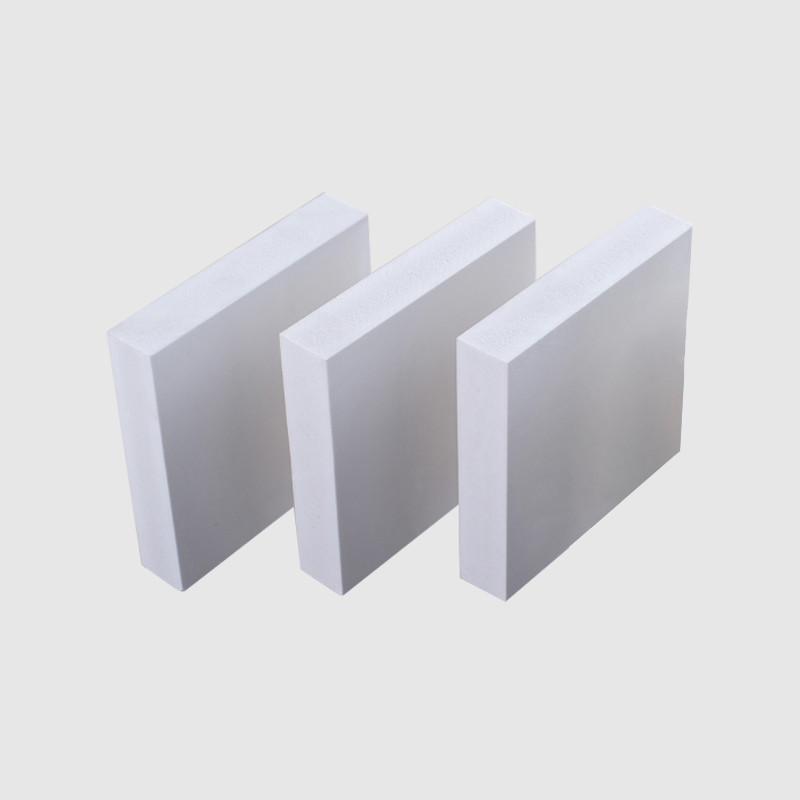 High-Density 20mm White Celuka PVC Foam Board 4x8ftThis thick Celuka board offers a hard, impact-resistant extruded skin suited for screw holding, sharp routed edges, and furniture or architectural use where standard PVC board falls short.View Product →
Celuka extrusion definition: a PVC foam process that controls the melt at the die surface to create a hard outer skin and a cellular inner section in one continuous board profile.
Key Differences at a Glance
The practical difference for buyers is the surface skin. Standard PVC board gives you a soft, ink-friendly face; Celuka board gives you a hard, impact-resistant face. Everything else follows from that.
| Attribute | Standard PVC foam board | PVC Celuka foam board |
| Manufacturing process | Free-foam extrusion | Controlled Celuka extrusion |
| Surface skin | Soft, matte, micro-porous | Hard, smooth, dense skin |
| Core structure | Open-cell foam | Closed-cell foam with dense shell |
| Usual density | 0.40-0.65 g/cm3 | 0.60-0.80 g/cm3 |
| Typical thickness | 1-30 mm | 3-20 mm |
| Ink adhesion | Excellent without pre-treatment | Good; may need surface treatment for solvent ink |
| Routing and edge finish | Okay for simple cuts; edges slightly porous | Clean, hard edges ideal for CNC routing |
| Screw holding | Lower pullout strength | Higher pullout strength |
| Impact resistance | Moderate | High |
| Relative cost | Lower per sheet | Higher per sheet, but can use thinner gauge |
Do not compare only the price per sheet. Compare the cost of the finished part, including cutting time, rejects, edge finishing, and hardware installation.
Surface Hardness and Print Performance
Use the board that matches the finish line: standard board for direct printing, Celuka board for routed letters, cabinet doors, and architectural panels. Print shops choose standard PVC foam board because the open-cell matte face produces high ink holdout and even color. The same openness becomes a disadvantage when the board is routed into letters: the cut edge exposes tiny foam cells that can make paint and primer look blotchy.
Standard PVC foam board suits
- UV printing and screen printing
- POP displays and exhibition boards
- Prototyping and building models
- Light indoor signage
PVC Celuka board suits
- CNC routed signs and letters
- Kitchen and bathroom cabinet doors
- Wall panels and ceilings
- Racking, enclosures, and shelving
Test the edge before placing a production order. Route a sample, paint half of it, and compare the surface with a Celuka sample under workshop lighting.
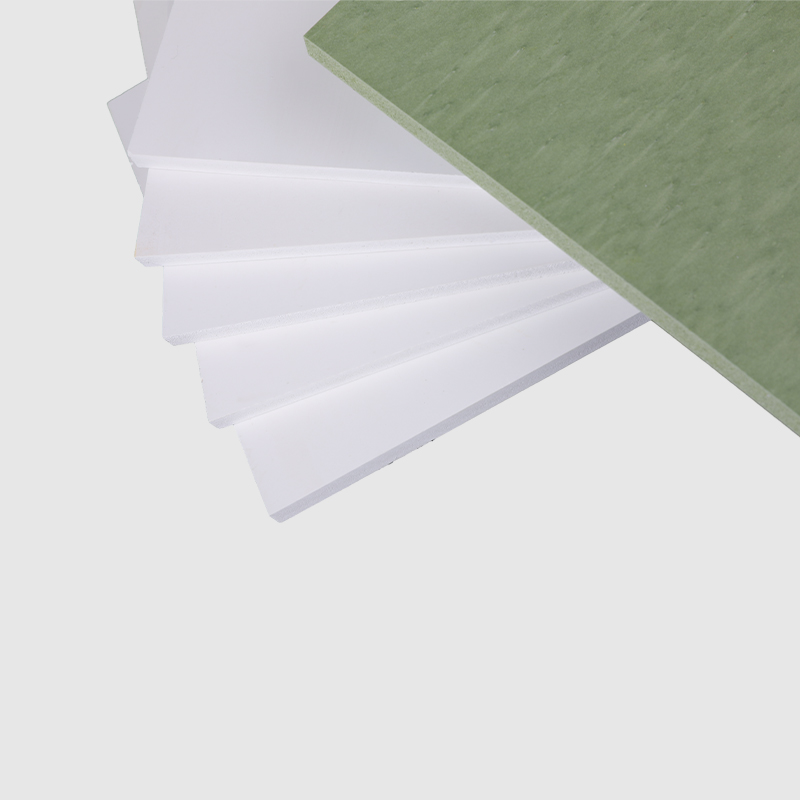 5mm UV-Printable Sintra PVC Sheet for SignageA rigid, closed-cell PVC sheet engineered for UV flatbed printing and banner applications, providing consistent ink adhesion and dimensional stability for indoor signs and retail displays.View Product →
Density, Strength, and Structural Use
Celuka board is stiffer than standard PVC foam board at the same average density because the dense skin bears a disproportionate share of the bending load. That makes Celuka the safer option for unsupported shelves, cabinet frames, wall panels, and any component that will carry a latch or hinge.
- Bending stiffness: the dense skin of Celuka resists flexing, so cabinet shelves stay flat over long spans.
- Screw retention: fasteners bite into a harder layer, giving higher pullout strength for hinges and handles.
- Edge quality: Celuka edges can be routed, rounded, and reamed without exposing visible foam cells.
- Panel flatness: the skin helps the panel resist bowing when humidity changes.
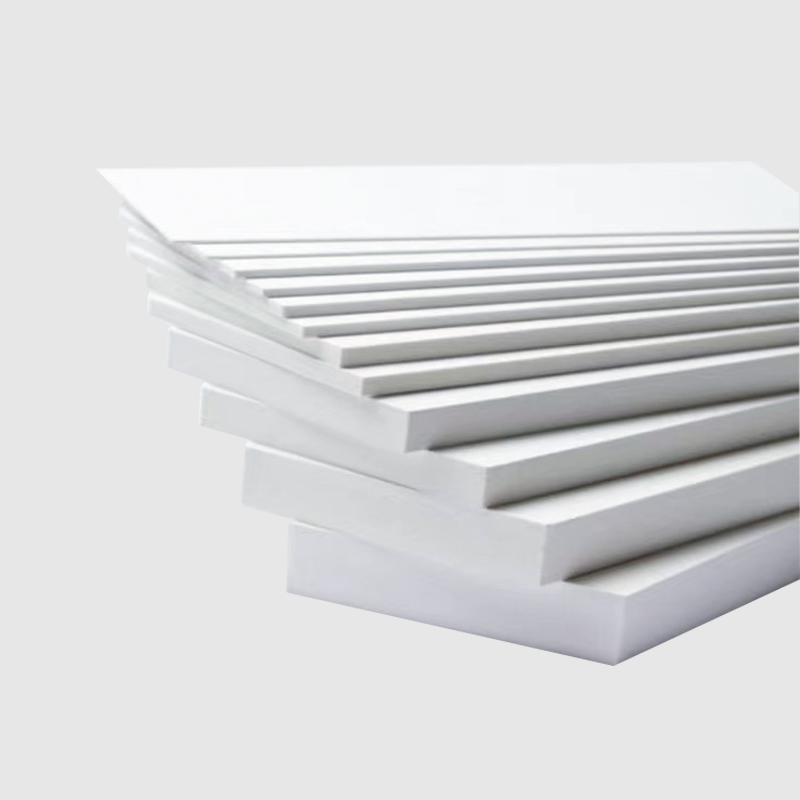 Recyclable 3-17mm White Celuka PVC Foam Board for FurnitureThis Celuka sheet combines a dense, rigid skin with a fine closed-cell core, allowing thinner panels to match standard stiffness—reducing freight and expanding design options for cabinets and panels.View Product →
Structural panels need more than density numbers: check flatness, skin thickness, and the degree of closed cells at the edge. A good Celuka sheet should cut cleanly without a visible open-cell ring near the skin.
Procurement and Price: What Buyers Should Watch
A lower sheet price can be misleading when fabrication waste, freight weight, and panel performance are added into the total landed cost. Standard PVC foam board is cheaper per sheet, but Celuka board often allows you to reduce thickness by 2-3 mm for the same stiffness, which lowers freight and expands the design range.
Because both boards are made from PVC, raw material cost moves similarly, but the Celuka process adds closer die control and slower cooling. Expect a premium of roughly 20-35 percent for Celuka board at the same thickness and density. In return, you get fewer rejected parts and less finishing labor on visible edges.
When sourcing, use a manufacturer that can prove batch-to-batch consistency. A company such as Jiatao Industrial Co., Ltd. has production capacity and quality control procedures for both product families. Our company overview explains the factory setup and export experience.
Ask your supplier to declare density tolerance for each batch. A maximum drift of plus or minus 5 percent should be achievable for continuous Celuka extrusion.
How to Make the Final Decision
Apply the application-first rule: when the product will be printed and framed, standard board is enough; when it will be routed, fixed, or seen from close range, choose Celuka. This simple filter answers 90 percent of sourcing questions before you open the price list.
- Identify the primary operation: printing, routing, or structural assembly.
- Confirm thickness and sheet size with the buyer; 4x8 ft is the most common format for both types.
- Match hardware requirements: hinged doors and screwed enclosures should use Celuka.
- Request a sample and run the same ink, blade, or paint you use in production.
Quick rule: if the customer will touch, route, or hang the panel, choose Celuka. If it will be printed, mounted, and viewed from a distance, standard board can save money.
Frequently Asked Questions
Buyers ask four questions before ordering PVC foam board.
Can standard PVC foam board be used for CNC routing?
Yes, but the cut edge will show a porous cell structure and may absorb paint unevenly. For visible routed edges, use Celuka board or specify a high-density standard grade and test edge finish first.
Is Celuka board better for outdoor use?
Celuka board is more weather-resistant than standard free foam because the closed surface slows water absorption and limits UV attack on the core. Outdoor panels still need UV-resistant paint or laminate, and edge sealing is essential.
Does Celuka board cost much more than standard PVC foam board?
Per sheet, Celuka board usually costs 20-35 percent more at the same thickness and density. The saving appears in fabrication: less scrap, fewer rejected routed parts, and longer service life in furniture or signage.
How can I test the difference quickly?
Press a fingernail into the face of the board. Standard board leaves a small dent; Celuka board resists the pressure. For a clearer test, cut a clean edge with a sharp knife: a standard board has a fine foam texture, while a Celuka edge is smooth and almost skin-like.
Recommended NEWS:
PVC Free Foam Board's multiple applications and environmental advantages in the field of transportation
Custom Laminated PVC Foam Board: A versatile material with excellent waterproof performance
The price of PVC Foam Board is affected by the cost of raw materials
White Laminated PVC Free Foam Boards: Environmentally friendly and sustainable production
Fireproofing of Custom Laminated PVC Foam Boards
Laminated PVC Foam Board has the advantages of being moisture-proof and water-resistant compared to other materials
Related Products


Jiatao Industry Co., Ltd. is a professional manufacturer of polyvinyl chloride plastic boards in China, dedicated to the production of PVC foam boards, plastic wood foamboards, as well as colorful pVC for extruded foam board sheet manufacturers.
-
ADDRESS
No.65 Liminba, Yinong Town, Xiaoshan District, Hangzhou, Zhejiang, China
-
EMAIL
-
PHONE
+86-17816178586
MOBILE SITE



Copyright © Jiatao Industry Co., Ltd. All Rights Reserved.
Custom Rigid PVC Plastic Foam Boards Suppliers

Contact Us