

 English
 Español
 عربى
عربى
Cat:PVC Foam Board
The PVC foam board is engineered for use in advertising, signage, and construction applications. Manufactured using extrusion technology with controll...
See DetailsArticle Directory
In the digital imaging and advertising industries, achieving high-definition results on rigid substrates requires more than just high-performance printers; it requires a deep understanding of substrate surface science. The white pvc foam board has become the preferred medium for UV flatbed printing due to its lightweight and durable nature. However, the success of the printing process is primarily dictated by "Surface Energy." Jiatao Industrial Co., Ltd., a professional manufacturer in China with an annual capacity of 25,000 tons, utilizes advanced extrusion technology to optimize the white pvc foam board for high-end markets. Our boards are exported to over a dozen countries, serving top-tier advertising and furniture industries. This article explores the technical correlation between surface energy of PVC foam sheets and ink adhesion, and how to improve PVC foam board ink adhesion for professional results.
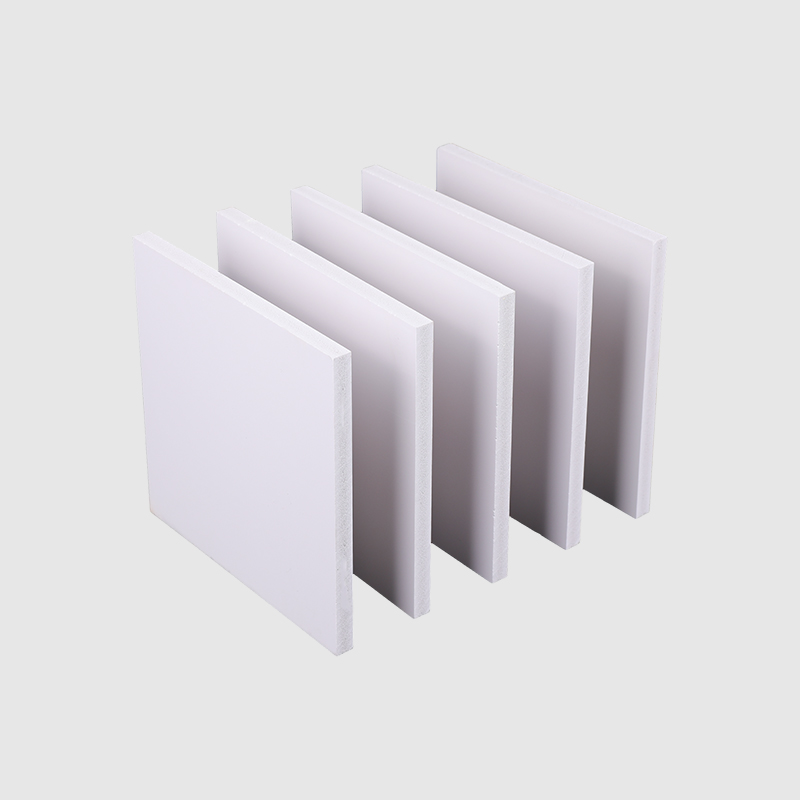
Surface tension, measured in dynes/cm, determines whether UV-curable ink will "wet" the surface of the white pvc foam board or form beads. For high-definition output, the surface energy of the board must be higher than the surface tension of the ink. If the pvc foam board dyne level for UV printing is too low, the ink will fail to spread uniformly, leading to "pinholing" or poor color saturation. When comparing matte vs glossy PVC foam board for printing, matte surfaces typically offer better mechanical anchoring for the ink, whereas glossy surfaces require higher surface energy to prevent ink retraction. Understanding the best white PVC foam board for signage involves evaluating the balance between surface smoothness and chemical receptivity.
| Surface Condition | Interaction with UV Ink | Final Print Quality |
| Low Dyne Level (<34 dynes/cm) | Ink beading / Poor wetting | Low resolution; ink peeling |
| Optimal Dyne Level (38-42 dynes/cm) | Controlled spreading | High-definition; vibrant colors |
| Excessive Surface Tension | Excessive ink gain | Loss of fine detail; dot gain issues |
The white pvc foam board is naturally prone to static electricity during the extrusion and handling process. Static attracts dust, which acts as a barrier between the ink and the substrate, directly impacting the high definition UV printing on PVC board quality. Jiatao Industrial uses fine cooling solidification and advanced processes to minimize these issues, yet removing static from PVC boards before printing remains a critical step for the operator. Furthermore, pvc foam board surface treatment techniques, such as corona treatment, are often employed to artificially raise the surface energy. Comparing corona treated vs untreated PVC foam board shows that treated boards maintain much higher ink grab, though the effect can diminish over time if the PVC board storage tips for printers are not followed.
Beyond the immediate print quality, surface tension influences the pvc foam board outdoor durability. High-definition prints on a white pvc foam board must withstand UV exposure and temperature fluctuations without the ink delaminating. A lightweight white PVC board for displays with optimized surface tension ensures that the chemical bond remains intact during the pvc foam board cutting and finishing process. As an important supplier in China, Jiatao Industrial ensures that our density of PVC foam board for printing is consistent, providing a stable foundation for the world's top enterprises in building decoration and transportation interior industries.
| Performance Requirement | Impact of Surface Tension | Technical Result |
| Scratch Resistance | Stronger molecular bond | Improved handling durability |
| Weathering | Prevents moisture ingress at ink edge | Extended outdoor lifespan |
| Flexibility | Consistent ink film thickness | No cracking when the board is bent |
The white pvc foam board is far more than a simple plastic sheet; it is a technically engineered substrate where surface tension plays the lead role in high-definition UV flatbed printing. By managing the pvc foam board dyne level for UV printing and utilizing Jiatao Industrial's advanced extrusion foam board technology, professionals can ensure vibrant, durable, and precise results. Our team remains focused on development and production to provide the best possible service, ensuring that our PVC plates continue to lead the high-end global market.
For most UV-curable inks, a dyne level of 38 to 42 dynes/cm is considered ideal. Values below 34 dynes/cm often lead to adhesion failure and poor high definition UV printing on PVC board results.
If the surface energy has dropped over time, you can use a topical primer or a corona treatment device. Alternatively, a light wipe with specialized surface promoters can temporarily raise the dyne level for better uv printing on pvc board.
While density primarily affects the board's weight and rigidity, higher-density boards often have a smoother, less porous surface finish, which can make the surface energy of PVC foam sheets more uniform across the entire plate.
Matte white pvc foam board is generally easier for UV printing because its micro-textured surface provides a better mechanical key for the ink, making it the best white PVC foam board for signage for high-volume production.
Keep the boards in a cool, dry environment, away from direct sunlight and dust. Avoid stacking them in areas with high humidity, as moisture can alter the chemical receptivity of the expanded PVC board for digital printing.
The PVC foam board is engineered for use in advertising, signage, and construction applications. Manufactured using extrusion technology with controll...
See Details
The 48ft PVC foam board sheet panel is engineered for applications in cabinet furniture manufacturing, providing a consistent and stable substrate for...
See Details
The panels are made from high quality PVC foam that resists termite infestation, making them ideal for areas prone to wood damage. The white colour ad...
See Details
Made from high quality PVC plastic, these sheets are durable and long-lasting, ensuring that your advertising efforts can withstand a variety of weath...
See Details
16mm 1.22x2.44m Structural PVC Co-Extruded Foam Sheet is a strong and durable material designed for structural applications. With a thickness of 16mm ...
See Details
Waterproof Fire Retardant PVC Foam Board is a high quality and reliable material built specifically for kitchen and bathroom cabinets. With a thicknes...
See Details
Characteristics: PVC board and other multi-hollow materials with similar acoustic properties noise reduction data in the range of 0.8-1.10 or so, can ...
See Details
Features: high-quality raw materials, flame retardant, sufficient inventory, moisture-proof and waterproof, support customization. Support LOGO custom...
See Details
No.65 Liminba, Yinong Town, Xiaoshan District, Hangzhou, Zhejiang, China
+86-17816178586
Copyright © Jiatao Industry Co., Ltd. All Rights Reserved.
Custom Rigid PVC Plastic Foam Boards Suppliers




Contact Us