

 English
 Español
 عربى
عربى
Home / News / Industry News / Future Trends in PVC Foam Board Technology: Surfaces, Sustainability, Manufacturing
Future Trends in PVC Foam Board Technology: Surfaces, Sustainability, Manufacturing
Article Directory
- 1 1. Sustainability Shifts from Optional to Baseline
- 2 2. Co-extrusion and Surface Engineering Redefine Performance
- 3 3. Density Control and Structural Grades Widen the Application Window
- 4 4. Digital Fabrication Compatibility Drives Material Specifications
- 5 5. WPC and Hybrid Formulations Open Wet-Area and Exterior Segments
- 6 Frequently Asked Questions
By 2026, a procurement email about PVC foam board rarely opens with price per sheet. Buyers now ask for density tolerance, surface hardness, lead-free declarations, and UV-print adhesion data before any trial order is placed. The technology behind these panels is answering with three visible shifts: cleaner formulations, harder and smoother surfaces, and far tighter process control across the full thickness range.
1. Sustainability Shifts from Optional to Baseline
Sustainable PVC foam board production is no longer a premium add-on; it is the working baseline for export-grade panels in 2026.
Lead-free stabilizer systems and REACH-aligned formulations now appear as standard requirements in supplier reviews, not exceptions. Recycled content is moving into the core layer of many sheets, while edge trim and offcuts from production are fed back into closed-loop extrusion lines. The result is lower virgin resin demand without losing the closed-cell structure that gives foam board its stiffness and moisture resistance.
- Lead-free calcium-zinc stabilizer systems replacing conventional metal-based options
- Recycled core content with virgin surface layers for consistent finishing
- Closed-loop regrind of edge trim and offcuts back into the extrusion run
- REACH-compliant pigment and additive packages across white and colored grades
For a manufacturer like Jiatao Industrial Co., Ltd., which runs more than 25,000 tons of annual PVC board capacity, consistency across batches matters more than the novelty of any single green claim. That is why sustainability is handled inside the process itself, not in a separate premium product line. For buyers, this means a lead-free or recycled-content requirement no longer triggers a longer lead time or a higher price tier.
WPC grades push the same logic further by blending wood fiber into the PVC matrix, which reduces plastic content in wet-area panels. For a closer look at how these formulations behave in real buildings and furniture, read our analysis of how PVC sheets perform environmentally in building and furniture applications.
25,000+
tons of annual PVC board capacity at Jiatao Industrial Co., Ltd., with lead-free and recyclable formulations now treated as standard for export production.
2. Co-extrusion and Surface Engineering Redefine Performance
Co-extruded PVC foam board is becoming the default grade wherever surface quality decides the sale, from cabinet doors to long-life signage.
Co-extrusion is a single-step process in which a dense outer cap layer and a foamed PVC core are fused into one board, producing a hard, smooth face over a lightweight cellular body. That structure delivers three advantages buyers now specify: higher surface hardness for CNC routing, lower moisture absorption for kitchens and bathrooms, and stronger ink adhesion for UV printers without a separate primer step.
The practical gap between standard free-foam board and a co-extruded grade becomes visible within the first week of fabrication.
Free-foam board
Uniform foam density from face to face. Easy to cut and thermoform, but the softer surface absorbs ink, scratches easily, and swells at exposed edges in humid rooms.
Co-extruded board
Dense cap layer over a foamed core. Resists scratches, moisture, and solvent. Cleaner routed edges and consistent color make it the first choice for cabinet doors, displays, and printed panels.
For cabinet shops, the difference in surface hardness of co-extruded foam board in cabinetry translates into fewer rejected door fronts and less edge sanding. When the specification calls for a white face that stays white after printing, a co-extruded foam board with a smooth, extra-rigid surface reduces finishing work and rework at the same time.
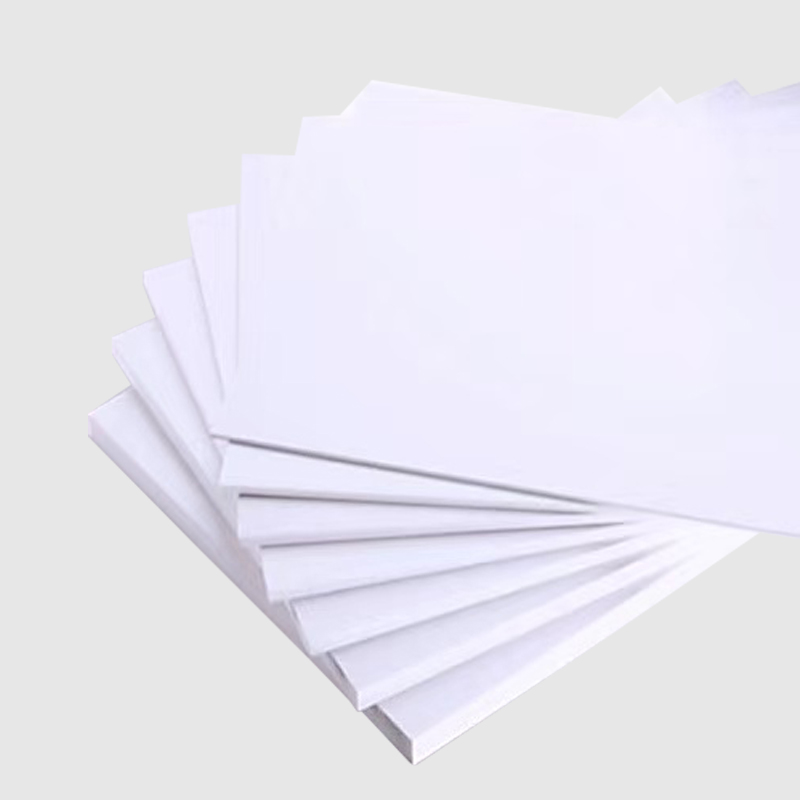 Wholesale OEM/ODM Pvc co-extruded foam board smooth surface extra rigid plastic Offer Wholesale Pvc co-extruded foam board smooth surface extra rigid plastic pvc sheets waterproof soundproof, Jiatao Industrial Co., Lt...View Product →
3. Density Control and Structural Grades Widen the Application Window
Density control, not entirely new chemistry, is driving the next round of PVC foam board performance gains, and it is why a single production line can now serve signage, furniture, and construction at the same time.
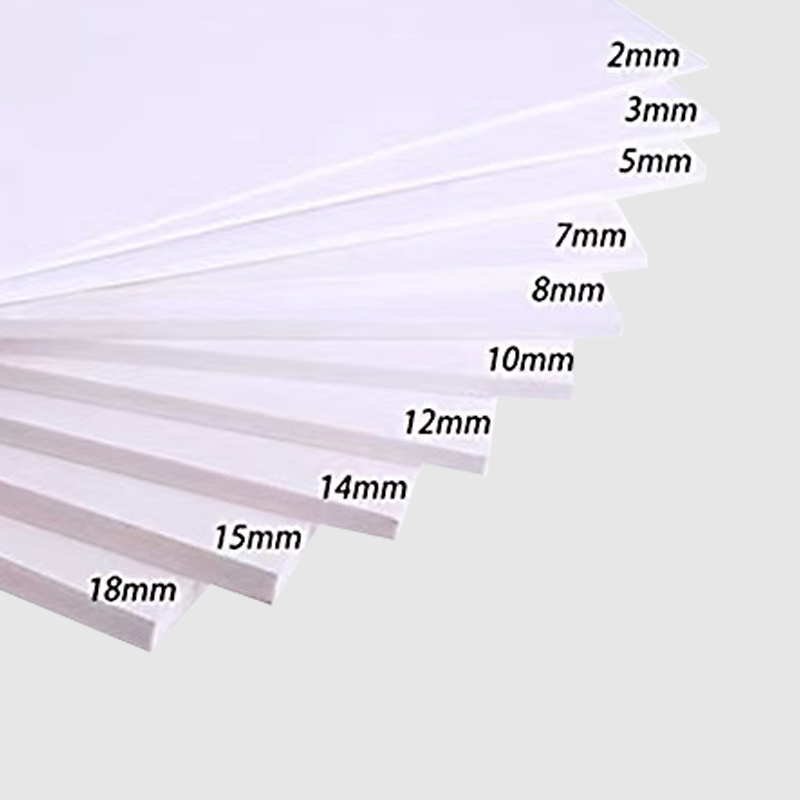
Commercial sheets run from roughly 0.4 to 0.9 g/cm3 and from 3 mm to 30 mm in thickness, with specialty boards available beyond both ends. At the low end, light panels keep shipping costs down for displays. At the high end, the board starts to behave like machinable plastic sheet: edges hold threads, screws pull out less easily, and a cabinet hinge seats without a reinforcing insert.
Typical density ranges by application (g/cm3)
Density predicts machinability, screw holding, surface hardness, and weight.
The density range is also becoming a procurement specification rather than an afterthought. A 0.55 to 0.75 g/cm3 grade suits furniture, while cladding and structural panels are moving toward 0.70 g/cm3 and above. Boards up to 330 mm thick are produced for special industrial uses, which shows how wide the application window has become.
For furniture makers that need a rigid face and a closed, waterproof core, a high-density PVC celuka board designed for furniture applications carries hinges and routed details without the flex of a standard free-foam sheet.
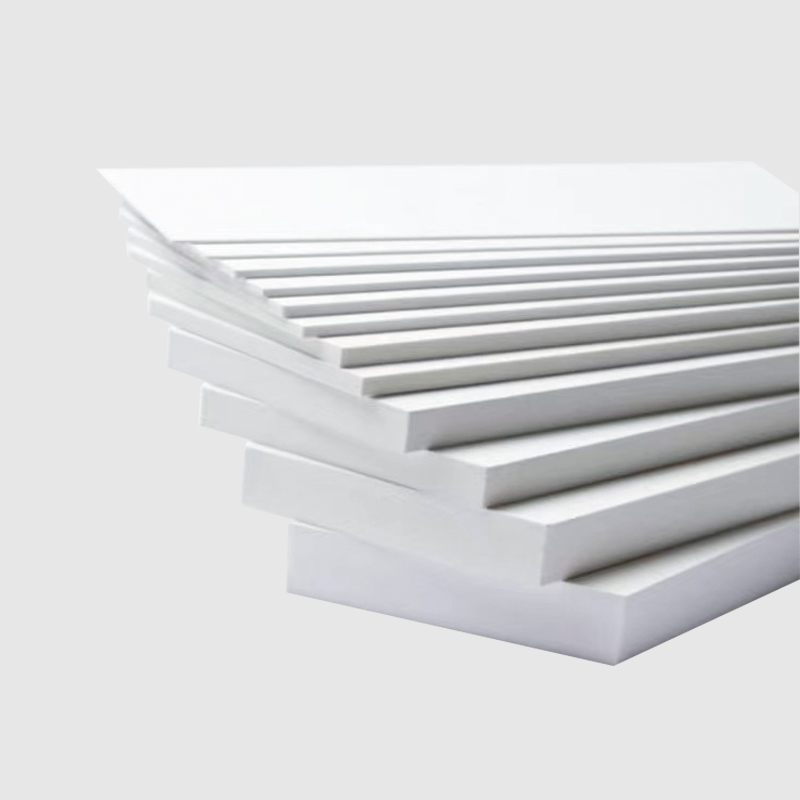 Wholesale OEM/ODM Pvc foam board celuka sheet rigid surface high density 3mm-17mOffer Wholesale Pvc foam board celuka sheet rigid surface high density 3mm-17mm furniture application water proof pvc board white color r...View Product →
4. Digital Fabrication Compatibility Drives Material Specifications
CNC routing and UV printing no longer happen after the material decision; they now dictate which PVC foam board grade a fabricator orders.
Shops report three board properties that predict digital fabrication success: flatness across a 4x8 ft panel, surface tension high enough for ink and adhesive bonding, and a fine closed-cell structure that leaves clean edges after routing and engraving. A board that fails on any of these produces ink puddling, chipped cut lines, or extra sanding that erases the margin on the job.
Select Match density and thickness to the part: 3 to 10 mm for prints, 10 to 18 mm for routed displays and furniture components.
Route Use a sharp single-flute bit; a closed-cell edge holds detail without delamination.
Prep Clean the face with a tack cloth; co-extruded and celuka surfaces normally need no primer.
Print and finish Apply UV ink directly, then trim with a consistent 0.5 mm allowance.
Because these workflows are now standard in signage and cabinet shops, manufacturers have started publishing surface-energy and flatness data in the same datasheet as density. For a full comparison of how each board family behaves, see this guide to PVC foam board types and applications across industries.
5. WPC and Hybrid Formulations Open Wet-Area and Exterior Segments
Wood-plastic composite foam board is the fastest-growing hybrid in the family because it combines wood machinability with plastic water resistance.
WPC foam board blends wood fiber into the PVC matrix, so fabricators get a panel that cuts and routes like timber, resists moisture like plastic, and holds screws well enough for cabinet carcasses, bathroom vanities, and wall cladding. In humid climates, it is replacing plywood and MDF where swelling, delamination, and mold were recurring problems.
| Family | Density (g/cm3) | Surface | Typical use |
| Free-foam | 0.45 to 0.70 | Soft, matte | Signage, displays |
| Co-extruded | 0.55 to 0.80 | Hard, smooth | Cabinetry, printed panels |
| Celuka | 0.60 to 0.85 | Dense skin | Furniture, doors |
| WPC | 0.60 to 0.85 | Wood-like | Wet areas, cladding |
Contractors specifying panels for wet areas value two things that WPC delivers consistently: dimensional stability after weeks of high humidity and predictable screw holding near routed edges. A 4x8 WPC foam board built for kitchen and bathroom cabinetry keeps installation simple and reduces long-term warranty risk compared with wood-based panels.
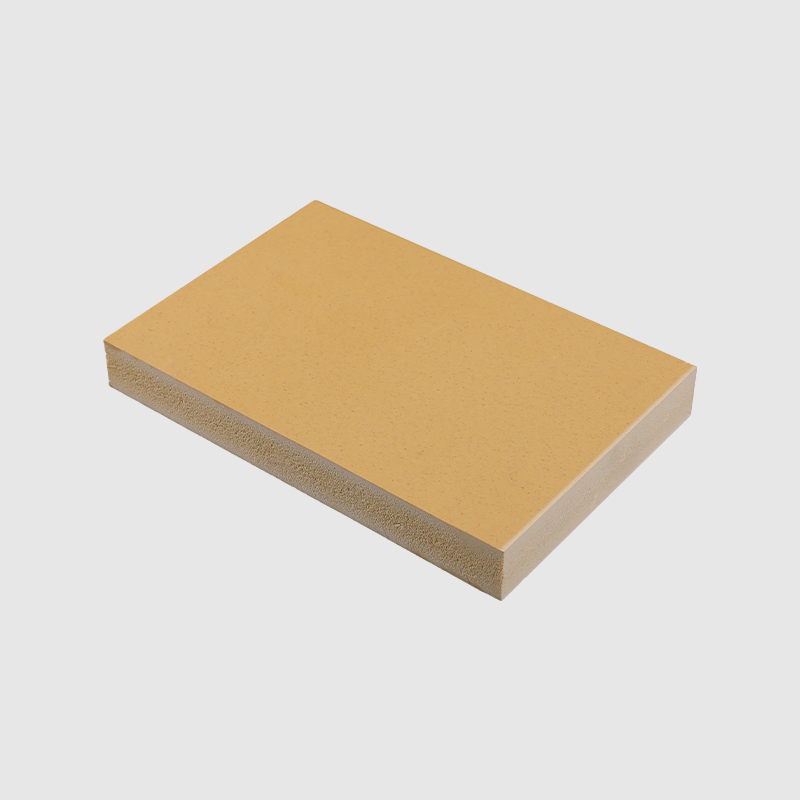 Wholesale OEM/ODM 4x8ft wood plastic composite wpc foam board waterproof pvc sheOffer Wholesale 4x8ft wood plastic composite wpc foam board waterproof pvc sheets construction kitchen bathroom cabinets cutting moulding...View Product →
Fabricator takeaway WPC panels cut callbacks in humid environments because they do not swell, delaminate, or support mold growth the way plywood and MDF do.
Frequently Asked Questions
What is the biggest trend in PVC foam board technology right now?
The biggest trend in PVC foam board technology is the combination of surface engineering and sustainability. Co-extruded and celuka boards with dense, printable surfaces are replacing free-foam sheets in furniture and signage, while lead-free and recycled formulations have become standard for export production.
Are PVC foam boards becoming more environmentally friendly?
Yes. Lead-free stabilizers, REACH-aligned ingredients, recyclable formulations, and closed-loop reuse of production scrap are now normal in large-scale manufacturing. WPC grades reduce plastic content further by blending wood fiber into the board.
How does density affect the choice of a PVC foam board?
Density predicts machining behavior, screw holding, surface hardness, and weight. Lower-density boards suit signage and displays; higher-density boards handle hinges, routing, and structural use in cabinets and cladding. Suppliers publish density ranges precisely so buyers can match the grade to the application.
Can PVC foam boards be CNC-routed and UV-printed?
Yes. A fine closed-cell structure produces clean cut edges without delamination, and co-extruded or celuka surfaces provide the ink adhesion that UV printers rely on. Always specify flatness tolerance and surface treatment when ordering for digital fabrication.
Recommended NEWS:
PVC Free Foam Board's multiple applications and environmental advantages in the field of transportation
The profound influence of production process on the weather resistance of PVC Foam Board
Custom Laminated PVC Foam Board: A versatile material with excellent waterproof performance
Fireproofing of Custom Laminated PVC Foam Boards
White Laminated PVC Free Foam Boards: Environmentally friendly and sustainable production
What environmental measures are used in the production of White Laminated PVC Free Foam Boards?
Related Products

Jiatao Industry Co., Ltd. is a professional manufacturer of polyvinyl chloride plastic boards in China, dedicated to the production of PVC foam boards, plastic wood foamboards, as well as colorful pVC for extruded foam board sheet manufacturers.
-
ADDRESS
No.65 Liminba, Yinong Town, Xiaoshan District, Hangzhou, Zhejiang, China
-
EMAIL
-
PHONE
+86-17816178586
MOBILE SITE



Copyright © Jiatao Industry Co., Ltd. All Rights Reserved.
Custom Rigid PVC Plastic Foam Boards Suppliers

Contact Us