

 English
 Español
 عربى

Home / News / Industry News / How to Select the Right PVC Foam Board for Digital Printing and Advertising Signs
How to Select the Right PVC Foam Board for Digital Printing and Advertising Signs
Article Directory
- 1 Match Board Structure to the Job Before You Compare Price
- 2 Thickness and Span Decide Whether a Printed Panel Stays Flat
- 3 Ink Adhesion: What Changes Between One Batch and the Next
- 4 Fire, Weather and Paperwork for Sign Programs
- 5 Tolerance, Cost and Supply Terms That Protect the Order
- 6 Decisions That Come Up on Every Print Job
Print a full-colour job onto the wrong grade of PVC foam board and the failure appears in the first square meter: ink that beads instead of wetting out, halos around 8 pt type, and a panel that bows 8 mm across a 900 mm span once it is hung. Choosing the right sheet for digital printing and advertising signs comes down to four measurable properties, which are skin structure, density, thickness and surface energy. All four can be checked before a production run is scheduled.
3 to 18 mmThickness band covering most printed advertising and display panels
38 mN/mMinimum surface energy for reliable UV ink wetting on rigid PVC
1220 x 2440 mmStandard sheet format used by most flatbed printers and CNC routers
This guide follows the order in which those decisions reach the finished sign: board structure, thickness and span, print surface, compliance, and finally the tolerance terms that keep an order predictable.
Match Board Structure to the Job Before You Compare Price
Free-foam, celuka and co-extruded PVC foam board are not interchangeable for digital printing, because only celuka and co-extruded sheets carry a densified skin thick enough to hold a crisp printed dot. On a 5 mm sheet the gap between the three is roughly 20 to 30 percent in price, and that money buys dot sharpness, edge quality and screw holding.
| Board structure | Surface skin | Typical density | Print behaviour | Typical sign use |
| Free foam | None to very thin | 0.35 to 0.55 g/cm3 | Ink spreads, edges stay soft | Indoor posters, 1 to 4 weeks |
| Celuka (crust) | 0.3 to 0.6 mm | 0.50 to 0.80 g/cm3 | Sharp dot, matte hold | Exhibition panels, long-run indoor signs |
| Co-extruded | 0.15 to 0.30 mm, dual layer | 0.55 to 0.90 g/cm3 | Highest face hardness, best ink hold | Printed panels, cabinet doors, structural displays |
The skin is not a coating. It forms during the cooling and sizing stage of extrusion, when the outer surface of the melt solidifies before the blowing agent finishes expanding the core. A co-extruded sheet bonds a second, harder PVC layer onto that skin, which is why two boards at the same 5 mm thickness can behave completely differently under the same print head.
Working definition: PVC foam board, also sold as Forex, Sintra, Sunboard or KT board, is a rigid closed-cell thermoplastic sheet made by extruding PVC compound with a chemical blowing agent. Its printable face is created by the extrusion and cooling profile, not by any treatment applied after the sheet leaves the line.
Where a sign will be screwed, hinged or carried between venues, start with co-extruded or celuka. Free foam remains the correct answer for short-life indoor work that is laminated or fully covered by vinyl.
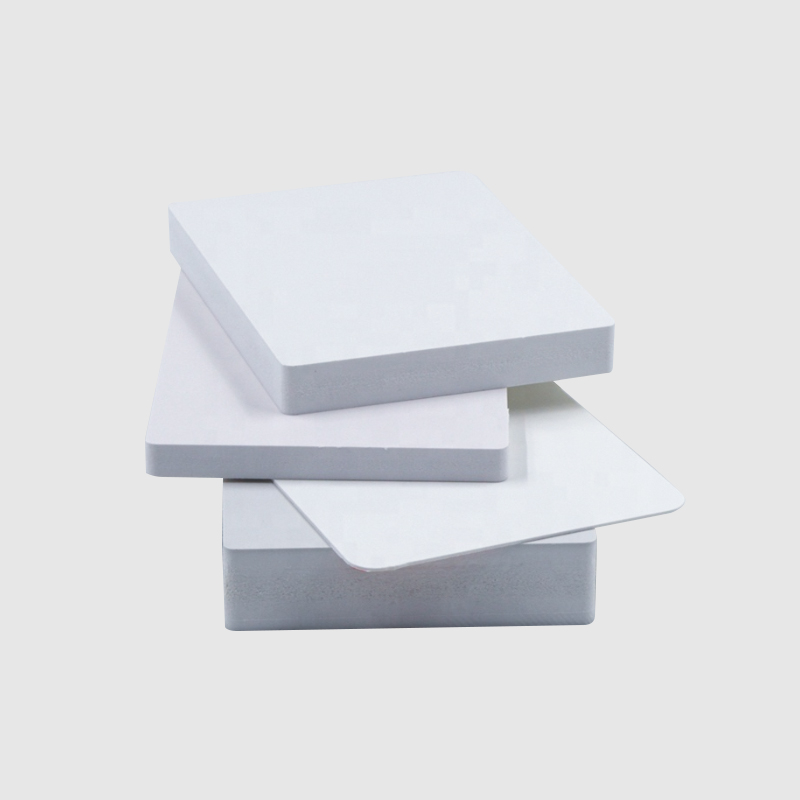 Co-Extruded PVC Foam Board Sign Sheet for Printing and AdvertisingA rigid co-extruded PVC foam sign board for printed advertising, positioned for screwed, hinged, or transportable signage where durability matters.View Product →
Thickness and Span Decide Whether a Printed Panel Stays Flat
For an unsupported printed panel, 5 mm is the practical minimum up to a 600 mm span, 10 mm carries a 900 mm span, and anything beyond 1200 mm should start at 19 mm. Below those limits a PVC foam board sign bows visibly within weeks of being hung in warm air.
Typical PVC foam board thickness band by advertising application
Bars show the upper bound of common commercial specs for rigid PVC foam sheet in sign fabrication. Confirm the exact grade against the supplier data sheet before release.
Stiffness, not density, drives this behaviour. A 10 mm sheet at 0.40 g/cm3 is far more rigid in a large format than a 5 mm sheet at 0.80 g/cm3, because panel rigidity scales with the cube of thickness while weight scales in a straight line.
Bending stiffness rises with the cube of thickness. Moving a printed face from 5 mm to 10 mm makes the panel roughly eight times stiffer while only doubling its weight.
Density still decides how the board behaves at the fixing points. A 0.55 g/cm3 celuka sheet holds a No. 8 screw near the edge, while a 0.35 g/cm3 free-foam sheet of identical thickness crushes at the same load. Match the grade to the joint, not only to the printer.
Ink Adhesion: What Changes Between One Batch and the Next
UV-curable inks need at least 38 mN/m of surface energy to wet out cleanly, and untreated PVC foam board sits at roughly 30 to 34 mN/m. Any sheet sold for direct printing should therefore arrive with a confirmed dyne value, or be corona treated in the same shift in which it is printed.
Most adhesion complaints trace back to handling rather than to the machine: a treatment effect that has decayed, dust left by CNC cutting, or moisture picked up in a cold warehouse.
- Confirm dyne level with a test pen on the production lot, never on the approved sample; 38 mN/m is the working threshold.
- Print as soon as possible after corona treatment, because the effect decays with time, dust and skin contact.
- Wipe printed faces with isopropyl alcohol and let them dry fully; solvent trapped under UV ink becomes a blister.
- Let sheets lie flat in the print room for at least 12 hours so the board reaches room temperature before the lamps fire.
- Keep the print head gap between 1.5 mm and 3 mm, because a wider gap costs dot placement accuracy on a 5 mm sheet.
- Run an ASTM D3359 cross-hatch tape test on every new batch and accept nothing below a 4B classification.
Surface energy also explains why primer is not a universal fix. On genuinely untreated or aged stock a thin primer restores adhesion, but it adds a coating that dulls the matte face sign buyers expect. The measurements behind this are set out in our note on surface energy and UV ink adhesion on white PVC foam board.
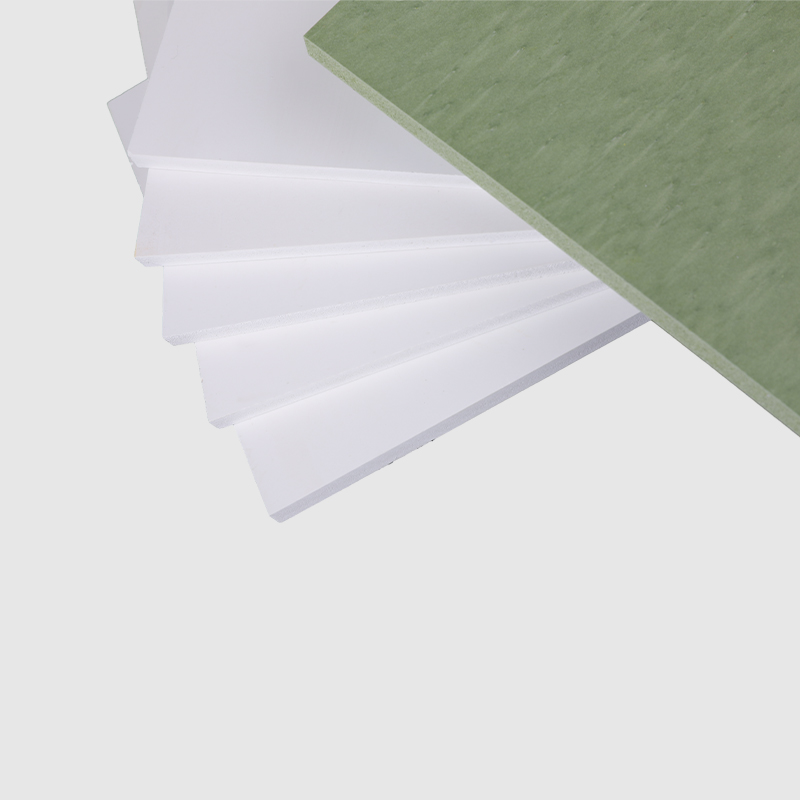 UV-Printable Sintra PVC Foam Sheet for Signboards and BannersA sintra-grade PVC foam board with a matte UV-printable face, available in 1220 x 2440 mm sheets for signboards, POP displays, and banner substrates.View Product →
Fire, Weather and Paperwork for Sign Programs
Indoor signage in United States commercial buildings is normally specified to ASTM E84 Class A, a flame spread index of 25 or below, while European projects work to EN 13501-1 B-s2,d0. Outdoor panels instead need UV-stabilised grades and a documented lead-free position under REACH.
Indoor programs
- Quote the fire rating for the exact thickness, because E84 results are thickness specific.
- Require a lead-free and SVHC statement for retail, school and healthcare work.
- Specify celuka or co-extruded where the face is laminated or direct printed.
Outdoor programs
- Choose UV-stabilised co-extruded board; thin free foam chalks and yellows.
- Allow a 1 mm expansion gap per 1000 mm of panel length at every fixing point.
- Plan replacement inside 5 years unless accelerated weathering data is supplied.
Documents to request with the first shipment: batch density report, thickness readings at nine points per sheet, dyne value for print grades, an ASTM E84 or EN 13501-1 report for the supplied thickness, and a lead-free declaration covering both pigment and stabiliser package.
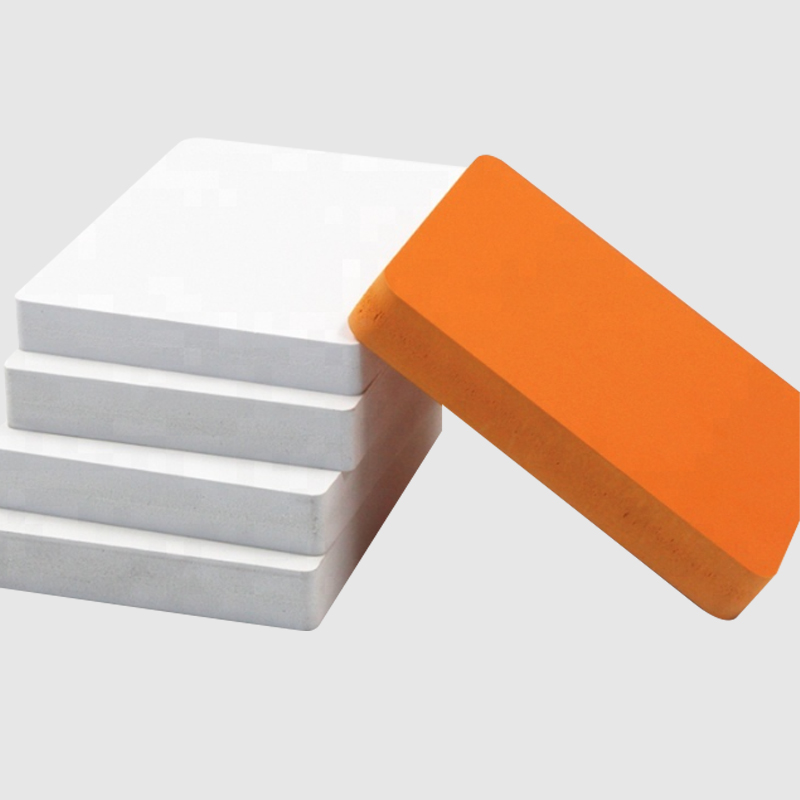 Coloured PVC Foam Board and Forex Sign Sheet in OrangeA customizable orange PVC foam board in 1220 x 2440 mm sheets and 3-25 mm thickness, suited to retail displays and promotional signage.View Product →
Tolerance, Cost and Supply Terms That Protect the Order
Commercial tolerance on a 1220 x 2440 mm PVC foam sheet is typically plus or minus 5 mm on length and width, plus or minus 0.2 mm on thickness, and a maximum bow of 5 mm over the full 2440 mm length. Looser sheets show up later as gaps in a CNC-cut sign frame.
- Ask for the grade name, measured density and whether the skin is co-extruded; a density figure without a skin description is not a specification.
- Request the thickness tolerance in writing, because printers set bed height and lamp distance from the nominal figure.
- Confirm flat pallet delivery with protected corners, since a bowed pallet turns into a bowed sign after a sea freight leg.
- State the packing format early, whether flat on edge or stacked on skids, as it changes freight cost per cubic meter.
- Compare cost per square meter at the density you actually need, not cost per sheet, because a 0.35 g/cm3 board is cheaper per sheet and more expensive per finished job.
Order three sheets, print them, and keep the batch number. Density and skin data only become a specification once a printed trial has passed.
Volume matters at the bottom of the cost stack. A producer running more than 25,000 tonnes of PVC board a year can hold density and skin thickness steady across containers, which is what keeps a repeat campaign consistent, and Jiatao Industrial Co., Ltd. publishes that capacity alongside an 11,000 square meter plant and more than 15 years of extrusion experience.
Decisions That Come Up on Every Print Job
Is 3 mm PVC foam board good enough for a printed sign?
Only for flat, supported indoor work under a 600 mm span. At 3 mm the sheet prints well on a flatbed, but it deflects once it is hung or framed loosely, so specify 5 mm for hanging panels and 10 mm for anything freestanding.
Does PVC foam board accept UV ink without primer?
Yes, provided surface energy is 38 mN/m or above at the moment of printing. Untreated stock measures 30 to 34 mN/m, so ask for a dyne value per batch and print within hours of any corona treatment rather than days.
How do I qualify a new board supplier in one week?
Order three sheets, measure thickness at nine points with a micrometer and reject anything beyond plus or minus 0.2 mm, then run an ASTM D3359 cross-hatch test and require 4B or better before releasing a container order.
Is PVC foam board fire rated for indoor advertising?
Rigid PVC foam board is inherently flame retardant because of its chlorine content, and most commercial grades of 5 mm and above are tested to ASTM E84 with a flame spread index between 15 and 25. Ratings are thickness specific, so always request the report for the thickness you are buying.
Recommended NEWS:
How to deal with board deformation during the production process of PVC Celuka Board?
How to choose the right Laminated PVC foam board according to the surface treatment and lamination type
PVC Free Foam Board's multiple applications and environmental advantages in the field of transportation
How does PVC co-extruded foam board provide excellent waterproof performance to ensure the service life of furniture?
Laminated PVC Foam Board has the advantages of being moisture-proof and water-resistant compared to other materials
WPC Foam Board: Lightweight and easy to process, leading the new trend of building materials
Related Products

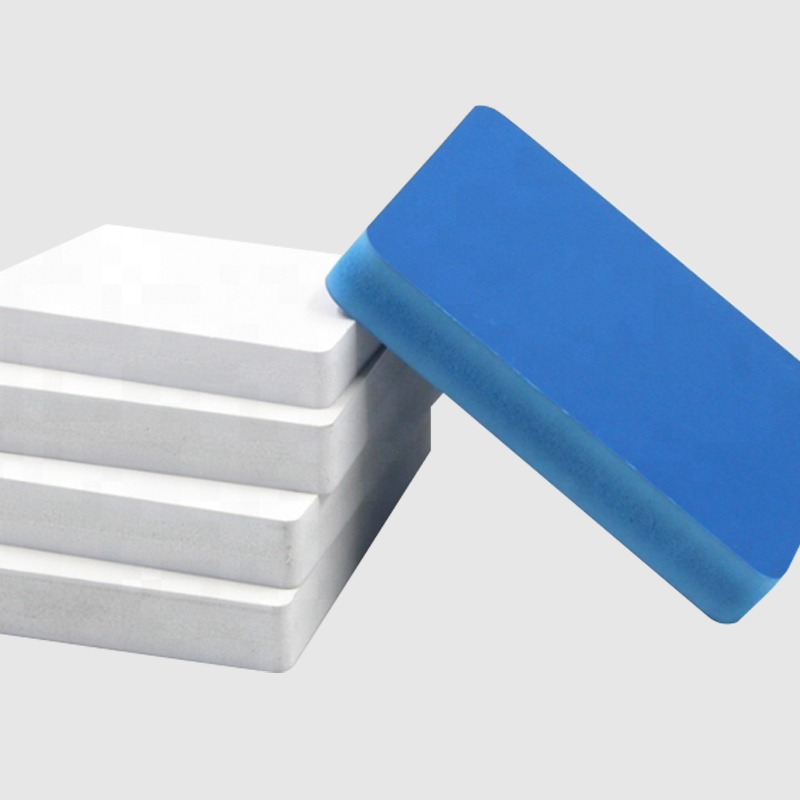

Jiatao Industry Co., Ltd. is a professional manufacturer of polyvinyl chloride plastic boards in China, dedicated to the production of PVC foam boards, plastic wood foamboards, as well as colorful pVC for extruded foam board sheet manufacturers.
-
ADDRESS
No.65 Liminba, Yinong Town, Xiaoshan District, Hangzhou, Zhejiang, China
-
EMAIL
-
PHONE
+86-17816178586
MOBILE SITE



Copyright © Jiatao Industry Co., Ltd. All Rights Reserved.
Custom Rigid PVC Plastic Foam Boards Suppliers

Contact Us