

 English
 Español
 عربى
عربى
Home / News / Industry News / PVC Foam Board vs PVC Sheet: How to Select the Right Material for Fabrication
PVC Foam Board vs PVC Sheet: How to Select the Right Material for Fabrication
Article Directory
An Austin sign shop ordered 120 sheets of "PVC sheet" for a building wayfinding program. The supplier delivered solid PVC, the shop had priced the job with foam board, and the project sat idle for three weeks while the buyer renegotiated. That kind of mix-up happens in fabrication shops every month, because "PVC sheet" is an umbrella term covering two very different products: PVC foam board and solid PVC sheet.
They look similar at a distance, but density, machining behavior, printing results, and cost per sheet differ enough to decide whether a production run makes money. This guide compares both materials from a fabricator's point of view and gives a direct selection path.
What Separates PVC Foam Board from Solid PVC Sheet
The single structural feature that separates the two materials is density, which drives weight, rigidity, and how a sheet behaves under a cutting tool.
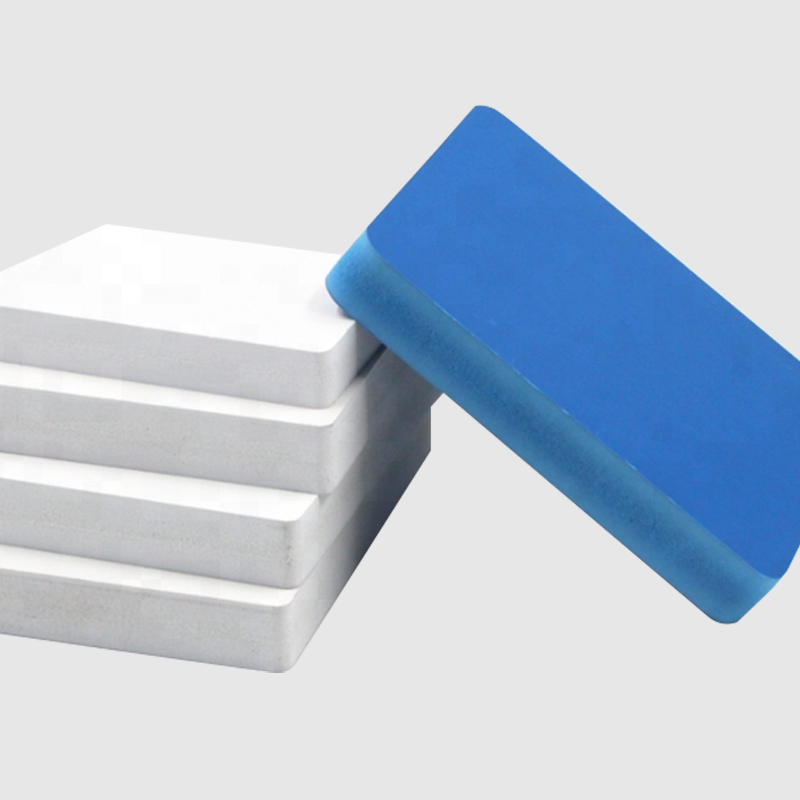
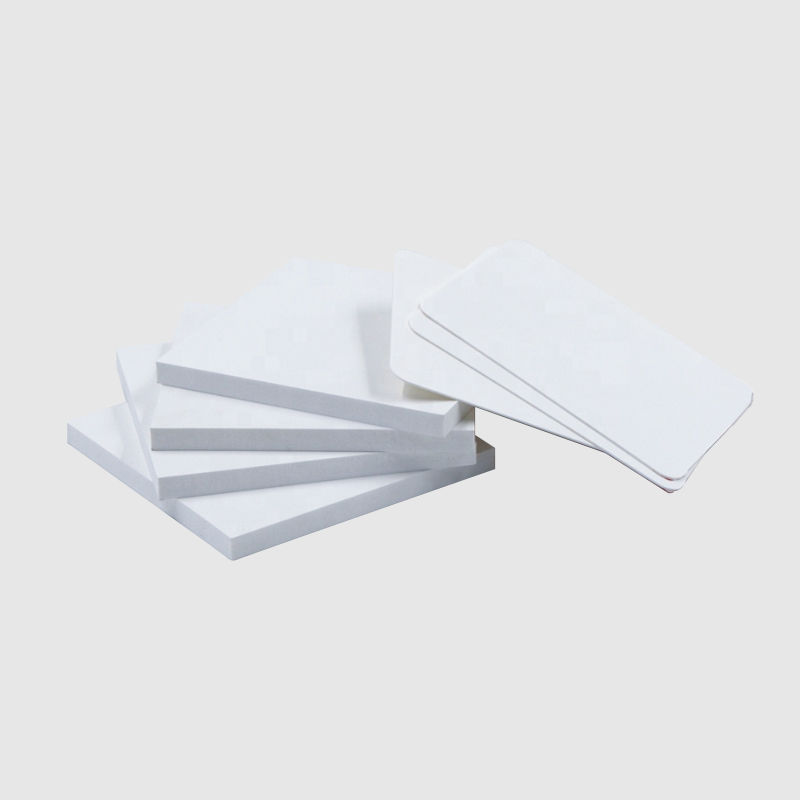
PVC foam board is an extruded panel with a cellular core created by a chemical blowing agent during extrusion. Hangzhou Jiatao Industrial Co., Ltd., a Chinese manufacturer with more than 15 years of extrusion experience, produces free-foam boards at 0.45-0.70 g/cm3 and high-density celuka grades up to about 0.90 g/cm3. Solid PVC sheet is a non-expanded PVC panel normally supplied at 1.35-1.45 g/cm3; because its extrusion or calendering process leaves no cell structure, every cubic centimeter is solid polymer.
Core definition: PVC foam board is an extruded PVC panel with a gas-expanded cellular core and a density of 0.45-0.90 g/cm3, while solid PVC sheet is a cell-free PVC panel extruded or calendered to a density of 1.35-1.45 g/cm3.
That structural difference changes three properties you will feel on the shop floor:
- Water absorption: closed-cell foam takes up roughly 0.3-1.5 percent by weight after immersion; solid sheet stays below 0.1 percent.
- Surface skin: celuka and co-extruded board form a hard outer skin, while free-foam board dents under point loads.
- Edge texture: routed foam edges show a fine cell structure; routed solid edges stay dense and glass-smooth.
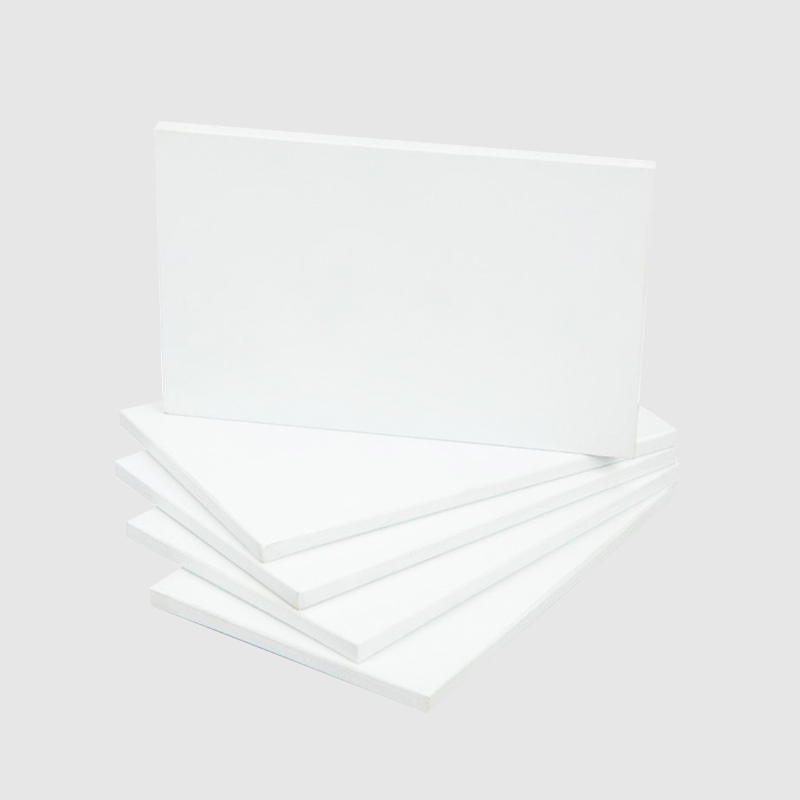
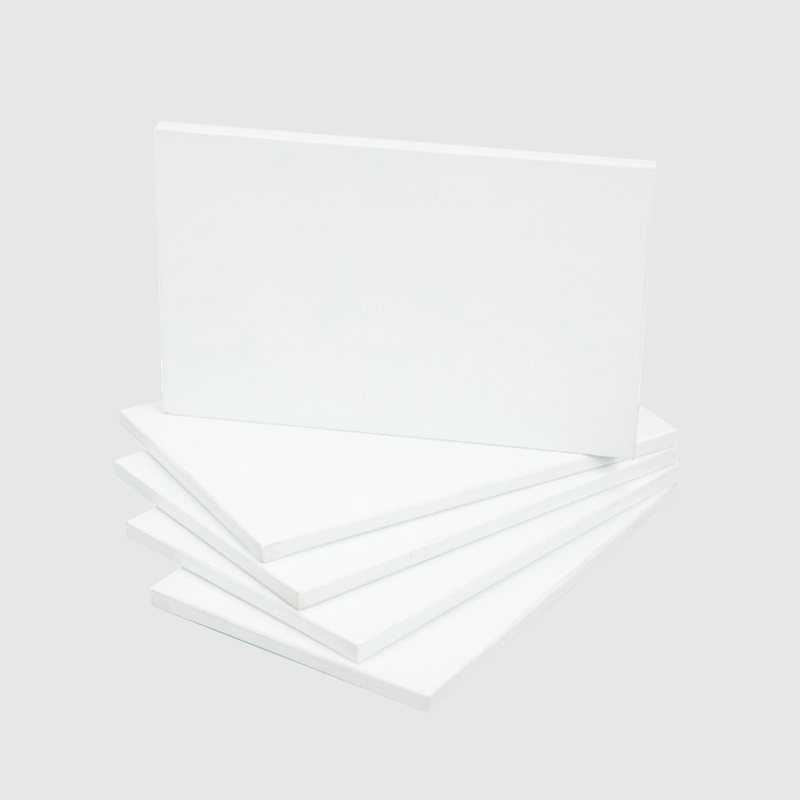 White PVC Foam Board in Multiple Thicknesses for Signage and DisplayThis closed-cell PVC foam sheet offers consistent density and a smooth matte surface, making it suitable for printing, lamination, and painting. Its lightweight yet rigid structure works well for signs, display boards, and furniture components, though not for chemical liners or impact guards.View Product →
For sign panels, display boards, and furniture components, the expanded structure is an advantage. For chemical liners and impact guards, it is a liability.
Density and Weight Drive the First Decision
Foam board weighs 30 to 50 percent less than solid PVC sheet, and that gap changes handling cost, mounting hardware, and structural framing more than any other variable.
A 1220 x 2440 mm panel in 10 mm thickness weighs about 22 kg in high-density foam board at 0.75 g/cm3 versus about 42 kg in solid PVC sheet at 1.40 g/cm3. A 30-sheet pallet therefore carries roughly 600 kg less dead weight when you choose foam.
Density bands reflect typical commercial extrusion grades offered by Jiatao Industrial; solid PVC data reflect standard rigid sheet.
0.45-0.90
Foam board density, g/cm3
1.35-1.45
Solid PVC density, g/cm3
30-50%
Weight saved with foam board
3-330 mm
Foam board thickness range
Rule of thumb: if part weight, thermal insulation, and machining speed matter more than point impact and chemical exposure, specify expanded PVC foam.
Side-by-Side Comparison
For most fabrication work, foam board wins on weight, machining speed, and cost per square meter, while solid sheet wins where point impact, chemical exposure, and thin-gauge stiffness decide whether the part survives.
| Criterion | PVC Foam Board | Solid PVC Sheet |
| Density range | 0.45-0.90 g/cm3 | 1.35-1.45 g/cm3 |
| 10 mm 4x8 panel weight | 16-22 kg | About 42 kg |
| Surface hardness, Shore D | 55-75 depending on skin | 78-85 |
| Impact resistance | Moderate; dents under point load | High; resists tools and impact |
| CNC routing speed | Fast, low tool wear | Slower, frequent swarf clearing |
| UV ink acceptance | Needs surface treatment or solvent ink | Reliable without pre-treatment |
| Edge finish after routing | Fine cellular texture, seal for wet service | Dense, crisp, paintable |
| Water absorption | 0.3-1.5 percent, closed-cell dependent | Below 0.1 percent |
| Relative cost, 10 mm sheet | Baseline | Roughly 2-4 times baseline |
The density numbers are the ones to memorize, because they connect directly to screw retention, hinge fixation, and long-term sagging. Our structural density guide explains how density changes stiffness across standard 4x8 sheet dimensions.
Behavior Under Fabrication Tools
Foam board cuts fast and produces a fine, powdery crumb, whereas solid PVC produces continuous swarf, needs slower feeds, and holds a sharper edge.
That difference shows up in every downstream operation, not just cutting.
Foam board behavior
- CNC routing with sharp carbide O-flute bits at two to three times the feed rate of solid sheet
- UV printing after corona treatment or with solvent ink matched to surface tension
- Edge sealing with solvent-based edge paint on celuka and co-extruded skins
- Bonding with contact adhesive or low-VOC acrylic adhesive
Solid PVC behavior
- Routing requires slower feeds and regular swarf removal to avoid melting
- Printing is reliable without pre-treatment because the surface is non-porous
- Edge finishing produces a dense, glass-like surface that needs no sealer
- Bonding with solvent cement or cyanoacrylate gives high-strength joints
Handlers notice the difference too. Foam board panels reduce lifting strain and allow thinner aluminum framing in display systems.
If the finished part will see moisture, check the cell structure and skin type before trusting a density figure. A closed-cell core with a hard co-extruded skin will outperform a free-foam core in wet service.
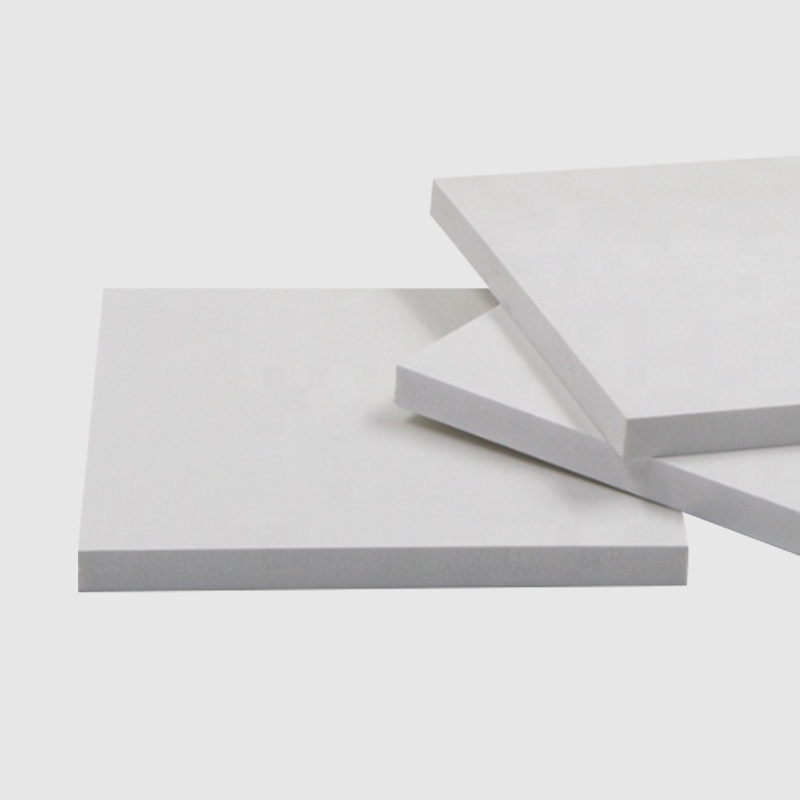
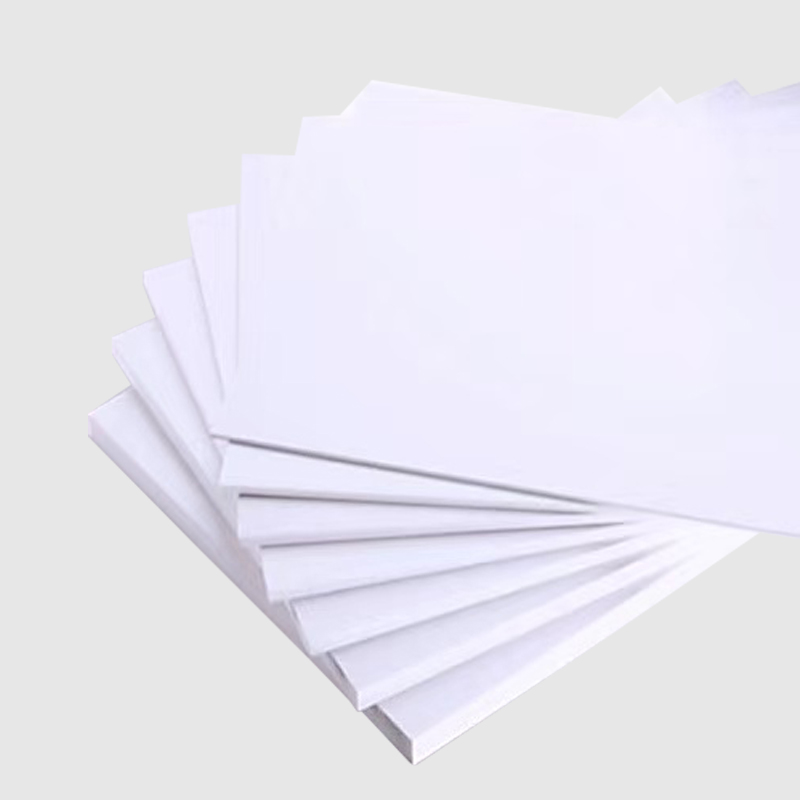 Co-extruded PVC Foam Board with Smooth Surface for Furniture ApplicationsEngineered with co-extrusion technology, this PVC foam board provides a uniform density and a smooth, glossy surface. It suits signage, displays, shopfitting, and cabinet components, offering waterproof and soundproof properties while being lighter than solid sheet alternatives for handling ease.View Product →
Matching the Material to the Application
Signage, displays, shopfitting, and cabinet components are foam-board work; chemical tanks, machine guards, and thin structural strips are solid-sheet work.
For most commercial fabrication, one of three foam board families will fit:
- Free-foam PVC board for signage, exhibition panels, and architectural models in 3-10 mm thickness
- Co-extruded PVC board for printed displays, cabinet doors, and outdoor-facing panels in 3-18 mm thickness
- High-density celuka board for furniture, bathroom cabinets, and load-bearing panels in 10-20 mm thickness
Reserve solid PVC sheet for a short list of cases: chemical-resistant liners, welding screens, machined parts under 2 mm thick, and surfaces that take repeated tool impact.
When the application is not obvious, start from our full PVC board range and narrow by thickness and surface type before you commit to a density class.
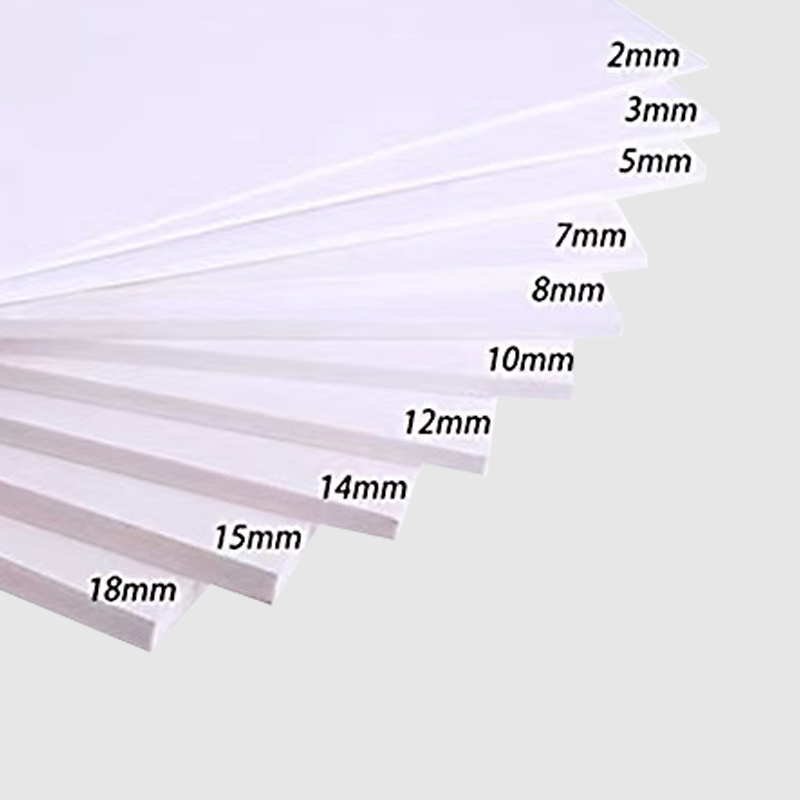
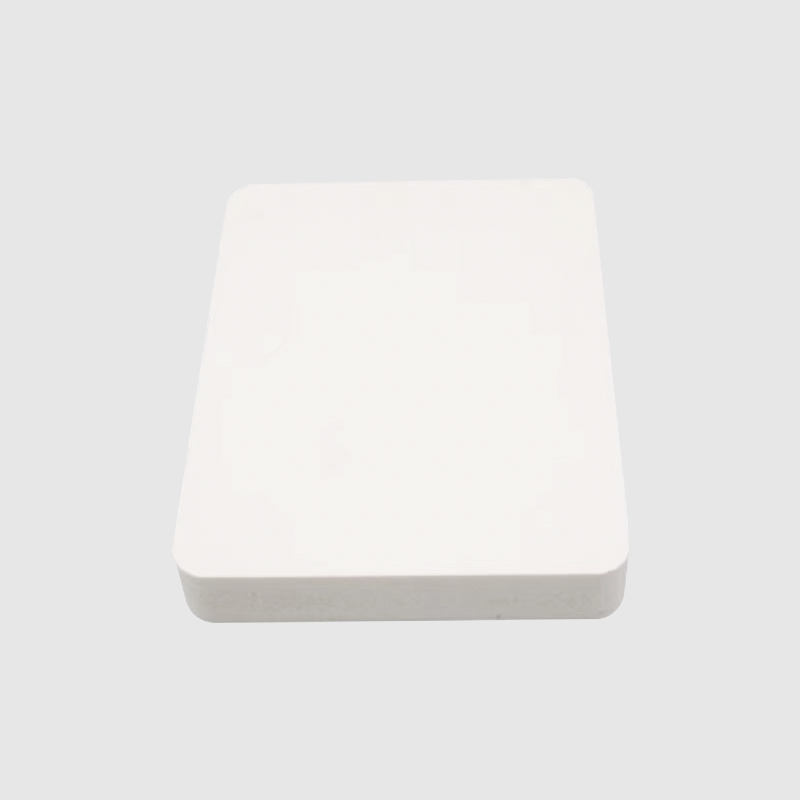 High-Density PVC Foam Board for Cabinets, Furniture, and AdvertisingThis high-density PVC foam board has a density range of 650-800 kg/m³ and a smooth, grainless surface. It resists moisture and UV radiation, offers fireproof B1 certification, and is ideal for kitchen cabinets, bathroom decoration, advertising, and furniture, with easy CNC cutting and engraving.View Product →
How to Specify and Verify What You Order
To avoid the wrong delivery, put density, thickness, tolerance, surface finish, and compliance requirements in writing on every purchase order.
- State density in g/cm3: 0.55, 0.70, or 0.85, depending on the stiffness you need.
- State board size: 1220 x 2440 mm, 2050 x 3050 mm, or a custom dimension.
- State thickness with tolerance, typically plus or minus 0.2-0.5 mm.
- State surface type: free-foam, celuka skin, or co-extruded skin.
- State the application so the manufacturer can flag a grade mismatch.
- For export orders, confirm lead-free formulation and request SGS or REACH documentation.
A maker such as Jiatao Industrial Co., Ltd., which ships more than 25,000 tons of PVC board each year to the United States, Germany, Japan, Spain, Italy, and the United Kingdom, can produce custom dimensions and surface finishes from a drawing or sample. That is the fastest way to close the gap between a generic quote and a production-ready grade.
Frequently Asked Questions
Is PVC foam board the same as PVC sheet?
No. PVC sheet is a category name that covers both products. PVC foam board is an expanded panel with a cellular core, while solid PVC sheet is a dense, cell-free material roughly twice as heavy.
Which material should I use for CNC-cut signage?
Use PVC foam board in 3-10 mm thickness for most signage. It routes two to three times faster than solid sheet, wears cutting tools less, and accepts UV ink when the surface is corona-treated or printed with solvent ink.
What density of PVC foam board is best for cabinet doors?
Specify high-density celuka or co-extruded board at 0.70-0.90 g/cm3 in 10-18 mm thickness. The hard skin gives screw retention close to wood-based panels while the cellular core keeps the door light and dimensionally stable.
Can PVC foam board replace solid PVC sheet outdoors?
Only when the part avoids point impact and concentrated loads. Closed-cell foam board resists water well and many co-extruded grades are rated for outdoor display, but solid PVC sheet remains the safer choice for exposed edges, thin sections, and surfaces that take repeated impact.
Recommended NEWS:
How to deal with board deformation during the production process of PVC Celuka Board?
PVC Free Foam Board's multiple applications and environmental advantages in the field of transportation
How does PVC co-extruded foam board provide excellent waterproof performance to ensure the service life of furniture?
Custom Laminated PVC Foam Board: A versatile material with excellent waterproof performance
How to ensure the installation quality of PVC Ceiling Panel
PVC cellular board Suppliers quality inspection: ensure the comprehensive guarantee of product performance
Related Products


Jiatao Industry Co., Ltd. is a professional manufacturer of polyvinyl chloride plastic boards in China, dedicated to the production of PVC foam boards, plastic wood foamboards, as well as colorful pVC for extruded foam board sheet manufacturers.
-
ADDRESS
No.65 Liminba, Yinong Town, Xiaoshan District, Hangzhou, Zhejiang, China
-
EMAIL
-
PHONE
+86-17816178586
MOBILE SITE



Copyright © Jiatao Industry Co., Ltd. All Rights Reserved.
Custom Rigid PVC Plastic Foam Boards Suppliers

Contact Us