

 English
 Español
 عربى
عربى
Home / News / Industry News / PVC Celuka Foam Sheet vs WPC Board: Key Differences, Density, Surface & Best Uses
PVC Celuka Foam Sheet vs WPC Board: Key Differences, Density, Surface & Best Uses
Article Directory
- 1 Start with the Surface, Not the Color
- 2 How the Two Boards Are Made
- 3 PVC Celuka vs WPC Board: Side-by-Side Comparison
- 4 Density, Surface Hardness, and Screw Holding
- 5 Water and Moisture Behavior in Real Conditions
- 6 Cutting, Routing, and Edge Finishing
- 7 Choosing by Application
- 8 A Short Decision Checklist for Your Purchase
- 9 Final Recommendation: Order for the Process, Not the Appearance
Start with the Surface, Not the Color
Two 12 mm white foam boards can sit side by side on a rack and still be entirely different products. Look closely and you will see it immediately: the PVC Celuka foam sheet has a smooth, almost hard plastic skin, while a WPC board (wood plastic composite) has a matte, wood-like texture on the face. That single structural difference is the defining difference between the two materials.
Put simply: if your project needs a clean printable surface, crisp edge details, and maximum dimensional stability, PVC Celuka foam sheet is usually the stronger candidate. If your project lives in a humid bathroom, runs on wall surfaces, or involves cabinet boxes where moisture and screw holding matter more than surface gloss, WPC board often makes more sense. This guide walks through the manufacturing differences, physical properties, fabrication behavior, and typical applications so you can make the call with data rather than guesswork.
How the Two Boards Are Made
The production route determines the structure of the finished sheet. Understanding it makes the other differences easier to remember.
PVC Celuka: A Dense Skin Over a Foamed Core
Celuka is a continuously extruded foam sheet made with a calibration process. The molten PVC compound passes through a die and immediately meets cooled calibrating plates on both faces. While the exterior solidifies into a compact skin, the inner material expands to form a closed-cell foam core. The result is a board with a hard, low-porosity surface, typically a fraction of a millimeter thick on each side, bonded to a lightweight core. This skin gives Celuka boards better surface hardness, cleaner printing results, and more reliable edge quality than free-foam or standard WPC sheets.
WPC: Wood Fiber Dispersed in a Plastic Matrix
Wood plastic composite foam board blends wood flour or wood fiber with PVC resin and processing additives, then extrudes the mixture under heat and pressure. The wood content, typically 40–60% of the formulation, gives the board its characteristic matte texture and wood-like response to cutting and routing. Because the fibers are encapsulated in the plastic matrix, WPC board stays water-resistant for everyday use, although cut edges absorb noticeably more moisture than a pure PVC Celuka edge if exposed to standing water for a long period.
PVC Celuka vs WPC Board: Side-by-Side Comparison
The table below summarizes the typical values for standard commercial grades. Formulations vary between factories, so treat these figures as orientation points and confirm the exact specification with the intended manufacturer.
| Parameter | PVC Celuka Foam Sheet | WPC Foam Board |
|---|---|---|
| Core structure | Dense outer skin over foam core | Uniform foam with wood fiber throughout |
| Surface finish | Smooth, hard, low porosity | Matte, wood-like texture |
| Typical density | 0.45–0.75 g/cm³ | 0.50–0.70 g/cm³ |
| Water resistance | Very high; low absorption | Good; slightly higher at cut edges |
| Printing and lamination | Excellent ink adhesion with UV or solvent inks | Good; surface preparation may be needed for high gloss |
| CNC routing and cutting | Clean edges; skin supports fine detail | Clean cuts; wood-like machining behavior |
| Common thickness range | 3–20 mm | 2–18 mm |
| Primary applications | Signage, cabinet doors, displays, furniture panels | Wall panels, cabinet boxes, decorative trim, wet-room joinery |
Density, Surface Hardness, and Screw Holding
Density is the most quoted number in foam board procurement, but it does not tell the whole story. A 0.60 g/cm³ Celuka sheet and a 0.60 g/cm³ WPC board feel similar in the hand and yet behave differently under a screw, a CNC bit, or a dropped corner.
Because the Celuka skin is compacted during cooling, its surface hardness is noticeably higher than the interior. That hard face resists indentation during stacking and transport, helps the board stay flat in large sheets, and gives fasteners stronger pull-out values near the surface. WPC board, with its wood-fiber-filled core, offers decent screw holding in the middle of the sheet, but the surface is softer, so a screw driven near an edge may tear the face in thin boards. If your fabrication involves heavy hardware, hinges, or repeated assembly, you will find the density, strength, and screw-holding comparison between PVC and WPC foam boards a useful reference.
Water and Moisture Behavior in Real Conditions
Both materials are marketed as waterproof, and both will survive a humid bathroom without falling apart. The difference is in the margins. A Celuka sheet made from pure PVC contains essentially no hygroscopic filler, so water absorption after 24 hours immersion typically stays below 0.2% by weight in standard grades. WPC board, depending on the wood-fiber ratio, absorbs more — commonly 1–3% when measured on a freshly cut edge.
In practice this matters in three situations. First, in a shower room or utility room with standing water, the lower absorption of Celuka is the safer choice. Second, if the board will be cut on site and exposed to weather before sealing, WPC edges can swell slightly over a few days. Third, for repeated cleaning with aggressive chemicals, the non-porous Celuka skin cleans more predictably. For a closer look at how WPC behaves beyond simple water resistance, the advantages and limitations of WPC foam board in interior decoration gives useful context on where this material performs best.
Cutting, Routing, and Edge Finishing
Both boards cut with standard woodworking and PVC-foam tooling, so a shop already running PVC foam sheet can process WPC with little change to workflow. The differences appear in the details.
Celuka's dense skin supports crisp profiles and fine lettering, especially in small text or thin webs. Routed edges come out smooth, and paint or edge banding adheres well because the skin is closed and non-porous. WPC board behaves closer to softwood under a cutter, giving a slightly fibrous texture on sawn edges that sometimes requires a light pass of sandpaper before painting.
Thermoforming is another point of difference. Celuka sheet is routinely bent and shaped for display stands, while WPC's wood filler makes it less suitable for tight-radius forming. If vacuum forming or deep bending is part of your product, Celuka is the simpler route.
Choosing by Application
Where PVC Celuka Sheet Delivers More Value
Signage and UV printing are the classic Celuka territory. The hard skin holds ink without the pinholes or fiber protrusions you can get on a filled composite surface. Adhesive vinyl, lamination, and screen printing all perform better on a sealed surface, which is why most 4×8 signage sheets on the market are Celuka rather than free foam or WPC.
The same logic applies to cabinet doors, drawer fronts, and furniture panels where the customer will touch and look at the board every day. A Celuka foam board with a rigid, smooth surface keeps a scratch-resistant face while remaining light enough for hinged doors. If you want to check performance details before specifying, the properties, uses, and quality criteria of Celuka foam board breaks down thickness, density grades, and the effects on strength and flatness.
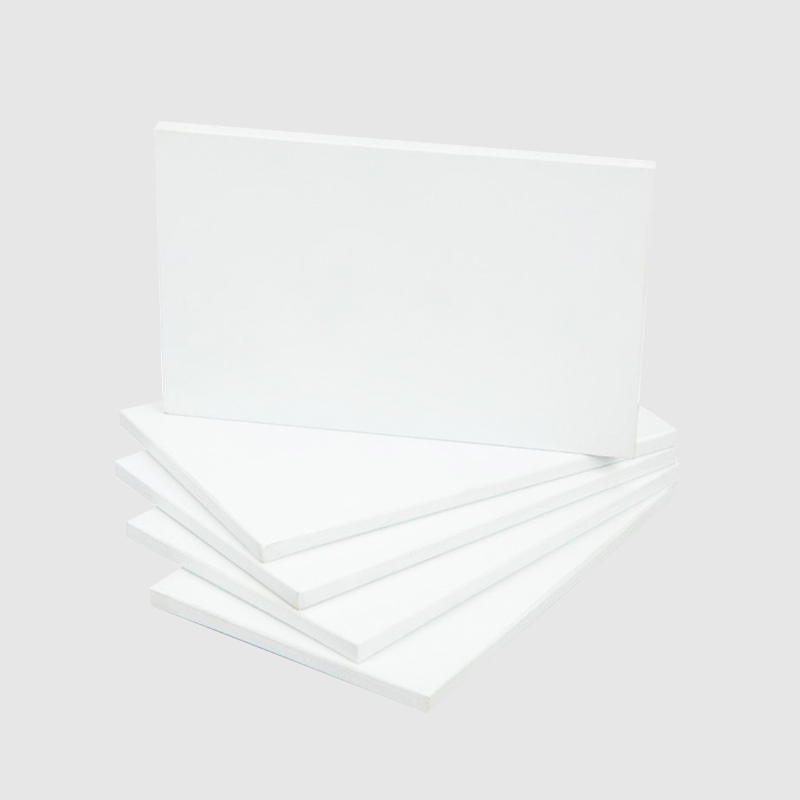
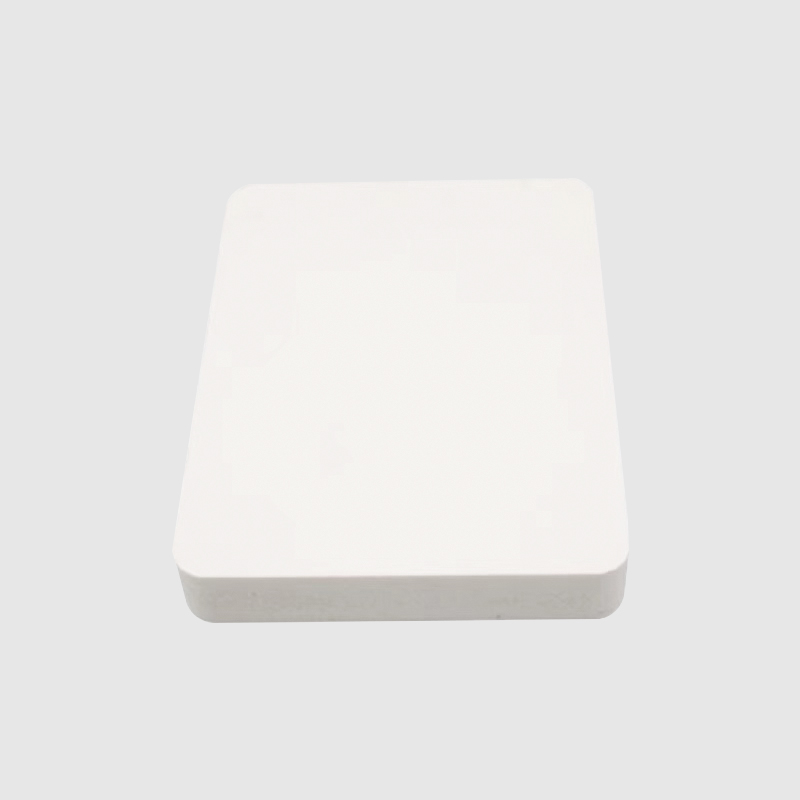 Wholesale OEM/ODM Pvc foam board sintra pvc sheet forex pvc celuka board SupplieOffer Wholesale Pvc foam board sintra pvc sheet forex pvc celuka board, Jiatao Industrial Co., Ltd is China OEM/ODM Pvc foam board sintra...View Product →
Where WPC Board Makes the Stronger Case
Wall panels and cabinet boxes are the sweet spot for WPC board. Because wood fiber gives the material a warmer visual texture, it reads naturally in interior cladding and complements wood-grain foil lamination. The contained water resistance of a well-made WPC sheet is enough for kitchens and bathrooms, and the lower cost per sheet in many regions makes it attractive for large surface areas.
For kitchen or bathroom cabinetry, a waterproof WPC board for kitchen and bathroom cabinets takes screws well, resists moisture, and cuts cleanly with standard CNC tooling. In large-format panels, WPC can also be supplied in colored and film-faced versions. If your project needs a matching finish across walls and cabinet faces, a large-format colored WPC furniture board is worth including in sample testing.
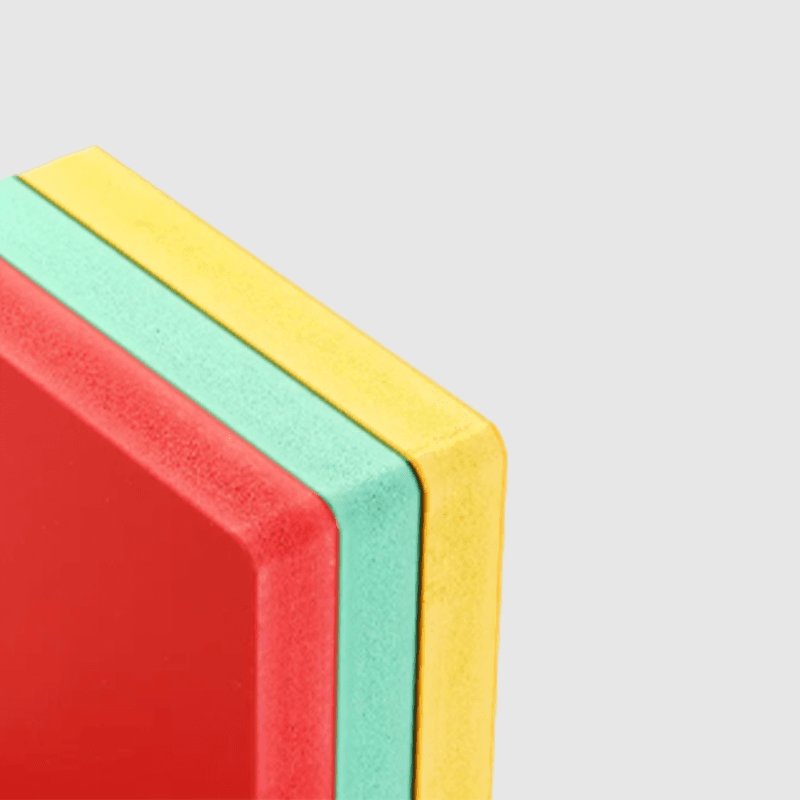
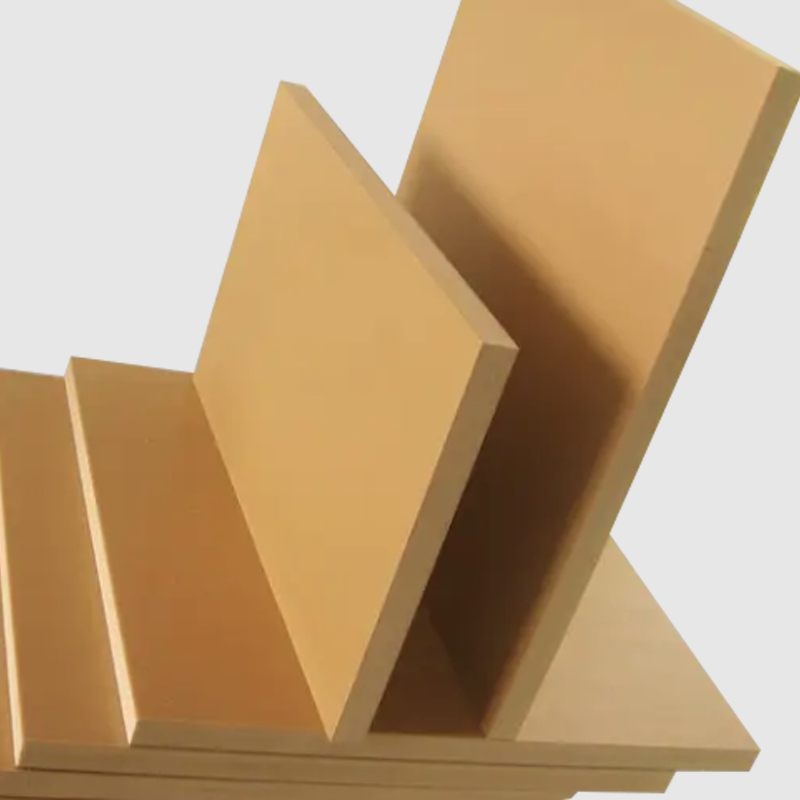 Wholesale OEM/ODM Wpc furniture foam board plastic sheet large colored wpc foam Offer Wholesale Wpc furniture foam board plastic sheet large colored wpc foam board, Jiatao Industrial Co., Ltd is China OEM/ODM Wpc furn...View Product →
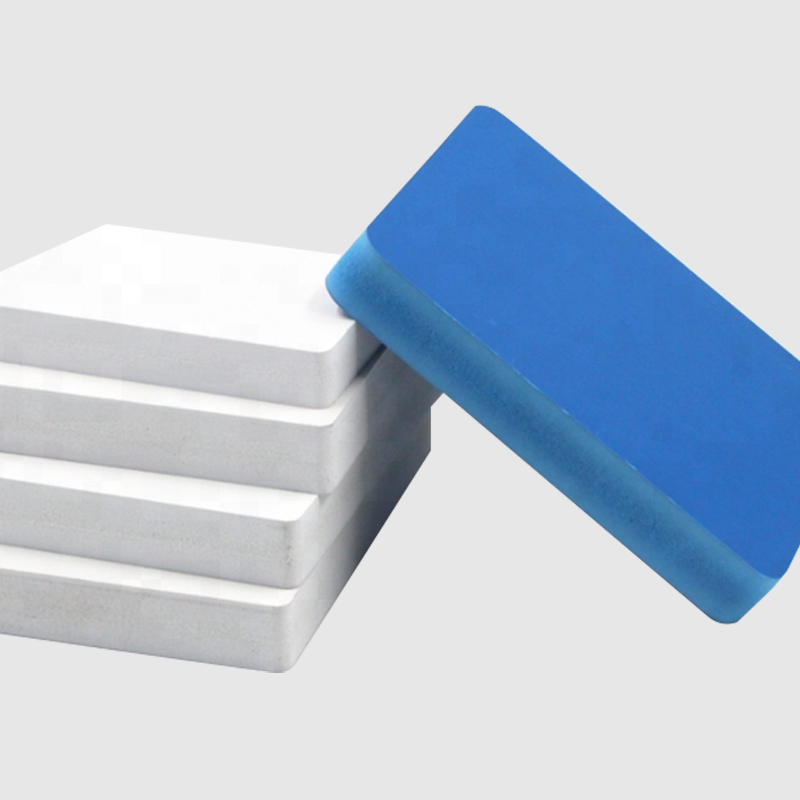
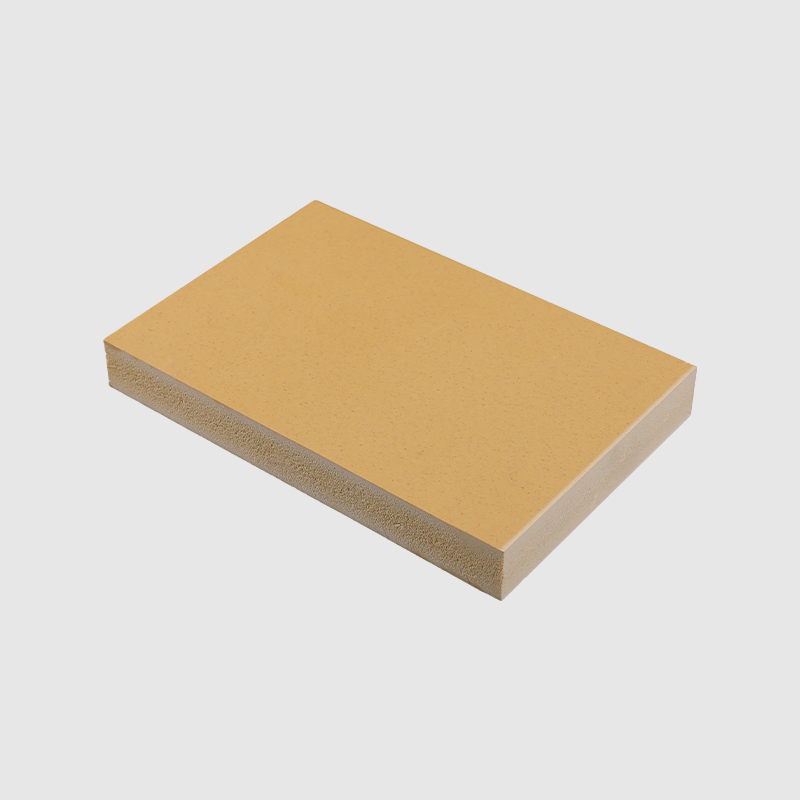 Wholesale OEM/ODM 4x8ft wood plastic composite wpc foam board waterproof pvc sheOffer Wholesale 4x8ft wood plastic composite wpc foam board waterproof pvc sheets construction kitchen bathroom cabinets cutting moulding...View Product →
A Short Decision Checklist for Your Purchase
- Will the board be UV printed, laminated, or screen printed? Choose Celuka for the most consistent ink coverage and finish.
- Is the application a wall or ceiling surface in a wet room? WPC with a moisture-resistant core and capped surface is a practical, cost-effective solution.
- Will the sheet carry hinges, handles, or brackets? The harder Celuka skin provides better fastener retention near the surface; for deep-thread screws in the core, both materials work.
- Do you need tight-radius bending or vacuum forming? Celuka is the safer choice for thermoforming.
- How thick do you plan to run? Both materials are available from 3–20 mm, but check the manufacturer's core quality at thicker gauges because skin thickness and density consistency matter most there.
- What is your acceptance tolerance for water absorption? If the specification demands less than 1% absorption, ask for a test certificate on Celuka rather than relying on a generic WPC rating.
Final Recommendation: Order for the Process, Not the Appearance
The cheapest mistake in foam board procurement is choosing a board because it looks the same in a photo. Once you compare the extrusion method, surface structure, density range, and moisture behavior, the difference between PVC Celuka foam sheet and WPC board becomes a simple alignment with how the sheet will be cut, printed, installed, and lived with. For printed signs, cabinet doors, and display work, Celuka is the reference product. For wall panels, cabinet boxes, and decorative joinery in humid spaces, WPC board gives you wood-like warmth at a competitive cost.
Whichever direction you pick, ask the factory for a density spec, a water absorption test report, and a cut sample so you can verify the surface before committing to a container or a large project order. Reputable suppliers publish these values and will normally provide a sample sheet for machining tests within a week.
Recommended NEWS:
WPC Foam Board: Lightweight and easy to process, leading the new trend of building materials
Environmental sustainability of High Density 4*8 ft Waterproof WPC Foam Boards
WPC Foam Board: Green building materials with environmental performance and waste reduction
PVC Free Foam Board's multiple applications and environmental advantages in the field of transportation
In public facility construction and home decoration, how does Waterproof PVC Celuka Foam Sheets meet the dual needs of waterproofing and sound insulation?
White Laminated PVC Free Foam Boards: Environmentally friendly and sustainable production
Related Products

Jiatao Industry Co., Ltd. is a professional manufacturer of polyvinyl chloride plastic boards in China, dedicated to the production of PVC foam boards, plastic wood foamboards, as well as colorful pVC for extruded foam board sheet manufacturers.
-
ADDRESS
No.65 Liminba, Yinong Town, Xiaoshan District, Hangzhou, Zhejiang, China
-
EMAIL
-
PHONE
+86-17816178586
MOBILE SITE



Copyright © Jiatao Industry Co., Ltd. All Rights Reserved.
Custom Rigid PVC Plastic Foam Boards Suppliers

Contact Us