

 English
 Español
 عربى
عربى
Home / News / Industry News / How Long Does PVC Celuka Foam Sheet Last? Lifespan Factors & Buying Guide
How Long Does PVC Celuka Foam Sheet Last? Lifespan Factors & Buying Guide
Article Directory
A shopfitter in Melbourne and a signage fabricator in Texas will ask the same question and are likely to hear very different answers: how long does a PVC Celuka foam sheet last? The honest reply is 5 to 20 years. The material family is not unpredictable, but the service life of a specific sheet depends on density, surface skin quality, UV stabilisation, and installation conditions. Buy a low-density, non-stabilised board and place it in direct sun, and you may be replacing it within five years. Specify a high-density, UV-stabilised sheet for indoor furniture, and fifteen years is a conservative estimate. The rest of this article explains how to land on the right end of that range.
The Short Answer: What Service Life to Plan With
Published data, manufacturer experience, and field reports converge on a simple set of planning figures. Indoors, in dry, shaded conditions, a well-made Celuka board with a density of at least 0.55 g/cm³ will normally last 15 to 20 years — often as long as the cabinet, door panel, or display unit it is built into. Outdoors, a UV-stabilised sheet with a properly formed outer skin delivers 7 to 10 years of acceptable appearance and mechanical strength. A standard grade without UV protection, or a board with a soft, chalky surface, may start to fade and lose impact resistance after only 3 to 5 years in the sun. Some premium formulations are reported to last beyond 20 years outdoors, but that requires favourable climate, protected edges, and a higher density grade; treat it as a bonus, not a baseline.
| Service environment | Expected lifespan | Main risk factors |
|---|---|---|
| Indoor furniture and cabinetry, dry areas | 15–20+ years | Mechanical damage, heat, occasional moisture |
| Indoor wet areas (kitchen, bathroom) | 10–15 years | Edge moisture ingress, steam, cleaning agents |
| Outdoor signage, UV-stabilised grade | 7–10 years | UV chalking, colour fade, wind load |
| Outdoor signage, standard grade | 3–5 years | Surface degradation, loss of impact strength |
What Actually Determines How Long a Celuka Sheet Lasts
A Celuka board is produced with a dense, solid outer skin over a closed-cell foam core, and both parts age differently. For a full account of the physical and mechanical properties, our guide to Celuka board properties and uses covers the key data in one place. The two factors that matter most for lifespan are density and skin quality.
Density and cell structure set the ceiling
Core density in commercial Celuka sheets usually falls between 0.4 and 0.8 g/cm³. At the lower end, the board is light and inexpensive, but the foam cells are larger and more interconnected, which allows water vapour to travel further from a cut edge and gives fasteners less material to grip. At the higher end, products such as the high-density rigid Celuka sheets used for furniture and cabinet doors resist moisture ingress, hold screws firmly, and keep their rigidity under sustained load. When a project calls for a long service life, density is the first specification to raise.
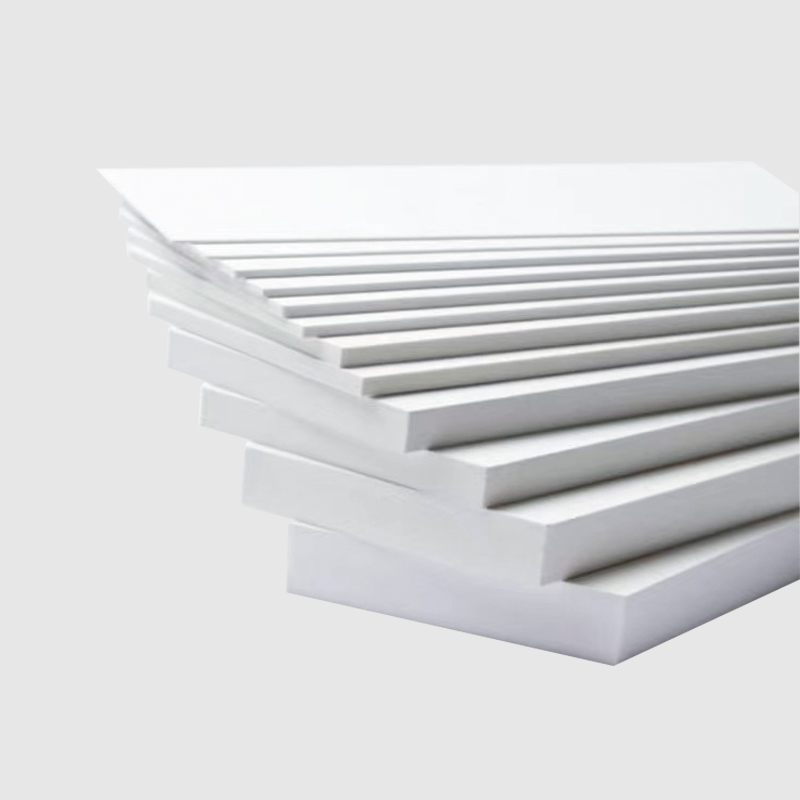 Wholesale OEM/ODM Pvc foam board celuka sheet rigid surface high density 3mm-17mOffer Wholesale Pvc foam board celuka sheet rigid surface high density 3mm-17mm furniture application water proof pvc board white color r...View Product →
The outer skin does more than look good
Many buyers evaluate a sheet by colour and flatness, yet the skin quality determines how the board ages. A properly formed skin is smooth, pore-free, and fully fused to the foam core. If the skin is thin, porous, or damaged during cutting, moisture and UV light reach the foam core directly, and deterioration accelerates quickly. Inspect the surface under angled light for pinholes, pits, or a chalky residue, particularly on boards from unfamiliar suppliers. A sheet that looks acceptable at the warehouse but carries a weak skin will lose its surface integrity years earlier than a well-formed one.
Indoor vs Outdoor: Two Very Different Lifetimes
Indoor and outdoor service do not just differ in degree; they create different failure modes. Indoors, the main threats are humidity, heat, and mechanical damage. In kitchens and bathrooms, water sitting against an unsealed edge can still cause localised swelling, so cutting cleanly and protecting edge profiles remains important. The moisture resistance of PVC Celuka board is well documented, and in dry areas such as offices and retail displays, visible deterioration is barely measurable even after a decade of use. Outdoors, ultraviolet radiation is the dominant enemy. UV breaks down the polymer over time, causing chalking, colour shift, and eventually surface micro-cracking. A board without UV stabilisers degrades from the outside inward; a UV-stabilised board with a dense skin holds its surface and strength much longer. For outdoor signs and façade elements, choose a board explicitly rated for exterior exposure and seal every machined edge. The 4x8 ft high-density PVC foam sheets in our Celuka range are a reasonable starting point because their dense skin naturally slows UV and moisture attack; for longer exposure, confirm the UV stabiliser level with your supplier.
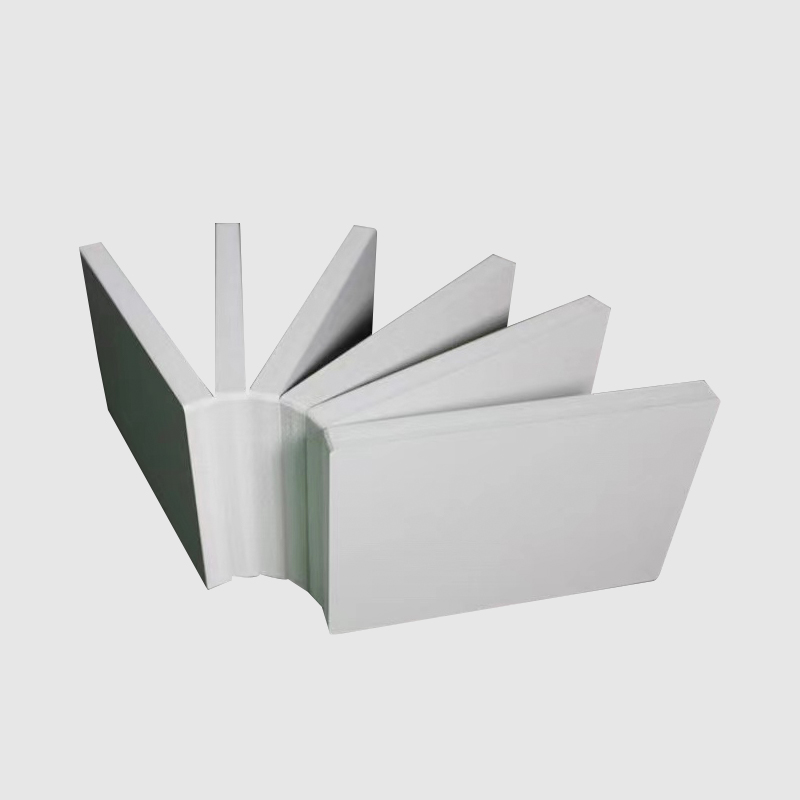 Wholesale OEM/ODM 4x8 feet high density 3mm 5mm 12mm rigid sheets celuca large pOffer Wholesale 4x8 feet high density 3mm 5mm 12mm rigid sheets celuca large pvc foam board, Jiatao Industrial Co., Ltd is China OEM/ODM ...View Product →
How Celuka Compares with Other PVC Foam Boards
Celuka is often mixed up with free-foam board, but the two age very differently. Free-foam board has a softer, less dense surface and a more uniform cell structure; it prints and cuts well, but its surface is more vulnerable to scratching, denting, and UV attack. Co-extruded board adds a separate solid cap layer during production, which gives excellent surface hardness and weatherability, and it is often chosen for outdoor displays and demanding furniture applications. Celuka sits between them in cost but usually ahead of free-foam board in lifespan because its dense skin is formed in the same process rather than added later. For outdoor signage, the practical differences and failure rates are laid out in the direct comparison between co-extruded and Celuka boards. As a rule of thumb: indoors, a standard free-foam board will often outlive the product it is built into; outdoors, you want a high-density Celuka grade or a co-extruded board, never a cheap free-foam sheet.
What Shortens Service Life and How to Prevent It
If you want the top of the 5-to-20-year range, the board alone is not enough. More premature failures are caused by fabrication and installation faults than by material defects. The following practices are standard for getting maximum life from Celuka sheet.
- Seal every cut edge. Saw cuts and routed grooves let moisture into the foam core long before the face skin is affected. Use PVC edge banding, a compatible solvent sealer, or moisture-resistant tape.
- Choose fasteners with care. Stainless steel screws with adequate thread depth, driven without over-tightening, hold better and avoid crushing the foam around the hole.
- Keep boards away from concentrated heat. The material softens well below its ignition point; dark-coloured panels in strong sun, or panels close to hot equipment, can distort.
- Clean with mild agents only. Aggressive solvents attack the surface skin and leave a cloudy, weakened layer that collects dirt and accelerates surface wear.
- Allow for dimensional movement. Large sheets exposed to temperature swings should be mounted with clearance and floating fixings rather than in rigid frames.
Each measure costs little at installation and saves a great deal later — which is why experienced fabricators treat them as mandatory rather than optional.
Buying Decisions That Decide the Lifespan
Specify density, thickness, and UV grade on paper
Do not order by thickness alone. Two 12 mm sheets from different mills can be entirely different materials: one at 0.45 g/cm³ that will dent and swell, another at 0.7 g/cm³ that behaves like a structural panel. Write the minimum density into the specification, require a UV-stabilised formulation for exterior work, and verify flatness and thickness tolerance when the goods arrive. A reputable manufacturer will state these values openly and keep batch-to-batch variation tight. For heavy interior applications such as shelving, countertops, and cabinet bodies, 15–20 mm boards with densities above 0.6 g/cm³ offer the best balance of rigidity, screw-holding, and long-term stability — a good example is the 20 mm rigid white Celuka sheet used for heavy-duty furniture and rack construction.
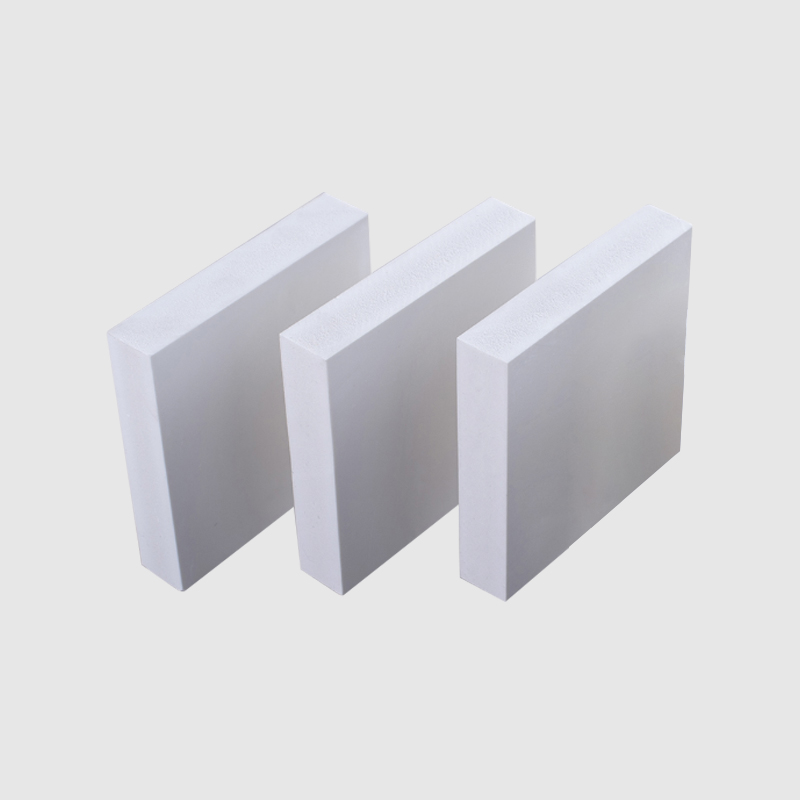 Wholesale OEM/ODM High density rigid white plastic 4x8ft 20mmplastic forex celukOffer Wholesale High density rigid white plastic 4x8ft 20mmplastic forex celuka free pvc foam sheet board, Jiatao Industrial Co., Ltd is ...View Product →
Check surface and edge quality at incoming inspection
Reject boards with pinholes, cracked skins, or a powdery surface before they reach the production line. Measure thickness at several points across each sheet; a tolerance tighter than ±0.3 mm is normal for good material. If a supplier cannot provide density data or third-party test reports, treat any lifespan claim with caution. You are not looking for paperwork as a luxury; you are looking for evidence that the board will still perform in a decade.
The realistic answer to how long a PVC Celuka foam sheet lasts is therefore 5 to 20 years: indoor, high-density, well-installed boards sit at the top of the range; outdoor, low-density, poorly sealed boards sit at the bottom. Density, skin quality, UV stabilisation, and installation practice are the four variables you control when specifying. Use them, and the material will quietly outlast the application it was bought for.
Recommended NEWS:
In public facility construction and home decoration, how does Waterproof PVC Celuka Foam Sheets meet the dual needs of waterproofing and sound insulation?
How to deal with board deformation during the production process of PVC Celuka Board?
How does PVC co-extruded foam board provide excellent waterproof performance to ensure the service life of furniture?
Application of White High-Tech PVC Plastic Foam Sheets in Advertising and Exhibition Display
How to choose the right Laminated PVC foam board according to the surface treatment and lamination type
How to ensure the installation quality of PVC Ceiling Panel
Related Products

Jiatao Industry Co., Ltd. is a professional manufacturer of polyvinyl chloride plastic boards in China, dedicated to the production of PVC foam boards, plastic wood foamboards, as well as colorful pVC for extruded foam board sheet manufacturers.
-
ADDRESS
No.65 Liminba, Yinong Town, Xiaoshan District, Hangzhou, Zhejiang, China
-
EMAIL
-
PHONE
+86-17816178586
MOBILE SITE



Copyright © Jiatao Industry Co., Ltd. All Rights Reserved.
Custom Rigid PVC Plastic Foam Boards Suppliers

Contact Us