

 English
 Español
 عربى
عربى
PVC Cellular Foam Board: What It's Made Of and What It's Used For
Article Directory
What You Need to Know
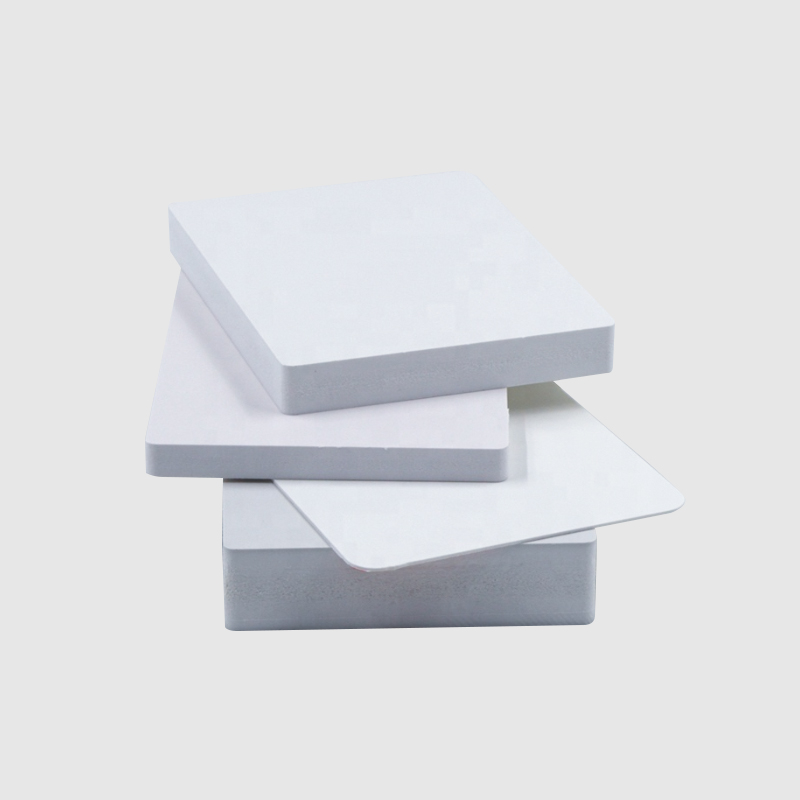
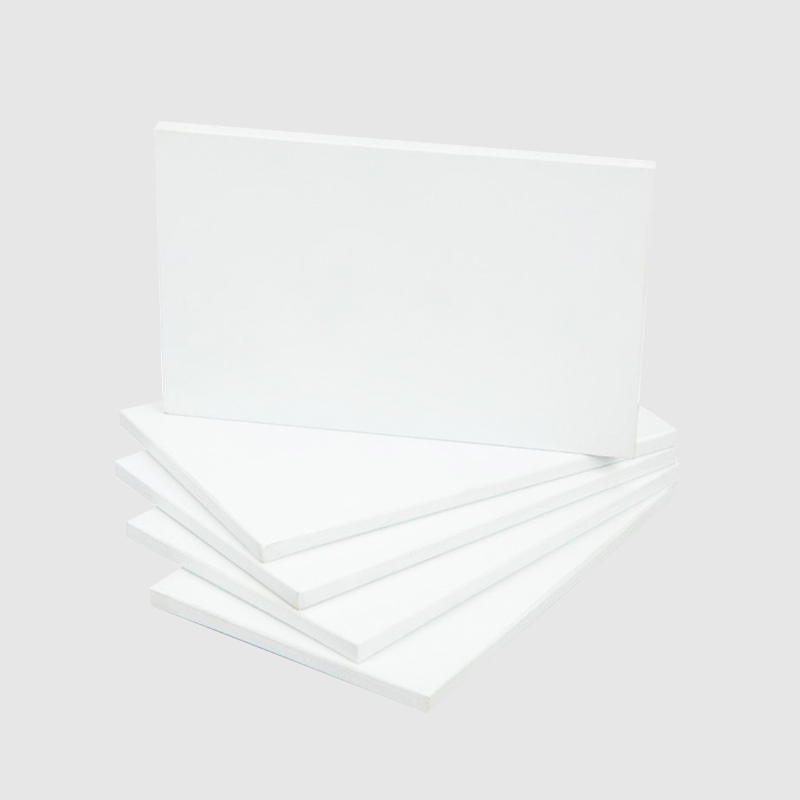
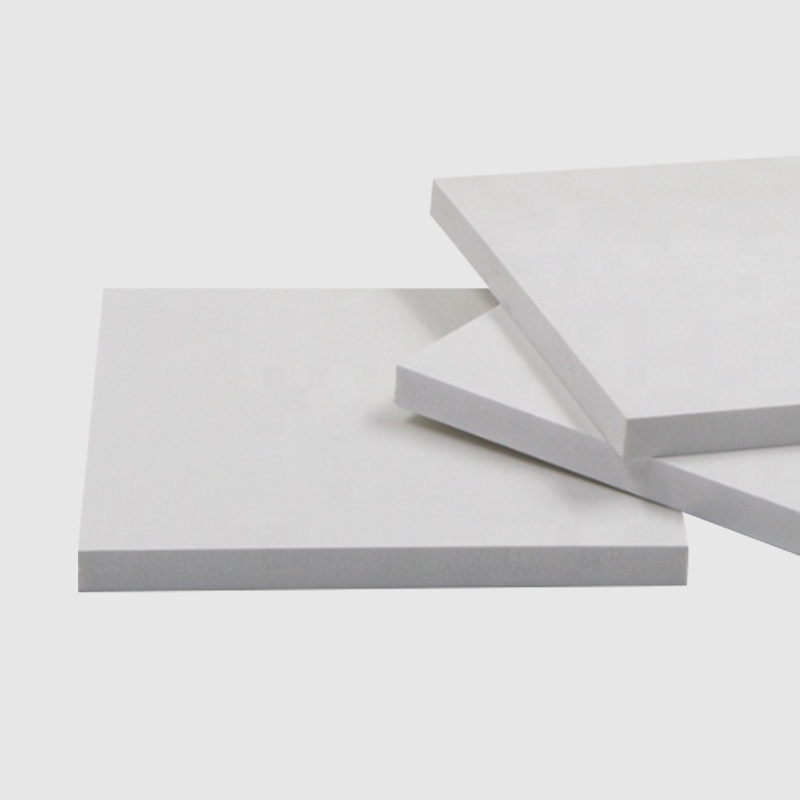
PVC cellular foam board is a rigid, lightweight panel made from polyvinyl chloride (PVC) resin expanded with a foaming agent to create a closed-cell structure. Yes — it is plastic. It is manufactured from PVC polymer, making it fully synthetic, waterproof, and chemically resistant. Its primary uses span construction cladding, signage, cabinetry, marine fitouts, and display boards — anywhere wood or MDF would rot, warp, or corrode.
Is PVC Foam Plastic?
Yes — PVC foam is unambiguously a plastic material. It belongs to the thermoplastic family, meaning it can be softened by heat and re-solidified without any fundamental change to its molecular structure. The base polymer — polyvinyl chloride — is one of the three most widely produced synthetic plastics in the world, alongside polyethylene and polypropylene.
What distinguishes PVC foam from solid PVC sheet is its cellular interior. During manufacturing, a chemical or physical foaming process introduces millions of microscopic gas bubbles into the molten PVC, which are then locked in place as the material cools. The result is a board with:
55% Lower weight vs solid PVC of same thickness
100% Waterproof — zero moisture absorption
0.55 Typical density (g/cm3) for standard grade
60+ Years estimated service life indoors
Because it is thermoplastic, PVC cellular foam board can be cut with standard woodworking tools, routed, drilled, heat-bent, and welded with hot-air PVC welding guns — making it far more fabrication-friendly than most technical plastics.
What Is PVC Foam Board Made Of?
The composition of PVC foam board is more nuanced than simply "PVC resin." A typical commercial formulation contains several carefully balanced ingredients, each serving a specific structural or processing function:
PVC Resin (K-Value 65–68) 45–55%
The structural backbone. A higher K-value indicates longer polymer chains and improved mechanical strength. Suspension-grade PVC resin is standard for foam board production.
Chemical Foaming Agent (Azodicarbonamide) 0.5–2%
Decomposes at processing temperatures (180–200°C) to release nitrogen gas, creating the closed-cell foam structure. The concentration directly controls final board density — more agent yields lower density.
Lead-Free Thermal Stabilizers 3–5%
Calcium-zinc or organotin stabilizers prevent PVC degradation during high-temperature extrusion. Modern boards use lead-free formulations to comply with RoHS and REACH directives.
Acrylic Processing Aid 5–8%
Improves melt viscosity and foam cell uniformity. Critical for achieving a smooth, hard skin surface (especially in Celuka-process boards) while maintaining a stable cellular core.
Fillers (Calcium Carbonate) 10–20%
Reduces raw material cost and fine-tunes stiffness. Too much CaCO3 impairs impact strength — quality manufacturers maintain a careful balance to preserve mechanical performance.
Lubricants and Impact Modifiers 2–4%
Internal and external lubricants control flow through the die. CPE or ACR impact modifiers reduce brittleness — essential for boards used in cold climates or applications with mechanical shock.
Celuka Process vs Free-Foam Process: What's the Difference?
Two main manufacturing technologies produce PVC cellular foam boards, and they yield meaningfully different surface and structural properties:
| Feature | Celuka Process | Free-Foam (Zendow) Process |
|---|---|---|
| Surface Hardness | Hard, dense skin (same PVC, no foam at surface) | Slightly softer, uniform foam throughout |
| Density Range | 0.55–0.75 g/cm3 | 0.40–0.60 g/cm3 |
| Printability | Excellent — takes UV, screen, and vinyl print | Good — slightly more porous surface |
| Screw/Nail Holding | Superior — dense skin grips fasteners | Adequate for lighter loads |
| Primary Use | Furniture, construction, precision signage | Display boards, lightweight signage |
What Is PVC Foam Used For?
PVC cellular foam board has displaced wood, MDF, aluminum composite, and gypsum board across dozens of industries — primarily because it combines the workability of wood with the permanence of plastic. Below are the major application categories, with specific use cases that illustrate why professionals choose it over alternatives.
Construction and Architecture
- Exterior wall cladding and facade panels (resists UV, rain, and frost)
- Soffit boards replacing rotten timber in eaves and overhangs
- Window surrounds and door trims (no primer needed for painting)
- Partition walls in wet areas — bathrooms, commercial kitchens, swimming pool enclosures
- Raised floor panels in modular construction (lightweight, moisture-proof)
Signage and Display
- Outdoor billboards and roadside signs (3mm–10mm boards most common)
- Retail point-of-sale displays and shelf talkers
- Exhibition booths and trade show panels — easy to cut and assemble on-site
- Real estate signboards — typically 5mm, printed with UV flatbed printers
- Menu boards and indoor directional signage
Furniture and Cabinetry
- Bathroom vanity cabinets — no swelling, no delamination around sinks
- Kitchen cabinet carcasses in high-humidity environments
- Office furniture panels that need painted or foil-wrapped surfaces
- Wardrobe interiors in coastal or tropical climates
- Retail display shelving — clean appearance, easy to clean
Marine and Outdoor
- Boat interior lining panels (zero rot risk, lightweight)
- Dock and pontoon surfaces — resists saltwater and UV
- Garden furniture components
- Caravan and motorhome interior panels
- Swimming pool changing room partitions
Key Properties That Drive PVC Foam Board's Popularity
Understanding the specific property profile helps in comparing PVC foam to competing materials and selecting the right grade for a given application:
| Property | PVC Foam Board (Standard) | MDF | Aluminum Composite |
|---|---|---|---|
| Density | 0.40–0.75 g/cm3 | 0.70–0.90 g/cm3 | 1.50–1.80 g/cm3 |
| Moisture Resistance | Excellent (0% absorption) | Poor (swells and warps) | Good |
| Thermal Insulation | Good (closed-cell structure) | Poor | Fair |
| Machinability | Excellent (standard tools) | Excellent | Fair (blade wear) |
| Fire Rating | B1 (self-extinguishing) | C–D | B1 (FR core) |
| Relative Cost | Medium | Low | High |
| Recyclability | Yes (PVC stream) | Limited | Yes (aluminum) |
How to Work With PVC Cellular Foam Board
One of the most practical advantages of PVC foam board is that fabricators can use familiar woodworking equipment without special training. Here are the key processing methods and what to know about each:
Cutting
Circular saws, jigsaws, and table saws with fine-tooth carbide blades (80T+) produce clean edges. For thin sheets under 5mm, a sharp utility knife and straight edge work cleanly. Avoid blade speeds above 4,000 RPM to minimize melting at the cut edge.
Routing and Engraving
CNC routers produce highly detailed profiles and lettering — a key reason Celuka-grade boards dominate the sign industry. Use single-flute upcut spiral bits at 18,000–24,000 RPM with a feed rate of 6–10 m/min for optimum surface finish.
Heat Bending
PVC foam softens at 70–80°C, allowing tight-radius bends without cracking. A line bender or hot-air gun applied along the bend axis, followed by bending over a jig and water-quenching, produces consistent angles. Minimum bend radius is approximately 10x the board thickness.
Bonding and Adhesion
PVC-compatible contact cements, solvent cements, or methyl methacrylate (MMA) adhesives provide strong bonds. Mechanical fasteners (screws, rivets) hold well in Celuka boards — pilot holes prevent cracking. Avoid adhesives with aggressive solvents like MEK in concentrations above 50%, which can cause surface pitting.
Painting and Printing
PVC foam accepts acrylic and polyurethane paints without primer on Celuka-surface boards. For UV flatbed or screen printing, a light wipe with IPA improves adhesion. Avoid solvent-based paints with ketone or ester solvents, which can cause surface crazing.
Welding
PVC foam can be hot-air welded using PVC welding rod at 250–300°C nozzle temperature — useful for creating seamless joints in tank linings, custom enclosures, and marine fitout work. Ultrasonic welding is also viable for thin sections in automated production.
Choosing the Right Thickness and Density
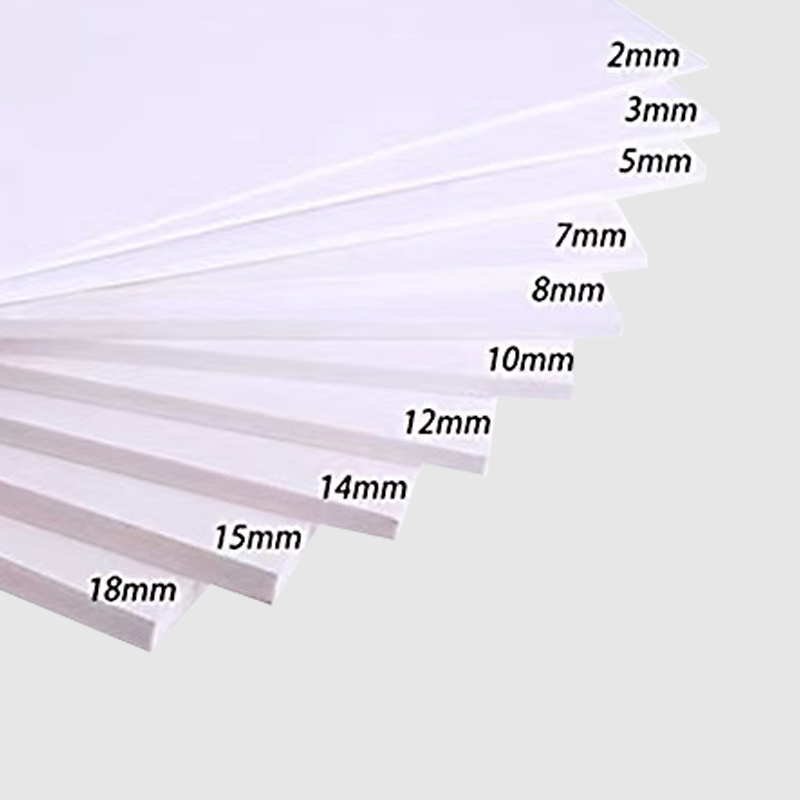
PVC foam board is available in thicknesses from 1mm to 40mm and densities from 0.35 to 0.75 g/cm3. The right combination depends on the structural and aesthetic demands of the project:
| Thickness | Density Grade | Recommended Application |
|---|---|---|
| 1–3mm | 0.40–0.55 g/cm3 | Indoor signs, light display boards, overlays |
| 5–6mm | 0.50–0.60 g/cm3 | Outdoor signage, real estate boards, exhibition panels |
| 8–10mm | 0.55–0.65 g/cm3 | Cabinet backs, partition panels, lightweight structural cladding |
| 15–18mm | 0.60–0.70 g/cm3 | Cabinet carcasses, shelving, bathroom furniture |
| 20–40mm | 0.65–0.75 g/cm3 | Structural panels, marine bulkheads, heavy-duty partitions |
Common Questions About PVC Foam Board
Can PVC foam board be used outdoors long-term?
Yes. PVC foam board has excellent UV and weather resistance. Standard white boards typically contain titanium dioxide UV stabilizers and can maintain structural and surface integrity for 10–15 years outdoors without painting. Colored boards should use UV-stable pigments or protective coatings for equivalent longevity.
Is PVC foam board food-safe?
Not all grades. Food-contact-rated PVC foam boards use formulations compliant with FDA 21 CFR or EU 10/2011 regulations, excluding heavy metal stabilizers. Always request a material safety data sheet and food-contact certification if the board will be used in food preparation, storage, or display environments.
What is the fire rating of PVC foam board?
Most commercial PVC foam boards achieve a B1 (or equivalent Class 1) fire rating — meaning they are self-extinguishing and will not sustain a flame when the ignition source is removed. This is significantly better than untreated wood or standard polystyrene foam. For building code compliance, always verify with the manufacturer's test certificate (DIN 4102 B1 or EN 13501-1 Class B-s1-d0).
Can I paint PVC foam board any color?
Yes — PVC foam board accepts water-based acrylic and two-part polyurethane paints well. For Celuka-surface boards, no primer is necessary. Avoid dark colors (especially black) on boards in full sun outdoors, as thermal expansion can reach 7mm per meter in length, potentially causing buckling if the board is rigidly fixed at both ends.
Recommended NEWS:
What environmental measures are used in the production of White Laminated PVC Free Foam Boards?
What factors affect the appearance of High Density Waterproof PVC Composite Boards Wall Panel?
What is the anti-corrosion performance of WPC Foam Board in humid or rainy areas?
What are the common quality problems of PVC foam board and how to solve them?
PVC Free Foam Board's multiple applications and environmental advantages in the field of transportation
What is the environmental performance of PVC Sheets?
Related Products

Jiatao Industry Co., Ltd. is a professional manufacturer of polyvinyl chloride plastic boards in China, dedicated to the production of PVC foam boards, plastic wood foamboards, as well as colorful pVC for extruded foam board sheet manufacturers.
-
ADDRESS
No.65 Liminba, Yinong Town, Xiaoshan District, Hangzhou, Zhejiang, China
-
EMAIL
-
PHONE
+86-17816178586
MOBILE SITE



Copyright © Jiatao Industry Co., Ltd. All Rights Reserved.
Custom Rigid PVC Plastic Foam Boards Suppliers

Contact Us