

 English
 Español
 عربى
عربى
Home / News / Industry News / PVC Foam Board Performance: How Surface Skin Thickness and Density Matter
PVC Foam Board Performance: How Surface Skin Thickness and Density Matter
Article Directory
Two PVC foam sheets can look identical on a spec sheet and behave completely differently in production. One routes cleanly, holds UV ink without pinholes, and survives shop-floor handling without scuffs. The other shows a furry edge, absorbs moisture at the cut line, and collects scratches before the part ever ships. The difference is not the thickness or the nominal density listed on the datasheet. It is a thin, dense layer called the surface skin.
The surface skin, typically 0.3 mm to 0.8 mm thick on each face, carries most of the load when a PVC foam sheet is scratched, printed, routed, or fixed with a screw. It also controls how quickly moisture enters the foam core. So when a project requires durable PVC foam sheet, the skin deserves as much attention as the core density.
What Exactly Is the Surface Skin on a PVC Foam Sheet?
During extrusion, PVC resin, fillers, thermal stabilizers, and a blowing agent are melted and pushed through a die. The hot melt then enters a calibrator or sizing sleeve, where the outer surface contacts a cold metal wall. Gas cells near the surface collapse, and the compressed material solidifies almost immediately. Behind this thin solid layer, the still-molten core continues to expand and forms the familiar cellular structure.
The finished board is a three-zone sandwich: a dense skin on each face, a low-density foam core in the middle. Skin thickness depends on melt temperature, cooling rate, calibration pressure, and the melt strength of the formula. On free-foam lines the natural skin is usually 0.3 mm to 0.8 mm. On co-extruded lines, the solid cap layer can reach 0.5 mm to 1.0 mm.
The practical implication is that two boards with the same nominal density can have very different surface hardness. A 0.6 g/cm³ sheet from one production line may resist scratches well, while another sheet at the same density marks easily. The skin, not the average density figure, determines how the board surface feels, prints, and wears.
Free Foam, Celuka, and Co-Extrusion: Three Ways to Build a Skin
Manufacturers use three main processes to create the outer layer, and each produces a different balance of cost, hardness, and surface finish.
Free-Foam Natural Skin
In a standard free-foam line, the skin forms simply because the outer surface cools and collapses against the calibrator. The result is a compacted but relatively soft layer with a fine, closed texture. Free-foam boards are the most economical option and are widely used where handling is careful and the board will be laminated, covered, or framed. When surface durability needs to be improved, specifiers move to higher-density free-foam grades, which produce a firmer natural skin. For advertising panels where stiffness and print quality both matter, a high-density PVC foam board for advertising panels is a common upgrade.
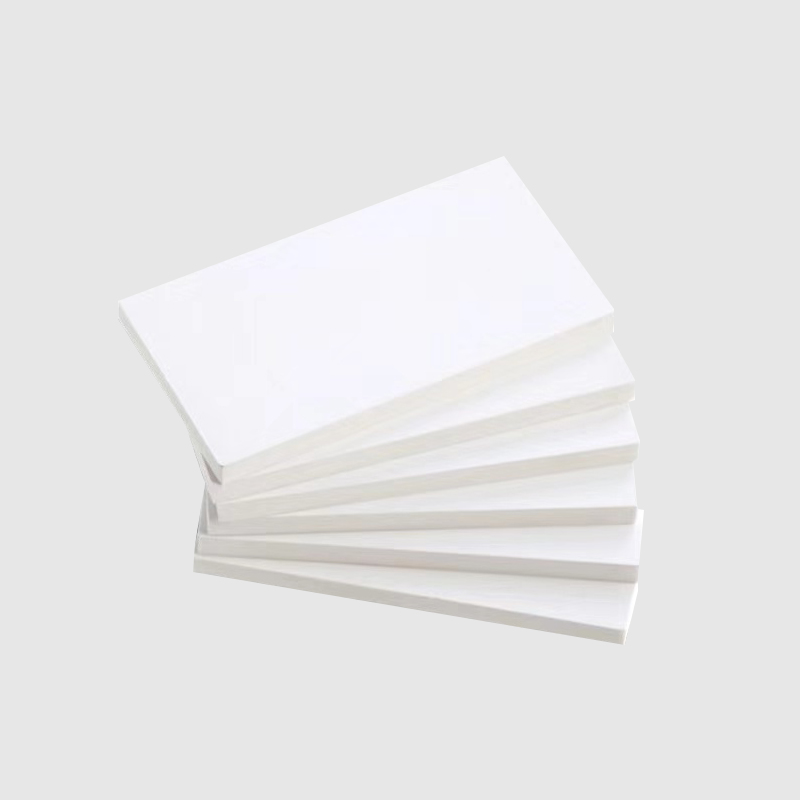 Wholesale OEM/ODM High density pvc foam board kt board sheet for advertising forOffer Wholesale High density pvc foam board kt board sheet for advertising forex celuka board, Jiatao Industrial Co., Ltd is China OEM/OD...View Product →
Celuka True Skin
The Celuka process, often called cellular or structured foam, uses a cooled calibrator with a shaped internal shoe. The melt is pressed against the cold wall and freezes almost instantly, creating a thick, compact, pore-free skin, while the interior expands into foam. This true skin is noticeably harder and more uniform than a natural free-foam skin. Celuka boards are chosen for furniture, cabinet doors, wall panels, and any part that will be handled, painted, routed, or exposed to moisture. A typical choice is a PVC Celuka foam sheet with a rigid, high-density surface.
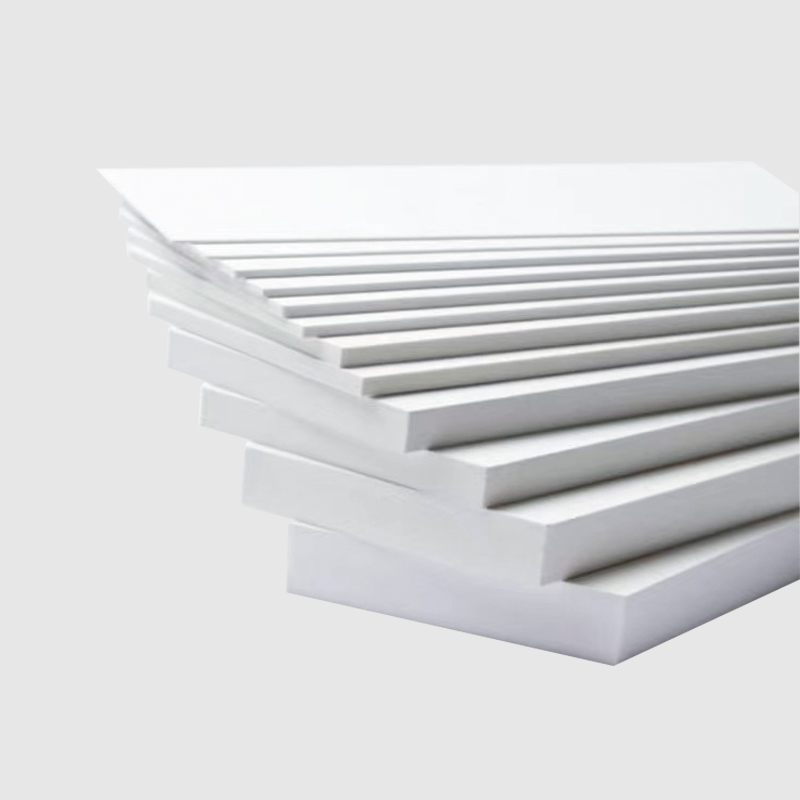 Wholesale OEM/ODM Pvc foam board celuka sheet rigid surface high density 3mm-17mOffer Wholesale Pvc foam board celuka sheet rigid surface high density 3mm-17mm furniture application water proof pvc board white color r...View Product →
Co-Extruded Cap Layer
Co-extrusion is the most controllable route. Two extruders feed one die: the first delivers the foam core compound, the second supplies a solid PVC cap that fuses to the surface as the board forms. Because the cap is fully dense, it provides the highest hardness, smoothest finish, and best resistance to moisture and impact. Co-extruded boards are specified for kitchen and bathroom cabinetry, outdoor displays, CNC fabrication, and parts that receive heavy handling. A representative grade is a co-extruded PVC foam board with a smooth, extra-rigid surface.
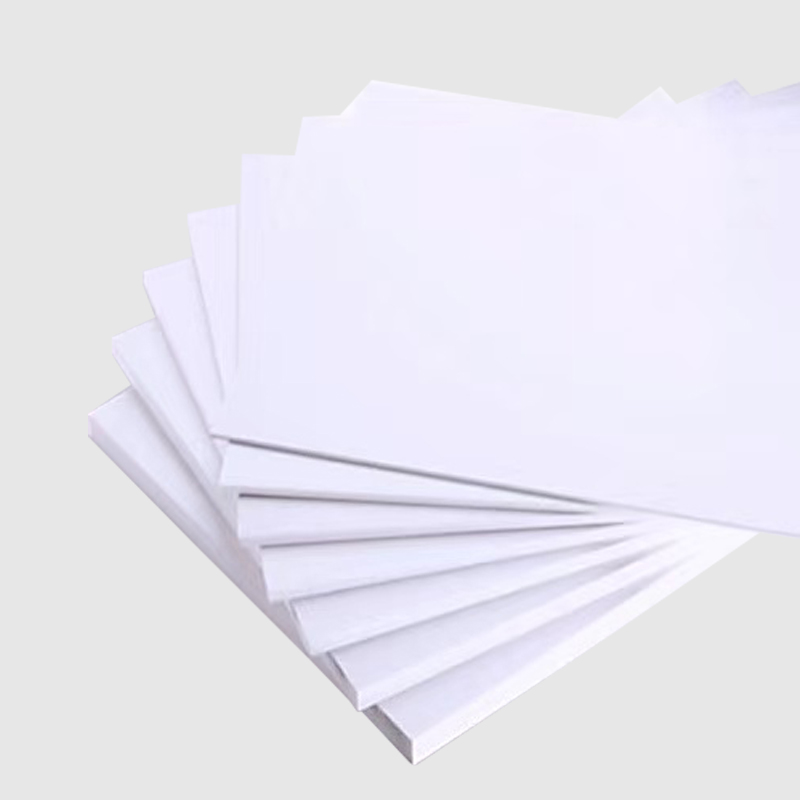 Wholesale OEM/ODM Pvc co-extruded foam board smooth surface extra rigid plastic Offer Wholesale Pvc co-extruded foam board smooth surface extra rigid plastic pvc sheets waterproof soundproof, Jiatao Industrial Co., Lt...View Product →
| Skin type | How it forms | Surface density | Relative hardness | Typical applications |
|---|---|---|---|---|
| Free-foam natural skin | Foam collapsed against the calibrator | Medium | Softest | Signage, display boards, models |
| Celuka true skin | Skin frozen against a cooled calibrator | High | Hard | Furniture, cabinetry, wall panels |
| Co-extruded cap layer | Solid PVC fused over the foam core | Fully dense | Hardest | Kitchen and bathroom cabinets, outdoor displays |
How the Skin Affects Real-World Performance
The skin changes the way a PVC foam sheet behaves in production and in service. Four areas matter most.
Scratch and Mar Resistance
Surface hardness tracks skin density. A soft natural skin shows scuffs when panels slide against each other in transit or when cabinet doors are stacked on a workbench. A dense Celuka skin or a solid co-extruded cap raises the threshold at which an abrasion mark appears. For furniture that must look new after installation, this is often the deciding factor. More detail on this behaviour is covered in the discussion of co-extruded board surface hardness in cabinetry.
Moisture Resistance
The foam core, particularly in free-foam boards, contains cells that can wick water once they are exposed. The intact skin acts as a barrier and keeps moisture out. This is why Celuka and co-extruded grades are preferred for bathroom cabinets, kitchen units, and exterior signage. Cut edges remain the weak point: any machining that opens the core should be followed by edge sealing or edge banding when the board will face humid conditions.
Printing and Ink Adhesion
UV inks applied directly to the board need a smooth, low-porosity surface. If the skin has micro-openings, ink can seep into the core and cause pinholes, mottling, or inconsistent color density. Co-extruded caps and high-density skins give the most predictable print results; soft free-foam skins sometimes require a primer or lamination film. Sign shops that verify surface quality before production reduce waste and rework. The relationship between skin density and print performance is also covered in the density and durability guide for signage applications.
Impact Strength and Fastener Holding
A thin, dense skin distributes point loads from screws, hinges, and impacts over a wider area and stops the core from crushing locally. The effect is visible when attaching a hinge to a cabinet door: a board with a weak skin allows the screw to sink and loosen over time, while a hard-skinned board holds torque through thousands of open-close cycles. For a deeper look at how density and skin affect structural behaviour, see the analysis of how board density affects strength, rigidity, and insulation.
Edge Quality After Machining
Because the skin is denser and tougher than the core, it behaves differently under a router bit. A well-formed skin produces clean, sharp edges and crisp transitions; a weak or irregular skin can chip or show a ragged line between skin and core. Fabricators who route lettering, grooves, or panel profiles notice the difference immediately, which is why co-extruded and Celuka boards dominate CNC work.
Selecting the Right Skin for Your Application
Rather than specifying PVC foam board generically, define the surface requirement first. Each skin technology suits different jobs:
- For furniture and cabinet doors, choose co-extruded or Celuka boards. The cap or true skin resists fingerprints, cleaning agents, and scratches, and it holds hinges and latches more reliably.
- For signage and print work where panels are transported and installed by hand, a high-density free-foam board is usually sufficient. If the sign will face outdoor weather, a co-extruded board is the safer specification.
- For wall panels and ceiling panels, Celuka boards provide the hard, smooth surface needed for painting or film lamination.
- Budget also matters: free-foam boards have the lowest cost, Celuka boards sit in the middle, and co-extruded boards cost more but deliver the longest surface life.
A simple field check helps: cut a sample, inspect the edge under magnification, and run a scratch test with a hardened blade. The skin should be uniform, free of voids, and clearly denser than the core. Ask the supplier for the surface hardness claim and the density range in writing.
The surface skin is the part of a PVC foam sheet that users see, touch, print on, and scratch. Buyers who understand the three skin technologies can match the board to the application and avoid failures that no core-density specification can predict. For jobs where surface quality is contractual, a co-extruded or Celuka grade is the safer choice; for cost-sensitive jobs, a quality free-foam board with a dense natural skin remains a reliable option.
Recommended NEWS:
PVC Free Foam Board's multiple applications and environmental advantages in the field of transportation
How to deal with board deformation during the production process of PVC Celuka Board?
How to choose the right Laminated PVC foam board according to the surface treatment and lamination type
Laminated PVC Foam Board has the advantages of being moisture-proof and water-resistant compared to other materials
White Laminated PVC Free Foam Boards: Environmentally friendly and sustainable production
Waterproof and moisture-proof performance of WPC Foam Board: materials, technology, application and maintenance
Related Products

Jiatao Industry Co., Ltd. is a professional manufacturer of polyvinyl chloride plastic boards in China, dedicated to the production of PVC foam boards, plastic wood foamboards, as well as colorful pVC for extruded foam board sheet manufacturers.
-
ADDRESS
No.65 Liminba, Yinong Town, Xiaoshan District, Hangzhou, Zhejiang, China
-
EMAIL
-
PHONE
+86-17816178586
MOBILE SITE



Copyright © Jiatao Industry Co., Ltd. All Rights Reserved.
Custom Rigid PVC Plastic Foam Boards Suppliers

Contact Us